Table of Contents
Penny Marie
I am an independent researcher and reporter.
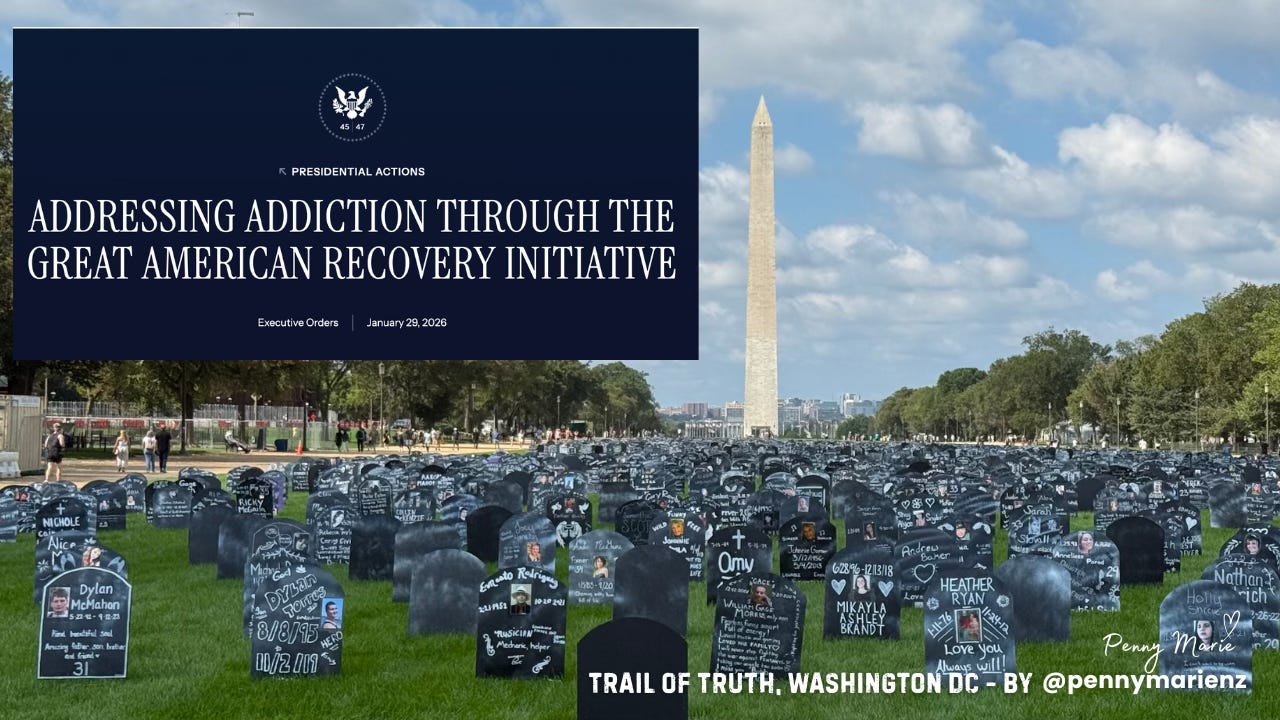
Health and Human Services (HHS) Secretary Robert F Kennedy, Jr has announced a comprehensive plan to strengthen prevention, expand treatment, and carry out the executive order President Trump signed last week to ignite the Great American Recovery.
The centrepiece of this plan is a $100 million investment to solve long-standing homelessness issues, fight opioid addiction, and improve public safety by expanding treatment that emphasises recovery and self-sufficiency.
The Safety Through Recovery, Engagement, and Evidence-based Treatment and Supports
The Safety Through Recovery, Engagement, and Evidence-based Treatment and Supports – or STREETS – initiative will fund targeted outreach, psychiatric care, medical stabilisation and crisis intervention, while connecting Americans experiencing homelessness and addiction to stable housing with a clear focus on long-term recovery and independence.
“Addiction begins in isolation and ends in reconnection,” said Secretary Kennedy, who is co-chair of President Trump’s Great American Recovery Initiative. “Thanks to the leadership of President Trump, we are bringing Americans suffering from addiction out of the shadows and back into community.”
Secretary Kennedy made the announcement at Prevention Day, the largest government-sponsored gathering dedicated to advancing the prevention of substance use, hosted by the Substance Abuse and Mental Health Services Administration (SAMHSA), a division of HHS.
The $100 million investment directed by Secretary Kennedy is a clear departure from Biden-era policies that were misguided, failing to stem the tide of death, addiction, homelessness, and crime in American communities. These policies focused not on preventing and treating individuals, but rather non-effective interventions such as harm reduction, supporting housing first, and other strategies that enabled future drug use – and were never intended to support people in their recovery to lead productive lives in their communities.
Substance-use disorder – impairment caused by repeated use of alcohol or other drugs – among people ages 12 and older rose from 7.4 per cent in 2019 to 16.8 per cent in 2024, according to SAMHSA survey data. Nearly eight in 10 people with a substance-use disorder in 2024 did not receive treatment.
Secretary Kennedy also announced the $10 million Assisted Outpatient Treatment (AOT) grant programme to support adults with serious mental illness. AOT is a civil court-ordered, community-based outpatient mental health treatment programme for adults with serious mental illness who are unable to engage with conventional outpatient treatment and are unlikely to be able to live safely in their community. The programme is designed to work within the civil court system that supports engagement with community-based treatment as an alternative to more costly restrictive levels of care, homelessness, and interactions with the criminal justice system.
Ending crime and disorder on America’s streets
President Trump’s Executive Order Ending Crime and Disorder on America’s Streets on July 24, 2025 directed SAMHSA grants toward evidence-based substance use disorder programmes with proven results and assisted outpatient treatment that moves people with serious mental illness or addiction off the streets and into stable housing and support networks. SAMHSA in September 2025 awarded more than $45 million in new supplemental funding to State Opioid Response programme recipients to focus on sober or recovery housing among young adults.
The STREETS Initiative and AOT grant announcements coincide with SAMHSA’s $794 million first allocation of 2026 annual block grant awards, with $319 million going to support comprehensive community mental health services for adults with serious mental illness and children with serious emotional disturbance, and $475 million to the agency’s Substance Use Prevention, Treatment, and Recovery Services Block Grant programme to prevent and treat substance abuse.
To help prevent family breakdown from substance use disorder, HHS’ Administration for Children and Families under Secretary Kennedy’s plan added three Medications for Opioid Use Disorder (MOUD) as prevention services eligible for federal funding. States and tribes can now receive a 50 per cent federal match, respectively, to provide buprenorphine, methadone, and naltrexone to parents when children are at imminent risk of entering foster care but can remain safely in the home or in a kinship placement with access to these treatments.
All three MOUD are US Food and Drug Administration-approved, well-established, evidence-based tools that support recovery, promote family stability, and reduce risk factors associated with child welfare involvement.
SAMHSA and ACF intend to issue a Dear Colleague letter to emphasize that both agencies welcome full participation from faith-based organizations in their programmes and activities.
President Trump declared upon establishing the White House Faith Office on February 7, 2025, “The executive branch wants faith-based entities, community organisations, and houses of worship, to the fullest extent permitted by law, to compete on a level playing field for grants, contracts, programmes, and other Federal funding opportunities.”
This article was originally published by Penny Marie NZ.