Table of Contents
‘Repatriating cultural heritage’ has been a big thing in recent years. Mostly, it seems, for history’s losers. As empires have for millennia, European empires tended to take a lot of ‘native’ stuff home with them. Some of it plainly looted, others bought fair and square, even if the buyers often had no idea (or interest) in the sellers’ provenance.
The idea that this is some kind of uniquely European sin is, in fact, a form of racism. After all, we don’t see India clamouring for Iran to return the Peacock Throne. Nor has Malta bothered asking Tunisia for the marble Muslim conquerors looted from its cathedral to build a fortress. And so it goes.
Those clamouring for the repatriation of artefacts from places like the British Museum might also want to show a bit of gratitude: if the Brits hadn’t preserved them, they’d almost certainly have been lost. As Carl Benjamin jibes, ‘if we had to dig them out of the ground, you weren’t really concerned about them’. This is particularly pertinent to a mosaic currently in the Australian War Memorial: WWI diggers found it under a rubbish pile and saved it.
Others would likely have been destroyed in the incessant strife that plagues certain areas of the world. If the ancient treasures of Nineveh had been in the British Museum, they wouldn’t have been destroyed by Islamic State (at least, not for a few years yet).
A set of ancient Chinese books would also have been lucky to survive Mao.
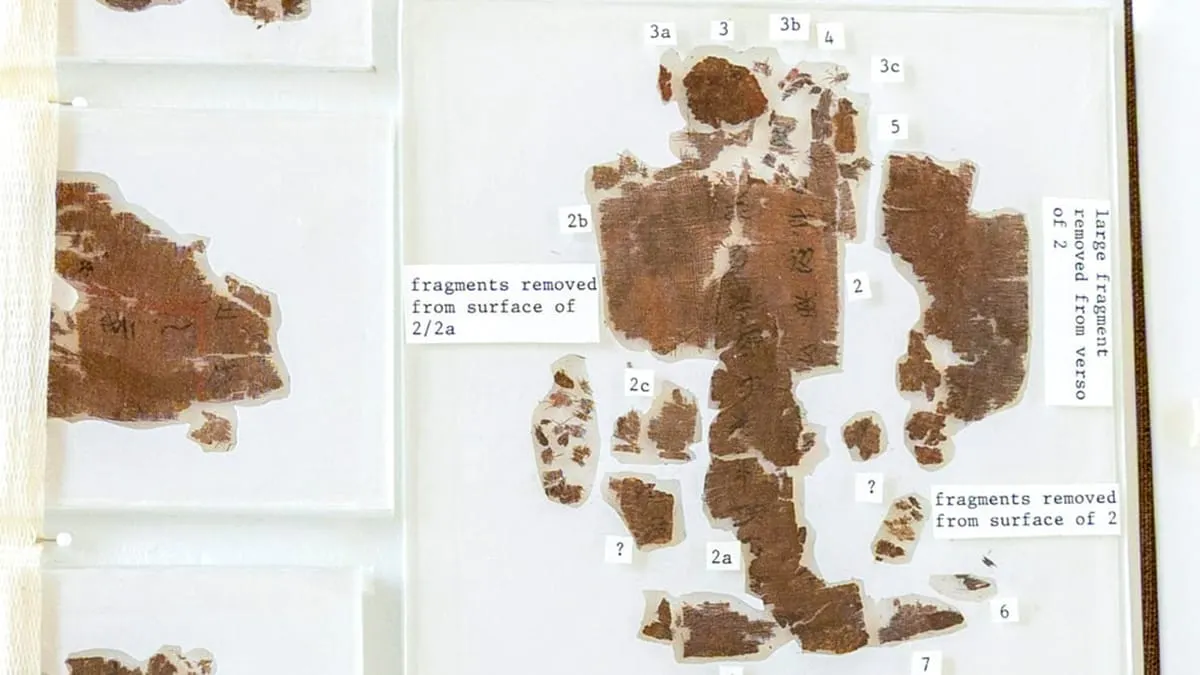
Two volumes of 2,300-year-old silk books – the earliest known in China – arrived in Beijing from the United States in the early hours of Sunday, marking the end of their 79-year journey abroad.
The Zidanku Silk Manuscripts – dating back to around 300BC, during the Warring States Period – are considered the oldest ancient classics ever found in China. They are more than a century older than the Dead Sea Scrolls […]
The manuscripts were illegally excavated in 1942 from a tomb in Zidanku in the city of Changsha in central China. They were first acquired by a Chinese collector, then illegally removed from the country in 1946 by John Hadley Cox, an American collector.
All very illegal, no doubt, but consider what would likely have happened, had they remained in China. In the holocaust of the Cultural Revolution, Mao’s Red Guards zealously destroyed as much of the ‘Four Olds’ as they could get their hands on. Books, paintings, scrolls, even ancient corpses were dug up and smashed and burned. It’s estimated that some 75 per cent of China’s cultural heritage perished at the communists’ hands. Had the Zidanku Silk Manuscripts been found in the collection of some ‘bourgeois’ Chinese collector, they would certainly have met the same fate.
So, Beijing might want to send a small note of thanks to ‘illegal’ collectors doing what the Chinese government certainly wouldn’t have done.
There seems to be precious little gratitude from Egypt, either, for Australia remedying Egyptians’ millennia-old habit of stealing and flogging off their own heritage.
In a significant victory for the preservation of cultural heritage, Egypt has successfully recovered 21 ancient artifacts that were illegally taken from the country and found in Australia. The items arrived back in Cairo today, marking not just a restoration of history, but also a testament to strong international cooperation.
Or a testament to institutions in some countries being a lot more honest than others – especially the ones making the loudest noises about ‘repatriating cultural heritage’.
Nigeria, for instance.
A group of the Benin bronzes that Germany handed back to Nigeria have vanished into a private collection instead of being exhibited in a museum as promised, prompting some observers to describe the restitution as a “fiasco”.
If they’d stayed in European museums, they’d still be on display for all to see.
Let that be an instructive lesson.