Table of Contents
In brief
- Albert Park in March 2023 exposed how quickly women’s speech could be shut down by intimidation, while much of the media and political class softened or excused what happened.
- A 2025 IPCA report later found police planning and resourcing were inadequate, backing the view that the violence and disorder were not just ugly, but badly mishandled.
- Since then, the wider debate has shifted sharply, with the Cass Review, tighter puberty blocker rules and new sport policies all pushing once-taboo concerns closer to the mainstream.
A peak moment for the trans movement
A little more than three years ago, in March of 2023, the scenes at Albert Park and the political fallout that followed felt like a display of peak activist confidence in New Zealand.
The aggressive protests mounted against women’s rights activist Posie Parker, real name Kellie-Jay Keen-Minshull, showed how quickly a supposedly tolerant society could decide that some women were no longer entitled to speak, and how readily institutions and much of the media could join with the mob punching down.
At the time, transgender activism appeared to have enormous cultural momentum. Figures such as Shaneel Lal had become emblematic of a movement that enjoyed broad institutional backing, strong media sympathy and a growing ability to define dissent as bigotry rather than disagreement. Albert Park appeared to have been something of a high-water mark for radical transgenderism.
The ‘joyful’ silencing of women
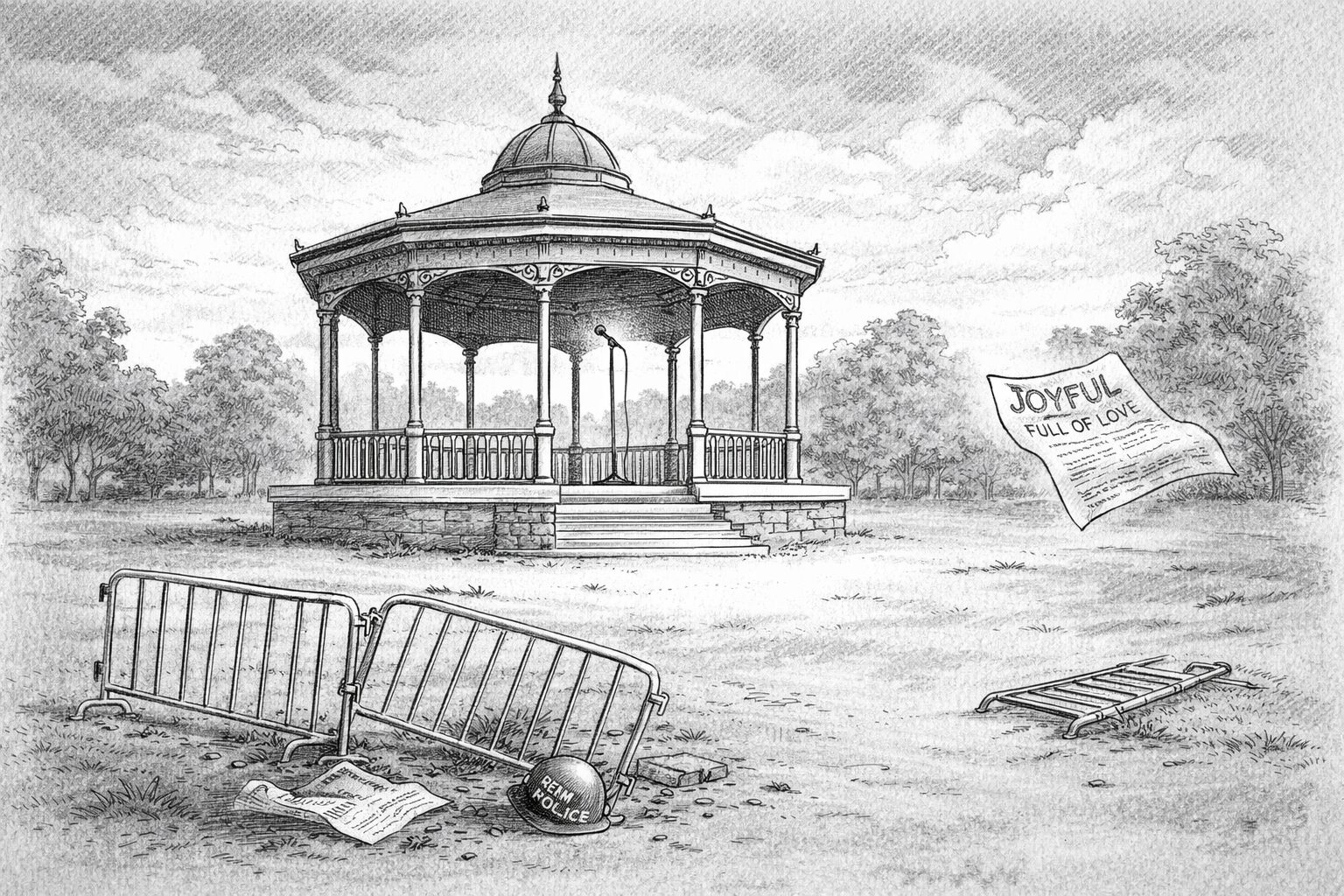
Women were verbally assaulted, barriers were torn down, Parker was drenched in tomato juice before she could speak, and a 71-year-old woman was punched in the head by a 21-year-old male “activist”. Others reported being spat on, abused and physically overwhelmed.
Yet the official and media reflex was to sanitise what had happened. Many New Zealanders will remember the now infamous framing of the counter-protest as “joyful” and “full of love.” That language landed with a thud because it was so plainly at odds with what people had seen on their screens and, in some cases, experienced in person.
What the police watchdog found
Two years later, in February 2025, the Independent Police Conduct Authority report found that the initial police risk assessment was flawed, that planning suffered from systemic weaknesses, and that the police response after protesters surrounded the rotunda was inadequate and did not have sufficient regard to public safety.
What is striking, three years on, is how far the wider debate has moved. Some of the views associated with Posie Parker that were treated as hateful or fringe in 2023 are now far closer to the mainstream.
A turning point
A major turning point was the Cass Review in the UK. Published in April 2024, it helped break the moral certainty (of the progressives) around youth gender medicine by giving institutional weight to medical concerns that had often been brushed aside.
NHS England said the review would be of “major international importance,” and the UK government later summarised one of its key conclusions this way: the rationale for early puberty suppression remained unclear, with weak evidence regarding its impact on gender distress and mental or psychosocial health.
The shift is not limited to Britain either. This week, the US Supreme Court this week struck down Colorado’s ban on conversion therapy for minors, citing free speech concerns.
That tide appears to be turning in New Zealand, too. The government announced regulations in November 2025 that took effect from 19 December 2025, restricting new prescriptions of puberty blockers for children and adolescents with gender dysphoria or incongruence, while allowing existing patients to continue. The Ministry of Health says the rules remain in force, even though enforcement was paused pending judicial review.
The same shift is visible in sport. World Athletics now requires athletes seeking to compete in the female category at the world championships to undergo a once-in-a-lifetime SRY gene test, and its rules define the female category around biological sex. World Rugby’s position is also clear, with transgender women who have experienced male puberty barred from women’s contact rugby.
And perhaps most significantly, the International Olympic Committee has now moved in the same direction. Last week it announced that only biological female athletes will be eligible for women’s events from the Los Angeles 2028 Olympics onwards, with a one-time gene test forming part of the eligibility framework. Whatever one thinks of the policy, it marks a remarkable change from the mood that dominated in 2023.