
As I wrote recently, there were many Banquo’s Ghosts at the Victorian leaders’ debate, but only one man refused to see them. With less that a week to go, the ghosts are still haunting the Victorian election: only, no one can see them. On account of their not being there at all. With the state Labor government swirling around the plughole after a near-unbroken 25-year rule, one of Labor’s biggest names is conspicuous by his absence from the Victorian campaign.
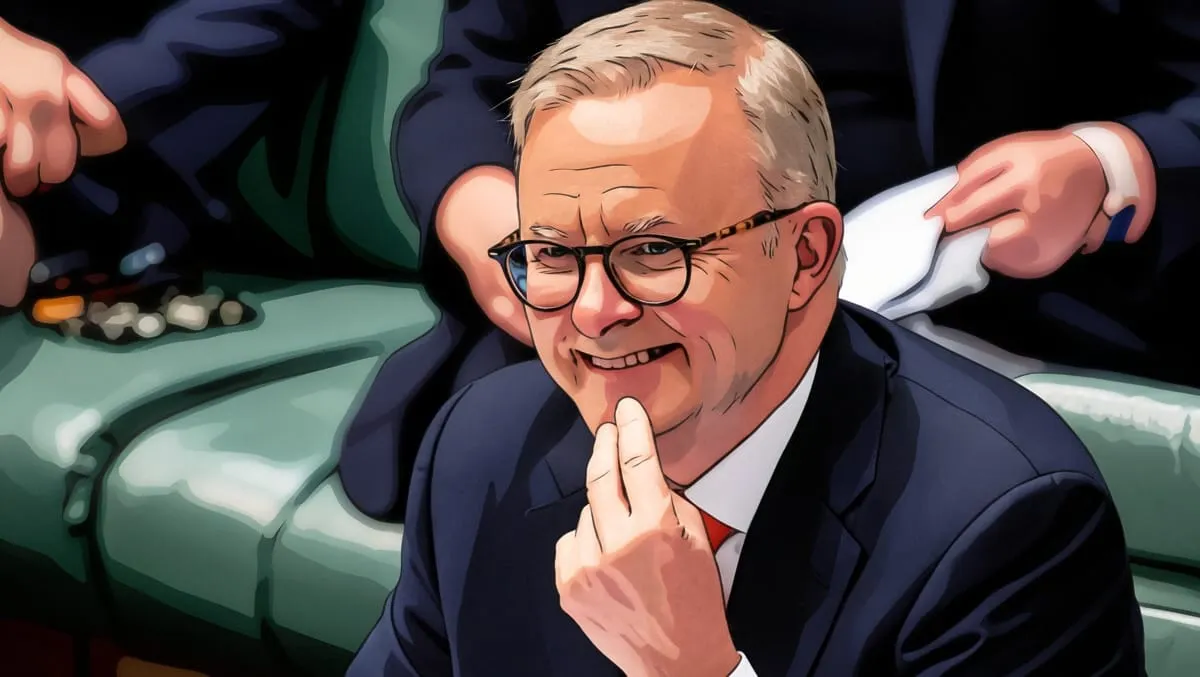
PM Anthony Albanese has enough troubles of his own without needing to be poisoned by associated with Victorian Labor. Vice-versa, Albanese’s plummeting popularity, not to mention his close friendship with the now-poisonous Dan Andrews, is yet another millstone the floundering Victorian Premier Ben Carroll doesn’t need to add to the collection around his neck.
Another leader conspicuously absent is One Nation’s Pauline Hanson. With her party polling second in Victoria, so far only deputy federal leader Barnaby Joyce has campaigned in that state. The ABC’s Patricia Karvelas, who infamously whined on TV that a One Nation by-election win had ‘legitimised’ the party that half the country wants to vote for, crows that it is a sign the party is not doing as well as the polls suggest. An alternate explanation might be that Victorian leader Warren Pickering, who surprised many with his debate performance, is doing better than expected. On that reading, Hanson, a divisive figure south of the Murray, could be seen as a net negative. Or that this is a sign that ON is positioning itself to be more than a one-woman band.
Whatever the outcome, it’s looking bad – very, very bad – for Labor.
Federal Labor is treating the Victorian campaign like a radioactive spill. Insiders privately compare the expected result to the 2011 NSW wipeout, when sleaze and corruption delivered a 30-seat thrashing and a primary vote that collapsed to 25.6 per cent. The NSW Labor brand became a byword for shonky deals. South of the Murray, a royal commission is poking into CFMEU conduct on major projects, and the stench is national. Polls point to a Liberal majority and Labor reduced to a rump of 20 seats or fewer in the assembly. Some optimists in the party would settle for 35 seats and the loss of ‘only’ 21. Most expect 30 to 35 to go.
Many long-time Labor voters cannot bring themselves to vote for a Labor government now associated with three things: crime, debt and corruption.
The “Big Build”, once a boast, is now a liability. Voters hear waste, mismanagement and union influence. The Werribee by-election already delivered a 16.5-point first-preference swing against Labor, before One Nation’s recent surge. Carroll has tried to signal a clean break. The Liberals have simply nailed him back to Andrews, Jacinta Allan, runaway crime, net debt heading toward $200 billion and the CFMEU allegations. Andrews still stars in Liberal advertisements three years after he left the premiership.
Labor’s campaign is conspicuously focused on trying to sandbag what should be ultra-safe seats. The usual safe-seat complacency has evaporated. Resources are being poured into seats that once required little more than a red rosette and a how-to-vote card.
If Jess Wilson becomes premier, she should not expect a long honeymoon. Much of the swing will come from voters simply determined to eject Labor, plus the preferences of those drawn to One Nation’s broken-system message. They will judge her on crime, potholes, budget holes and the long list of failures she has catalogued. A capable cabinet and competent administration will be required from day one.
The Greens, meanwhile, nurse modest hopes. Statewide support sits around 14 or 15 per cent in most polls, an improvement on their long plateau but nothing like One Nation’s rise. Moreover, while One Nation are polling fully half of the primary vote in country seats (with exit polls on early voting showing the same), the Greens’ vote is concentrated in the concrete jungles of inner-inner Melbourne: as far from the natural environment as it is possible to get. Beyond the ‘quinoa belt’ of wealthy inner-Melbourne hipsters, the Greens struggle. The Liberals’ preferences will likely keep them confined to the vegan-cafe suburbs.
But, in a sign of how drastically things have changed, the Liberals no longer see Labor as their many adversary. So, instead of putting Labor last as usual, the Libs are preferencing Labor ahead of the Greens. This could be a devastating blow to the Green’s hopes of expanding outside the vegan-cafe belt. Four years earlier, when Labor was recommended, flows to the minor party were 20–25 points lower. Liberal voters follow how-to-vote cards more faithfully than most. The decision is the single most consequential preference recommendation of the campaign. The party’s stated ambition to replace Labor remains an inner-Melbourne fantasy.
One Nation could still snare a handful of upper-house seats and hold the balance of power. That would be a striking result in a state that once treated the party as an exotic curiosity. The lower house, however, looks set for a Liberal majority. Labor’s near-unbroken quarter-century is ending not with a whimper but with the sound of brickbats.