Table of Contents
Matua Kahurangi
Just a bloke sharing thoughts on New Zealand and the world beyond. No fluff, just honest takes.
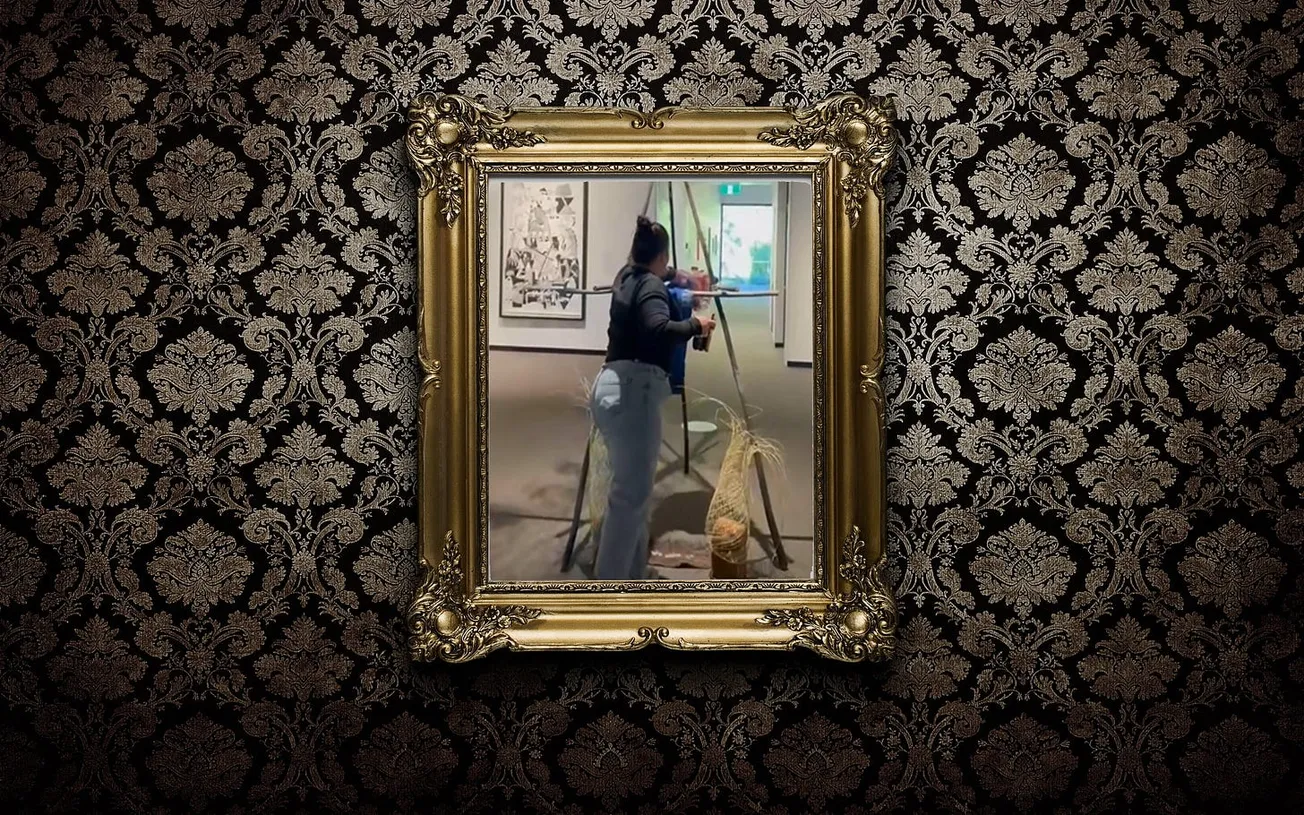
A recent controversy surrounding an art installation at The Suter Art Gallery in Nelson has sparked national conversation and strong reactions across social media. At the centre of the debate is a flag featuring the words “please walk on me”, which many saw as a provocative invitation to dishonour a national symbol. One woman, Ruth Tipu, decided to take a stand by removing the flag from the exhibition floor. Her actions were filmed and posted to her Facebook page. I reposted the video to X where the video gained over 1,300 likes in just 15 hours, along with hundreds of supportive comments and reposts.
Tipu’s stance resonated with many New Zealanders, especially as a young wahine Māori openly defending the mana of the national flag. Her decision sparked a broader conversation about what counts as art, respect for national symbols, and the limits of artistic freedom.
Mainstream media also took note. The New Zealand Herald ran a poll on whether the installation was appropriate. With over 4,300 respondents, a striking 82 per cent believed the artwork was inappropriate, while only 18 per cent defended it as a valid form of artistic expression. Public opinion appears clear that many felt the piece crossed a line.

Legal concerns have also come into play. Under New Zealand’s Crimes Act, it is an offence to destroy or damage the New Zealand flag with the intention of dishonouring it. The maximum penalty is a fine of up to $5,000. This law has been enforced in the past, and some argue that the artist behind the installation should be held accountable. Using ‘art’ as a defence risks creating a slippery slope, where increasingly harmful acts are justified under the guise of artistic expression. What’s to stop a paedophile claiming, ‘But it was art’, in defence of something as serious and criminal as taking exploitative photos of a child?

A look at Ruth Tipu’s Facebook profile offers further context. Her profile picture includes the phrase MNZGA, or Make New Zealand Great Again, a slogan linked to Destiny Church and often shared on social media. Tipu appears to be, or to have been, part of Destiny Church and its Legacy programme. Photos show her with Destiny leader, Brian Tamaki.

The Tamakis have long been vocal about protecting the New Zealand flag. Earlier this year, police fined protesters who performed haka on a motorway during a Destiny Church flag protest, which temporarily shut down the motorway. Twenty people were fined $250 each after entering the motorway on foot as part of the demonstration.

Some may frame Tipu’s actions in terms of her political or religious affiliations; her supporters view her as someone who stood up for national pride and cultural respect. Regardless of differing views, her actions clearly struck a chord with the public.
This incident highlights ongoing tensions in New Zealand between artistic freedom and cultural reverence, especially when national symbols are involved. It raises important questions. When does art go too far? Who decides the line between protest and offence? And what responsibilities do artists, citizens and institutions have when engaging with our shared national identity?
Ruth Tipu’s actions, and the flag on the gallery floor, have sparked a conversation that New Zealand cannot ignore.
This article was originally published by matuakahurangi.com.