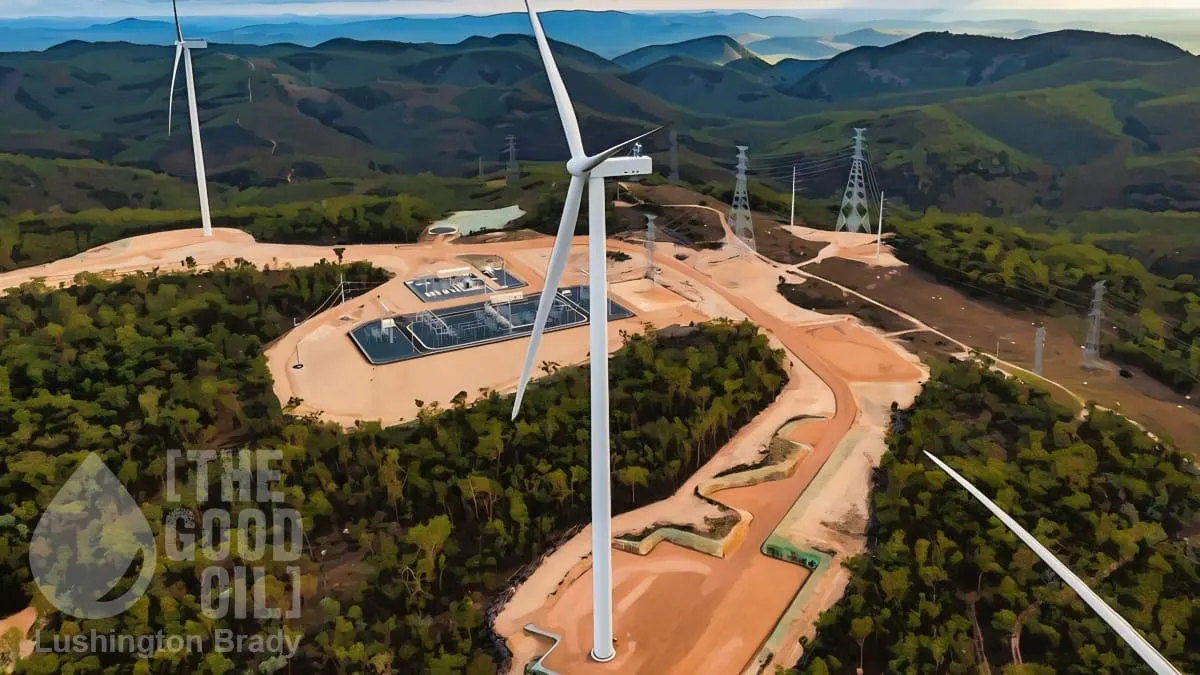
For years, the urban sophisticates of the green movement have sneered at the yokels who actually live in the natural environment. Especially for their growing resistance of the metastasizing blight of wind and solar farms, blanketing the countryside in glass, aluminium and whirling blades of bird-killing fibreglass. ‘Oh, those hicks,’ they sneered. ‘There’s nothing wrong with wind farms!’ Which begs the question, then, why they don’t build them on the heads above Manly, or some other inner-city teal-voting suburb where the house prices are higher than the cost of ‘renewables’.
A court in Victoria, of all places, has finally delivered rural communities some small vindication: yes, wind farms are a noise hazard. And, no, they’re not above the law.
A Victorian court has ordered a wind farm in the state’s south east to stop emitting noise at night… The Victorian Supreme Court today found the noise from the Bald Hills Wind Farm at Tarwin Lower created a nuisance to its neighbours ordering damages and an injunction.
John Zakula and Noel Uren took civil action after years of ‘roaring’ intermittent noise ruining their sleep and health. The very noise wealthy teals insist is no problem (and why would it be? The noise doesn’t reach where they live, after all). Justice Melinda Richards, on the other hand, didn’t mince words as she stated plainly what we knew already.
Noise from the turbines on the wind farm has caused a substantial interference with both plaintiffs’ enjoyment of their land. Specifically, their ability to sleep undisturbed at night in their own beds in their own homes.
The court ordered $260,000 in damages, including aggravated damages for the operator’s high-handed conduct, and a permanent injunction. They were also ordered to fix the noise at night, which they couldn’t, of course.
So, if Bald Hills can’t fix the noise, no more night-time operation. For the first time in Australia a wind farm has been told to shut up or shut down, at least at night.
The men’s lawyer Dominica Tannock believes it’s the first time in Australia a wind farm has been ordered by a court to reduce its noise levels […]
“It’s a momentous victory for my clients. They are vindicated, it has been a long battle,” she said.
“It’s not just a victory for Mr Uren and Mr Zakula but it’s for all those other people in small rural communities who are complaining and thought they could do nothing.”
This is good news for many rural communities and it isn’t some isolated whinge: rural communities across Australia are rising up against the ugly industrialisation of their backyards. From NSW’s New England to Queensland’s Darling Downs to South Australia’s hills, farmers and locals are mounting legal challenges, protests and class actions against sprawling wind and solar projects that destroy landscapes, slaughter wildlife and make life hell for those forced to live among the monstrosities. The corporate cowboys who’ve flocked to gobble the vast piles of taxpayer’s money thrown at them by idiotic governments are finally discovering that they won’t always get away with treating rural communities with arrogant disdain.
The Bald Hills operators thought they had a get-out-of-jail-free card: the notorious “Satisfaction of the Minister” clause.
An interrelated aspect of the wind farm’s defence that it had complied with its permit conditions was its submission that the minister, being the “final arbiter” of permit condition compliance, had, by expressing his satisfaction that the permit conditions had been complied with, conclusively determined the issue of permit compliance.
So, as long as some faceless bureaucrat in Melbourne signed off that noise levels were fine, neighbours’ sleepless nights were legally irrelevant. Property rights? Sleep? Health? Mere inconveniences to the greater green good.
Justice Richards wasn’t buying it, even if she clearly felt morally obliged to tip her wig to the green monomania. She noted renewable energy is ‘socially valuable’ but rejected the idea that the ‘social value’ to urban greens should come at the expense of red-eyed farmers.
It should not be a binary choice between the generation of clean energy by the wind farm and a good night’s sleep for its neighbours. It should be possible to achieve both.
Should be. But it isn’t, because these projects aren’t built for practicality. They’re taxpayer-subsidised totems to satisfy the boutique climate anxieties of wealthy inner-city greens who’ll never have a 200-metre turbine thumping outside their Toorak or Paddington terrace. Rural communities carry the burden: the visual blight, the wildlife carnage, the property value crashes and the constant low-frequency noise that drives people mad.
Meanwhile, the operator, Infrastructure Capital Group, is ‘absorbing the judgement’. Translation: working out how to wriggle out of it while the subsidies keep flowing.
This case exposes the rotten core of the Net Zero cult. Urban elites virtue-signal with their EVs and solar panels while forcing ugly, destructive, unreliable industrial hardware onto productive farmland and pristine countryside. They never bear the cost. Farmers and rural battlers do: in lost sleep, lost amenity and lost livelihoods.
Bald Hills is a precedent. Corporate Australia now knows complaints must be taken seriously. Operators can no longer hide behind ministerial rubber stamps and pretend the victims don’t exist. Rural Australians are done being sacrificed on the altar of intermittent power fantasies.
Every wind project now faces the same risk: actual accountability. Neighbours armed with this precedent can demand real mitigation – or shutdowns. The green dream is meeting reality, one sleepless night at a time.
Long may the pushback continue. The countryside belongs to the people who live and work it, not urban ideologues chasing subsidies and Instagram likes.
![Marvellous Melbourne’s Big Day of Diversity [Updated]](https://storage.ghost.io/c/31/f4/31f4e20a-0315-499e-83ff-139e8eab53bf/content/images/size/w1304/format/webp/2026/10/The_GoodOil_YogiThemAgain.jpg)