Table of Contents
She may be young but she only likes old things
And modern music it ain’t to her taste
She loves the natural light
Captured in black and white
– Death Cab for Cutie, ‘Monday Morning’
For many young people, ‘analog life’ has a distinct appeal: as well as the vaunted ‘vinyl comeback’, there are thriving subcultures of young people rediscovering cassettes and CDs. Sometimes leading to the charming naivete of youngsters asking cassette forums, ‘How do I burn a cassette?’
For many, it’s not just ‘quirky’ nostalgia: some are turning back to physical media for music, films and books, simply sick of owning nothing. Not to mention the realisation that digital media can be remotely altered or deleted at a mega-corporation’s whim.
For some, too, it’s the appeal of a ‘slow life’, which has led to renaissance of film photography, with Sony making their first new film camera in decades (the company had to bring engineers out of retirement to regain lost skills and knowledge). ‘Digital detoxing’ has also seen the rise of ‘dumb phones’.
As cheekily as some manufacturers own the term “dumbphones,” others avoid or shun it. Maybe the better term would be “self-assured phones.” These phones aren’t attention-hungry and insecure like other phones, demanding your eyeballs at every second with the easy-access promise of TikToks and Reels and Pokémon GO.
They just work as phones plus a few other tools – a basic text messaging, calculator, notes, a clock, an alarm, and perhaps a camera. No web browser or unbridled app store or social media apps to tempt you […] like any addictive behavior, it’s hard to go cold turkey when a high-powered portal to every addicting app – a smartphone – is right there on your desk or in your pocket.
If you find your phone taking up too much of your life and simply ignoring your smartphone’s more addictive qualities isn’t working for you, try dumbing down your life with a dumbphone.
For many parents, dumphones are attractive because they still allow kids to be in touch, without the 24/7 access to social media and cameras, which is a much more attractive option than the Albanese government’s heavy-handed ‘digital ID’ spyware push.
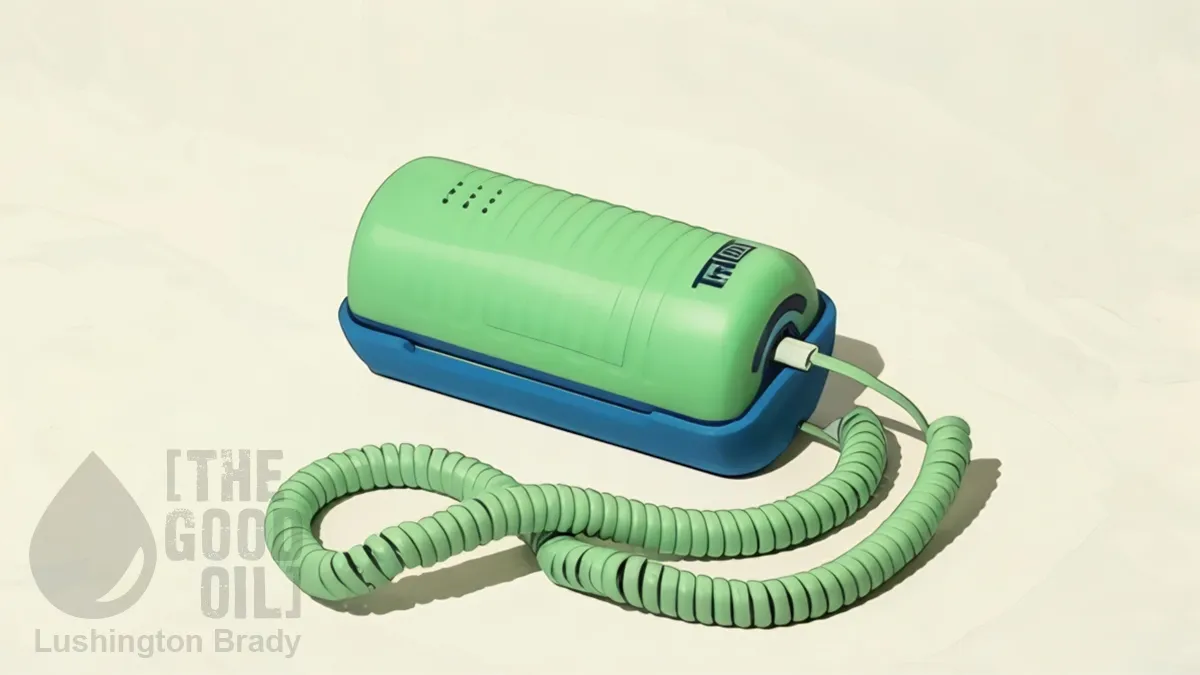
One startup is going a step further: not just a dumphone, but a clever bit of retro chicque that takes you all the way back to the glory days of idly twirling the phone cord while you’re chatting – and slamming down the receiver when you really, really need to.
As of last year, almost 80 per cent of households in America did not have a landline. Now, a startup called Tin Can is endeavouring to revive the landline with its first batch of corded devices that harken back to a simpler time of communication […]
Whilst some parents are dusting off old landlines, so kids can chat with friends without handing them a smartphone, Tin Can wants to be the upgraded version, according to Fast Company. The phones retail for $75, with a bright, retro 1980s design… that also resembles a tin can, of course.
They operate on “Voice over Internet Protocol” (VoIP) rather than a traditional landline and plug directly into a router or Ethernet port. The company also plans to roll out a WiFi version in the future. Each device is assigned a unique five-digit code instead of a phone number. Usage is free, although a planned upgrade that allows dialing real phone numbers will cost $10/month.
And here’s a cool feature for parents: they can toggle on and off when the Tin Can is available to use via an app.
Sadly, the phone hasn’t gone completely retro: calling numbers is done by ’80s-style push-buttons rather than a classic dial. But, hey, we can’t have everything.