Table of Contents
It may surprise many people that the biggest single bushfire in Australian history was way back in 1851. It burned five million hectares: a quarter of the state of Victoria.
The biggest burning ever was in 1973–4, but no one’s ever heard of those because they burned vast areas of empty scrub. Similarly, the 2003 Alpine fires are barely remembered, despite burning 1.5 million hectares, because it was mostly mountain forest. The 2019 fires were a biggie, but, rather than a single event, were a series of fires spaced across a much vaster area of Australia.
Despite having the highest death toll, the 2009 Black Saturday fires were a relative tiddler, burning less than half a million hectares.
This suggests exactly what the problem is: fires are not getting bigger, but they’re burning in areas where there are suddenly a whole lot more people. The journals of the earliest European explorers record seeing smoke everywhere, suggesting that fire was more-or-less a constant, long before Europeans, let alone ‘anthropogenic climate change’. But that was a very, very sparsely populated Australia.
Australia today is exponentially more densely populated. More of that population is moving into once-empty rural districts, and many of them are people who’ve never dealt with bushfire in their lives and don’t build or adapt for them.
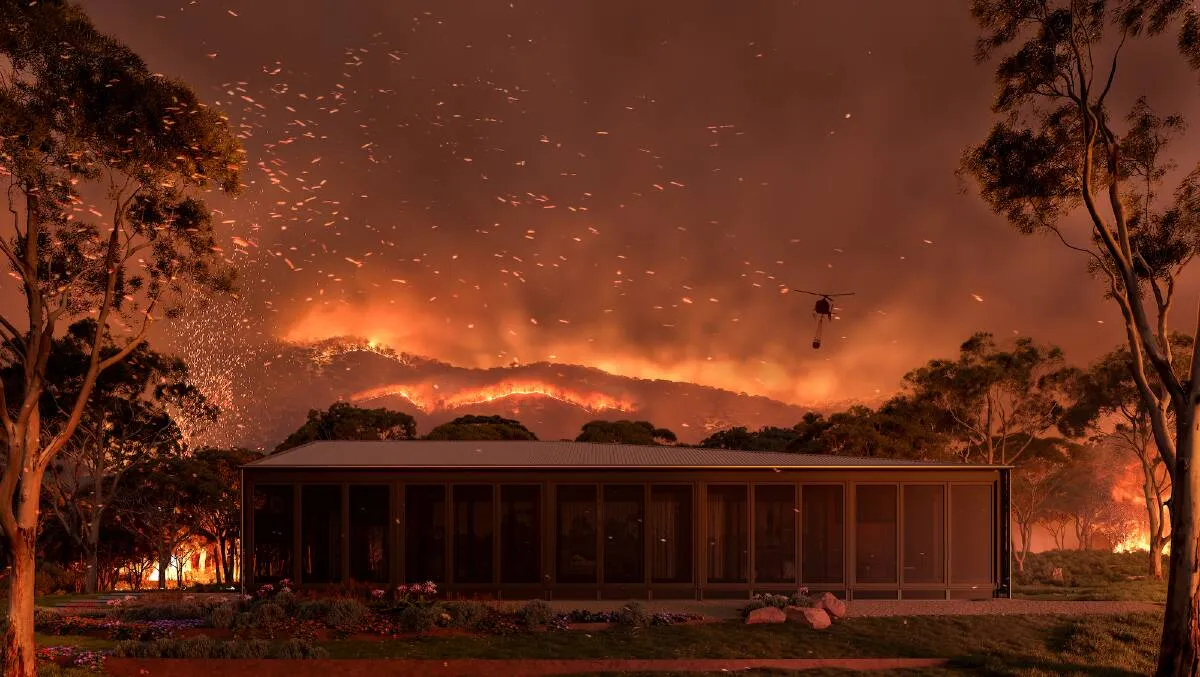
A 2025 research project centred on Harcourt in central Victoria found 90 per cent of homes scored only one bushfire-resilience star out of a possible five. At least 47 homes in Harcourt were lost to out-of-control bushfires on Thursday and Friday.
Bushfires are a wicked problem for Victoria, the fastest-growing state in Australia. New arrivals are increasingly moving to the regions, and the government is under pressure to build large numbers of new homes.
That’s the thing about the sticks: they burn. If you don’t want to get caught in a bushfire in what is one of the most fire-prone places in the world (largely thanks to the legacy of millennia of Aboriginal ‘firestick farming’), you have two options: either don’t live there, or live in houses well prepared for fire.
Too many people are doing neither.
In December, the Productivity Commission threw its weight behind the bushfire star-rating system and recommended mandatory disclosure of the rating when a house is rented or sold […]
The bushfire star rating system – known as a “resilience rating” – is being spearheaded by the Resilient Building Council, a coalition of researchers, banks and insurers funded by the federal government.
What if you’re buying, or already own, a house that isn’t bushfire resilient?
The app also generates a report with a mix of low-cost and more expensive recommendations on how to raise the star rating.
Most changes are small: installing mesh to stop embers getting into the gutters or roof, cutting down vegetation near the home, and installing fire-rated door seals.
“With bushfire, it’s often a lot of little things,” said [Resilient Building Council CEO Kate Cotter].
In Ash Wednesday, for instance, many houses burned down simply because they had a welcome mat – a highly combustible invitation for embers to move on in and set the place on fire.
Clearing around buildings is another step that many people don’t bother with. In the 2003 Alpine fires, we saw many homeowners clearing, as one said to me, ‘more bush than I’ve cleared in the last 20 years’. Others had access drives so overgrown that crews wrote off even attempting to go in to save property.
Yet, here we are, wasting hundreds of billions of dollars on vain efforts to slay the Sky Dragon and not spending a cent on a suit of armour.