Table of Contents
As I’ve repeatedly urged, there must be some kind of mechanism instituted to hold properly accountable those officials and professionals who turn obviously dangerous people loose to wreak mayhem on the innocent public. Essentially, it’s expanding ‘industrial manslaughter’ laws that can see bosses jailed for the deaths of workers, even if they were unaware of OHS breaches at their work sites.
Time and again, judges, bureaucrats, human rights activists and court psychiatric consultants blithely release on bail or parole people who are obviously dangerous. People who, to the surprise of absolutely no one, go on to commit even more egregious offences.
It’s long past time those responsible were held accountable.
A coroner has taken the first tentative steps to do so.
A coroner has referred the psychiatrist who treated Bondi Junction killer Joel Cauchi to the Queensland Health Ombudsman.
It was the first of 23 recommendations made by NSW Coroner Teresa O’Sullivan into the Westfield Bondi Junction inquest, which also included that the NSW government develop short-term accommodation options for those experiencing mental health issues and homelessness in the state.
Beginning in the 1980s and continuing for the last few decades has been the policy of ‘de-institutionalisation’. Posing as concern for the rights of the mentally ill and criminal – thus showing, yet again, the dangerous folly of pathological empathy – the policy is beloved of cost-cutting politicians and bureaucrats.
The result has been clear: record homelessness attributable in part to mental illness and drug use. And people walking free who clearly should not be. People like the demented tranny who randomly stabbed a Cambodian woman in Melbourne. People like Joel Cauchi.
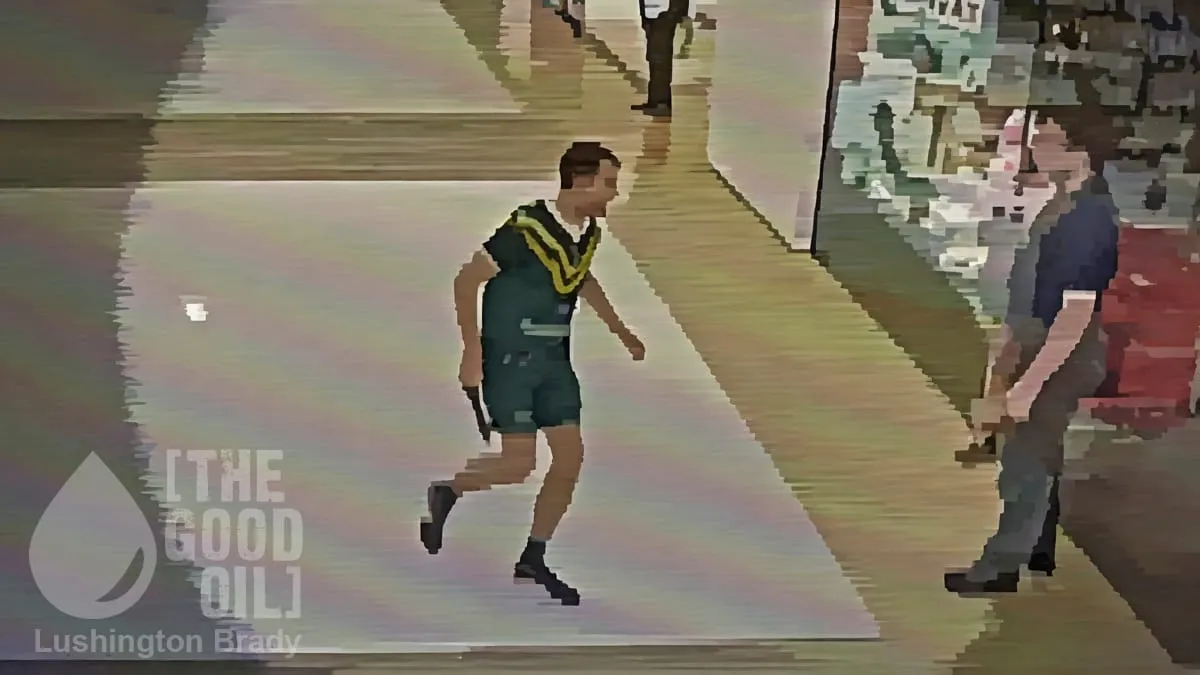
Cauchi, who was suffering from an acute episode of psychosis on April 13, 2024, stabbed and killed six people, at Bondi Junction shopping centre, with a 30cm hunting knife.
He injured another 10 people during the five-and-a-half minute rampage, which only ended when lone police officer Inspector Amy Scott shot him dead.
What was Cauchi even doing in the community? Was his psychotic rampage completely unpredictable – or should someone in a position of responsibility seen it coming?
From March 2012 to early 2020, Cauchi was a patient of Queensland psychiatrist Andrea Boros-Lavack at a Toowoomba-based clinic for chronic schizophrenia.
In 2019, Dr Boros-Lavack weaned Cauchi off his anti-psychotic medication entirely, however there were reported concerns Cauchi was “hearing voices”.
Kind of a biggie, one would have thought. Not to the psychiatrist, clearly.
The coroner accepted the counsel assisting’s submission that the psychiatrist “did not adequately monitor him for early warning signs of relapse”.
Dr Boros-Lavack’s evidence given to the inquest was considered “inconsistent” and “combative”.
“It was a major failing that Dr Boros-Lavack revised her view with respect to early warning signs and did not more proactively agitate for resumption of medication,” the coroner determined.
“I recommend that the Health Ombudsman of Queensland review Dr Andrea Boros-Lavack’s care and treatment of Mr Joel Cauchi.”
That should be just the start.
She also recommended the NSW government model short-term accommodation needs for those experiencing mental health issues in NSW, and support the establishment of long-term accommodation options.
In other words, re-open the institutions, which should never have been closed in the first place.
Australian Society of Psychiatrists Executive Director Dr Pramudie Gunaratne, outside the court, “It’s been too long that we’ve had people falling between the cracks of our mental health care system and if anything can come of this incredible tragedy it’s that we have a greater focus on what’s needed to bolster our mental health systems.”
She said it was clear from the findings that there were “so many gaps” between GP and specialist services, as well as public and private services.
And a complete lack of accountability from those responsible.