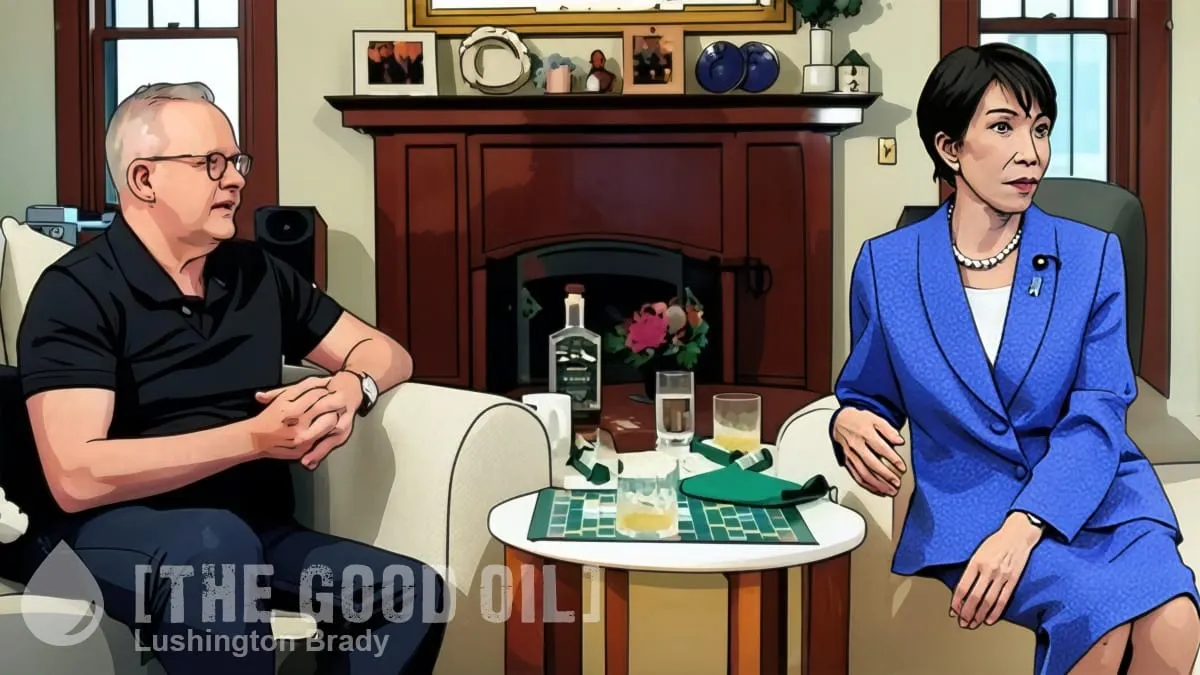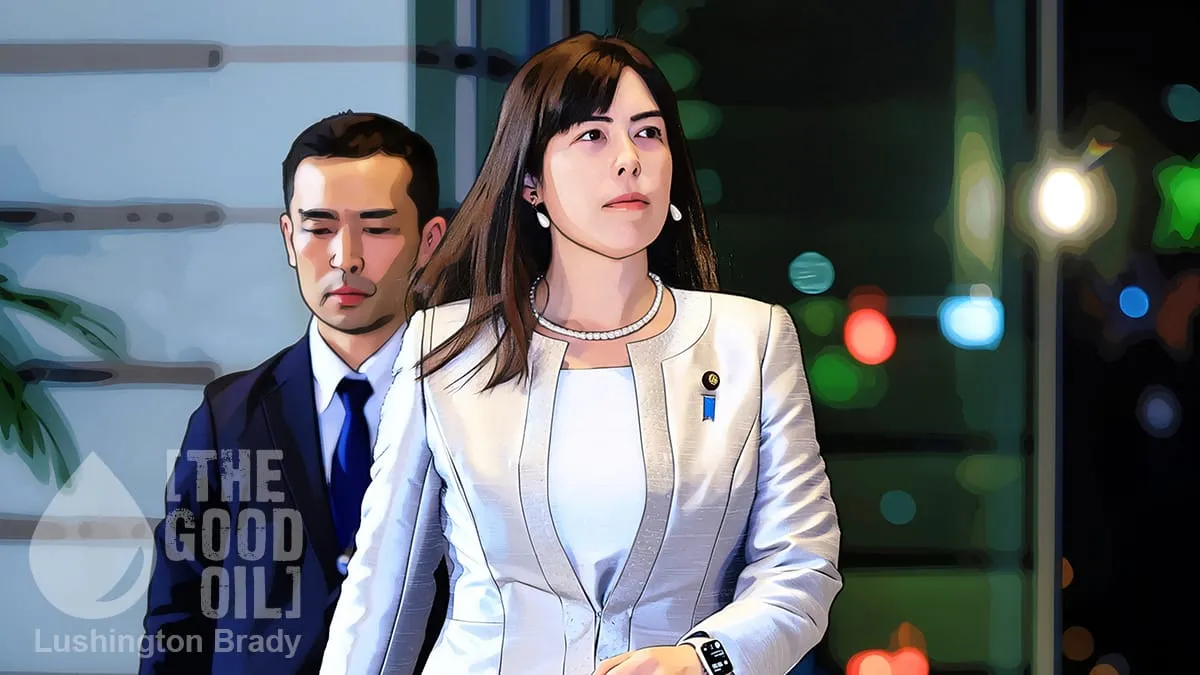
They say that politics is show business for ugly people. So, how do they explain Japan’s Minister of State for Economic Security Kimi Onoda?
Ms Onoda is far from just easy on the eye, though. She’s also a solid conviction politician who is not only committed to PM Sanae Takaichi’s policies on keeping Japan Japanese, but admirably forthright. When busybodying foreign activists tried to finger-wag Japan on its ‘problematic’ popular entertainments, Onoda had a blunt message: “Shut up. This is Japan.”
If only we in the West could have politicians so committed to defending our own cultures.
A self-proclaimed otaku [a Japanese term that refers to a person with an intense, obsessive passion for a particular hobby or interest – most commonly anime, manga, video games, cosplay, or related Japanese pop culture] with prior experience in anime and game production, Onoda pushed back against growing external demands to alter Japanese content. Her widely quoted line – paraphrased as “Shut up. This is Japan” or “Enough already – this is Japan” – underscored a clear principle: Japan’s cultural exports succeed because of their authentic creativity, not through compliance with foreign standards.
Japan has so far avoided the worst of the social chaos that mass low-skilled immigration from incompatible cultures has inflicted on Europe, North America and Australia. So far. But the rumblings of the mass immigration tsunami which has engulfed the West already have the Japanese on edge. Foreign residents have risen from 2.23 million to 3.95 million in a decade and now make up about three per cent of the population. Projections suggest that figure could hit the OECD average of 10 per cent by 2070 if nothing changes. The Japanese government has decided it will not let that happen without a fight.
Onoda, the youngest member of the new Takaichi cabinet and a former game developer turned politician, has been handed the job of tightening rules on foreign nationals. At her first press conference, she was blunt about the problems already appearing.
“Crimes and disruptive behavior by some foreign nationals, as well as inappropriate use of public systems, are causing anxiety and a sense of unfairness among Japanese citizens,” Onoda said on Oct 22 at her first news conference since her promotion.
She expressed her intention to review existing systems and policies to address these concerns.
She has signalled a review of systems that allow permanent residency too easily, plans to raise income and Japanese-language requirements for long-term stays, and measures to crack down on foreigners working in jobs for which they have no visa. Unpaid national health insurance premiums and even small medical debts will now factor into residency decisions. The residency period needed for citizenship is also under review.
Hiroshi Hiraguchi, the new justice minister, also addressed the Takaichi administration’s focus on foreign national policy during his own news conference on Oct 22.
He revealed that Takaichi had instructed him to cooperate with Onoda to “strengthen measures against illegal stayers” and “enforce strict immigration control.”
A nationwide survey by the Mainichi Shimbun found strong public backing for this approach. Seventy-one per cent of respondents approved of stricter policies on foreigners, with concerns focused on land purchases, overtourism, bad manners and pressure on housing and services. Even among those who do not support the government overall, approval for tighter controls ran at 45 per cent.
Japan is barely beginning to feel the disruption that the West has already absorbed in full. Crime rates, welfare dependency, parallel societies and collapsing social trust have become everyday features of life in many Western cities after decades of open-border policies sold as compassion or economic necessity. Japanese leaders are acting while the numbers are still manageable and before the problems become entrenched.
The same clarity shows in Onoda’s defence of Japanese pop culture. When Western activists and international bodies such as the UN’s CEDAW committee demanded that anime, manga and games be sanitised to fit foreign notions of gender and sexuality, she did not apologise or promise consultations. She told them to mind their own business. Japanese creative output succeeds precisely because it is Japanese, not because it has been edited to please overseas scolds and payment processors.
The contrast with the West could not be sharper. Our politicians have spent years cringing before every foreign pressure group, every activist NGO and every globalist institution that demands we rewrite our own stories, open our borders wider and treat any defence of national character as bigotry. Japan’s response is simpler and older: this is our country, these are our rules and outsiders who dislike them are free to stay away.
Onoda and Takaichi are not waiting for the problems to become unmanageable before acting. They are raising the bar for permanent residency, linking welfare use to immigration status, protecting Japanese land from speculative foreign buying and telling cultural busybodies exactly where to go. The result is a government that still believes its first duty is to its own citizens and its own civilisation.
The West could do with a few politicians prepared to say the same thing without apology. Instead we get lectures about diversity, while our cities change beyond recognition and our young men disappear from universities and the workforce. Japan has looked at the same trends and decided, early, that enough is enough.
That is Japan. If only it could be the rest of us.