Table of Contents
The story of humanity since the Industrial Revolution has been one of increasing abundance. When idle rich-kid Friedrich Engels wrote The Condition of the Working Class in England, what he was incapable of grasping was that, first, however miserable the new factory towns were, they were far better than what preceded them. No one had to be forced into the slums of the industrial cities: they flocked there because it was better than the rural slums they came from.
The other thing Engels and his fellow layabout theorist Karl Marx were incapable of grasping was that they were fulminating against the briefest snapshot of progress. The “increasing misery of the proletariat” was an illusion. Beginning in the late 19th century and taking off like a rocket in the second half of the 20th, human prosperity increased at a rate unimaginable for most of human history.
The proportion of the global population living in poverty has plummeted in the last 50 years or so. While some indeed remain in poverty, they’re fewer than ever before – and becoming fewer by the decade. Especially children living in extreme poverty.
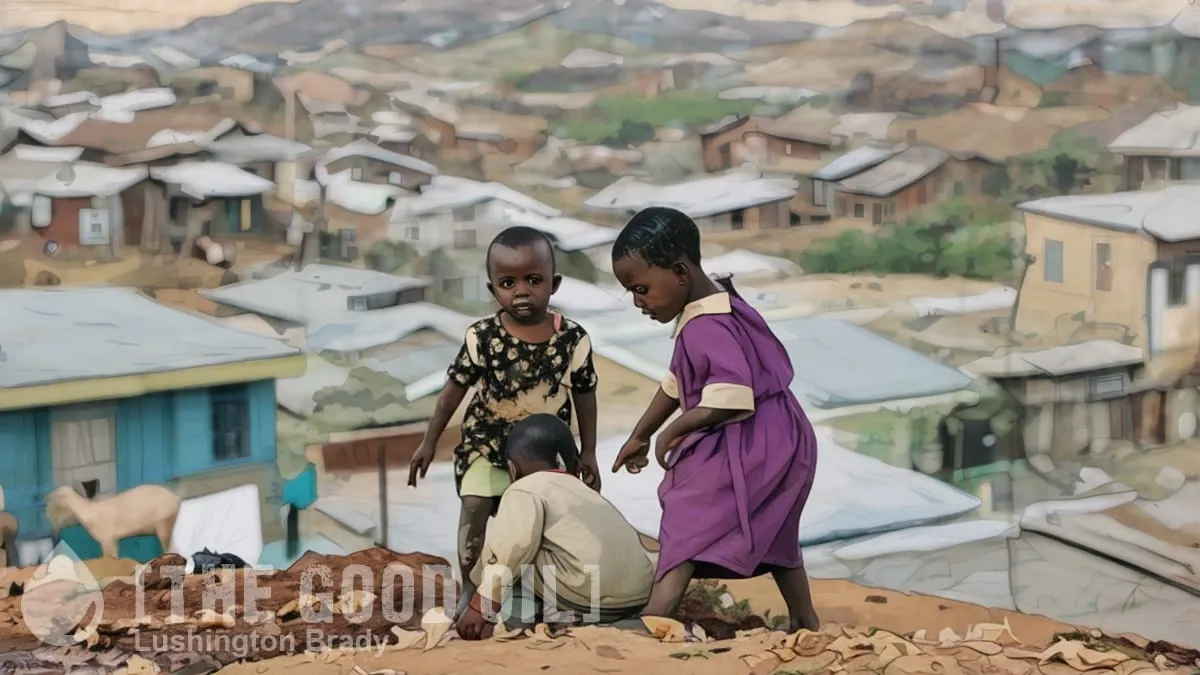
Around one in five children today are living in extreme poverty, according to new World Bank-UNICEF research. In 2024, an estimated 412 million children aged 17 or younger were residing in households living on less than $3 a day, the extreme poverty line used for low-income countries.
If that sounds bad – and, sure, we’d all like it to be better – bear in mind that just a century ago, three times as many of all people were living in extreme poverty. Given that children are disproportionately affected, we can assume that the rate of child poverty was much higher.
We haven’t eliminated extreme poverty, but we’re working on it – and still succeeding. Children continue to be disproportionately affected.
Globally, child poverty has been on a steady, if slow, decline since 2014, when an estimated 507 million children lived in extreme poverty. However, the pace of poverty reduction among children has been slower compared to the general population. Children continue to be disproportionately affected, comprising more than 50 per cent of those in extreme poverty, although their share of the global population is just 30 per cent.
The biggest part of the problem is that extreme poverty is stubbornly persistent in certain areas.
Child poverty rates vary substantially across regions. While Sub Saharan Africa is home to about 23 per cent of the world’s population of children, it is home to about three quarters (over 312 million) of all children living in extreme poverty. At around 52 per cent in 2024, the extreme child poverty rate in the region remains the same as in 2014.
South Asia and East Asia and the Pacific are estimated to have experienced important reductions in the child poverty rate over the period 2014–2024. In South Asia, extreme poverty was cut by more than half in the last decade, with India seeing the largest reduction in the number of extreme poor children in the region.
In contrast, extreme child poverty in the Middle East and North Africa region is projected to have increased over the same period. The extreme child poverty rate is projected to have almost doubled between 2014 and 2024, increasing from 7.2 per cent to 13.3 per cent.
So, what did South and East Asia do, that Africa and the Middle East can’t or won’t?
Addressing structural inequalities, strengthening social protection, and prioritizing vulnerable regions like Sub-Saharan Africa are essential to tackling child poverty and ensuring every child has the opportunity to thrive. Ending child poverty requires a collective, sustained commitment from global and national stakeholders.
Asia, we are told, reduced poverty by rapid economic growth driven by industrialisation and export-led strategies, supported by coordinated policies, increased investment in human capital like education, and significant public investments in infrastructure. Building good governance structures was vital as well.
Africa and the Middle East need to learn to fish, instead of just begging for fish from the rest of the world.