Few things are likely to shake a conviction in natural justice than monsters who live to a ripe, old age and die in their beds. While there’s some slight satisfaction that Stalin died in agony (“He literally choked to death as we watched,” his daughter said), exacerbated by the fact that all the best doctors had been shot or imprisoned on his orders, for every Mussolini dying a justifiably brutal death, there’s a Mao living to old age and dying more-or-less peacefully.
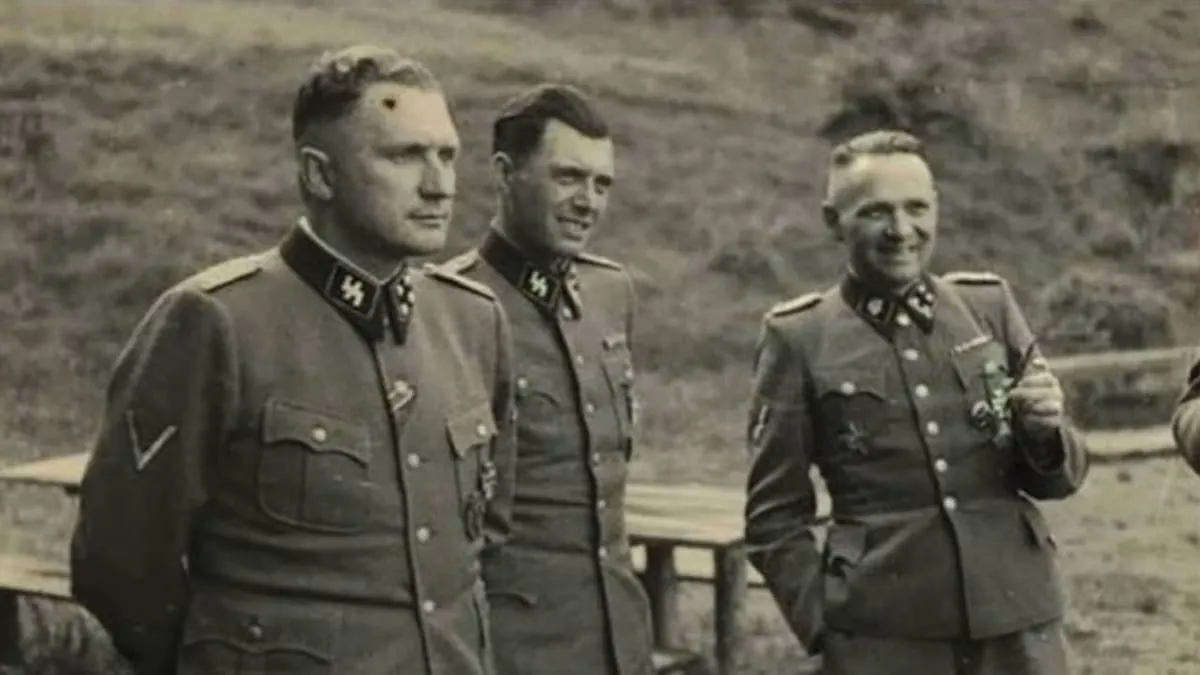
While Hitler was driven to suicide as the approaching Russian army pounded his headquarters with missiles and artillery from just a few blocks away and his henchmen were tried and executed over the following year, many of the monsters they’d enabled fled justice, often for the rest of their lives. Few were more monstrous than Josef Mengele. Mengele escaped justice entirely, dying of a stroke while swimming at a Brazilian beach in 1979.
But for Switzerland’s notorious secrecy, he might have been apprehended decades earlier.
The Swiss Federal Intelligence Service has said it will finally open long-sealed files on the notorious Nazi war criminal Josef Mengele, but without saying when.
Mengele fled Europe after World War Two, but for years there have been rumours that he spent time in Switzerland, even though an international warrant was out for his arrest.
Historians have repeatedly requested access to the files, but until now the Swiss authorities have refused.
The files have been so far locked away until 2071. The grounds given are ‘national security’ and protecting the extended family. But is it really to spare Switzerland international embarrassment?
After the war Mengele, like many high-ranking Nazis, quickly changed both his uniform, and his name.
With the help of his false identity, he was issued Red Cross travel documents at the Swiss consulate in Genoa in northern Italy, and used them to flee to South America.
The Red Cross intended the documents for thousands of people across Europe who had been displaced or made stateless by the war, but Nazis seeking to escape prosecution also managed to acquire them, something for which the Red Cross has subsequently apologised.
But the Swiss connection has always lingered. Especially as it transpires that he used those documents to travel with what seems like incredible ease, including to Switzerland at least once and allegedly multiple times. We’ve known since the 1980s that Mengele enjoyed a skiing holiday in the Swiss Alps with his son Rolf in 1956. That was before the international warrant. What historians have long suspected is that he returned in 1961, after the warrant was out.
Swiss historian Regula Bochsler […] while researching Switzerland’s possible role as a transit country for fleeing Nazis, discovered that in June 1961 the Austrian intelligence service warned the Swiss that Mengele was travelling under an assumed name, and might be on Swiss territory.
Meanwhile, Mengele’s wife had rented an apartment in Zurich, and applied for permanent residency.
“There seems to be evidence Mengele was planning a trip to Europe in 1959,” the historian told the BBC. “Why did Mrs Mengele rent an apartment in Zurich?”
The apartment was in a modest suburb, and the Mengele family had the wealth for something much fancier. But it was close to the international airport.
Bochsler was refused access to Switzerland’s files on Mengele. In 2025, so was fellow Gérard Wettstein.
“It seemed ridiculous,” he told the BBC. “As long as they are closed until 2071, it fuels conspiracy, everyone says ‘they must have something to hide’.”
Wettstein challenged the decision by taking the Swiss authorities to court, an expensive process for which he sought crowdfunding. “We raised 18,000 Swiss francs (£17,000; $23,000) in just a few days.”
And that was when the Swiss Federal Intelligence Service finally changed their minds. In a statement this month which suggests full transparency might yet take some time, it said: “The appellant will be granted access to the file, subject to conditions and requirements yet to be defined.”
Some historians suspect the files may contain references to foreign intelligence contacts, possibly Mossad, which was hunting Nazis at the time. Others, like Jakob Tanner who served on the Bergier Commission into Switzerland’s wartime record, see it as typical Swiss institutional instinct: national security and embarrassment trump historical truth every time.
After all, Switzerland’s record during and after the war is already uncomfortable enough. Jewish refugees turned away at the border. Banks happily hanging on to the assets of families murdered in the camps. Now we learn they may have quietly tolerated the presence of one of the most notorious war criminals on the planet, or at least turned a blind eye long enough for him to slip away again.
Mengele died free in 1979, buried under a false name in Brazil. His body was only positively identified by DNA in 1992. The files might finally tell us whether Switzerland gave him safe harbour, even briefly, after the world had put a price on his head.