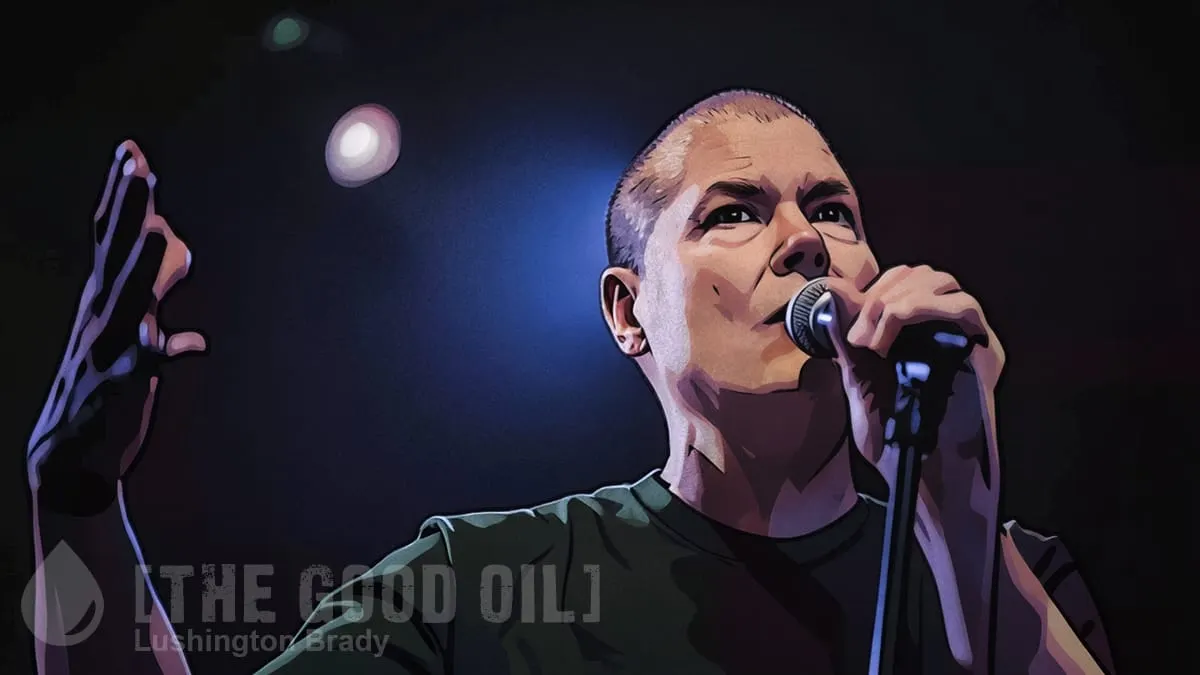
What do you get when you have a buzz-cut late-Boomer White kid with a classical music degree and a background in new wave bands, who turned his hand to hip-hop and fused it with jazz and witty, insightful snark? You get the infectious MC 900 Ft Jesus. His career was fleeting and fame was peripheral at best, but his scanty output remains some of the most gloriously unclassifiable music of the early ’90s.
In an era and genre already marked by mediocre uniformity, Mark Thomas Griffin took on a name straight from a televangelist fever dream and proceeded to blow the lid off rap Hell. Not many listened, but those who did knew they’d hit on something special.
Griffin was born in Kentucky in 1957, to an army officer father. Consequently, his family moved frequently, until eventually settling in Dallas in 1979. Griffin was classically trained on the trumpet and later took out a BA in music, then an advanced degree in music at North Texas State University. He cut his performing teeth in local Dallas new-wave bands, as well as backing jazz players and even Engelbert Humperdinck.
But it was while he was working at a local record store that he decided nothing he was playing in the store was really worth hearing. So, in true punk DIY style, he set about fixing that himself. His stage name was taken from a sermon by famed televangelist Oral Roberts. Roberts proclaimed that he had received a vision of a 900-foot-tall Jesus, who commanded him to build a hospital (CityPlex Towers) on the campus of Oral Roberts University.
His 1989 EP Born with Monkey Asses was a homemade calling card. Signed to Nettwerk/IRS (formerly home to REM and the Cramps, among others), he unleashed Hell with the Lid Off with DJ Zero in 1990, a bracing collision of industrial beats, hip-hop, jazz scraps and razor-sharp spoken-word rants. “Truth Is Out of Style” became a college-radio staple and Spike Jonze-directed video favourite. The album’s dense, sampled collages and sharp lyrics encompassing alienation, hypocrisy and the underbelly of the American Dream, felt like Public Enemy meets Ministry, with a side dish of Skinny Puppy, but with actual musical chops and a black sense of humour.
Welcome to My Dream in 1991 doubled down on the noir. Opening with the brooding jazz-funk of “Falling Elevators” (later used in a Levi commercial), the album then plunged into the funky “Killer Inside Me”, one of MC 900 Ft Jesus’ most infectious songs and biting lyrics. “The City Sleeps”, told from the point of view of a serial arsonist, got so much airplay it briefly sparked arson-copycat panic in Baltimore. Griffin’s “fascination with aberration” was never preachy: it was observational, ironic and darkly funny. Welcome to My Dream also started to break out of the industrial crunch to electronic jazz sounds in a similar vein to Herbie Hancock’s earlier experiments with synths, scratching and drum machines.
By One Step Ahead of the Spider (1994), with American Recordings, he’d moved further into the outfield of rap. “New Moon” opens the album with slinky jazz-noir spoken-word rants, while the album produced the closest thing he ever had to a hit: “If I Only Had a Brain”. The latter became his biggest MTV moment. Beavis and Butt-Head even mocked it, which in those days was basically a knighthood. The album’s range, from sharp poetry to instrumentals, showed an artist refusing to repeat himself. Critics called it literature on jazz; fans just knew it was smart, weird and utterly original.
Then, in 2001, he walked. Label interest had dried up while he was trying to finish a fourth record. So had his own.
“I lost my sense of humor about it,” Griffin later said. The project that once let him be funny and dark had stopped being fun. So he retired, got a commercial pilot’s licence and hoped to teach flying – and then fate struck again. A few months later, 9/11 happened, and suddenly flight instructors were out of demand and out of jobs.
Griffin floundered, battled the bottle, then sobered up and took day jobs: Amazon warehouse, Borders bookstore, later Lucky Dog Books. In 2007 he started DJing weekly at a Dallas dive called Lee Harvey’s, keeping one toe in the game without chasing the ghost.
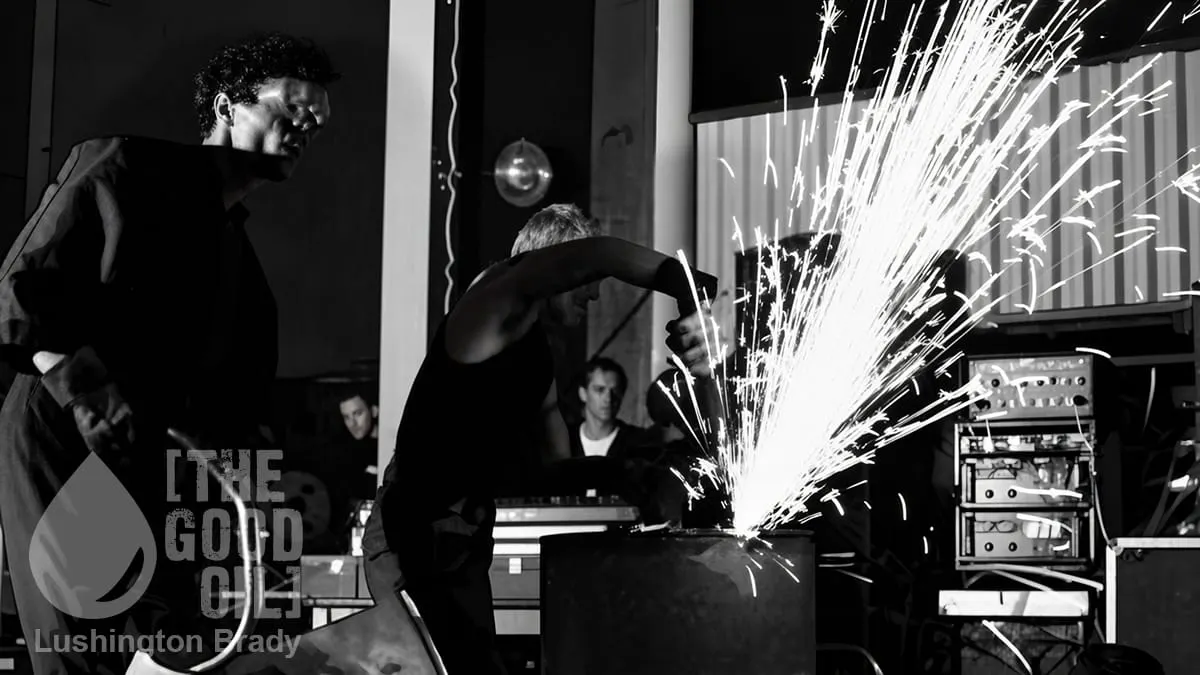
After a lost decade, independent label Nettwerk expressed interest in his unfinished fourth album. Around the same time, Griffin announced a one-off show at Dallas’ Kessler Theater with a quartet: original touring hands Chris McGuire and Greg Beck, plus tech wizard Wanz Dover to nail the electronic bits live. February 3 was sold out and the crowd gave him an ovation. Only a limited series of gigs followed, drying up altogether in 2018.
“I don’t want to be one of those geezer bands, where the tempos are all half what they should be,” he said.
He was true to his word: despite talk of new touring and recording, Griffin’s Facebook page has occasional T-shirt releases or vinyl reissues listed. The music biz has moved on and, so, it seems, has he.
MC 900 Ft Jesus never sold millions, never chased trends, and never pretended to be anything he wasn’t. In an industry that now rewards algorithmic slop and performative outrage, his three albums stand as proof that genuine weirdness, musical skill and lyrical bite could once carve out a cult following without compromising an inch. He blended hip-hop, jazz, industrial and spoken-word poetry at a time when genre walls still mattered, and did it with more wit and insight than most of his peers. The fact that he walked away rather than dilute the vision says more about artistic integrity than any streaming number ever could.
These days the name draws blank stares from anyone under 40. That’s their loss. Somewhere in Dallas, Mark Griffin is probably still behind a counter recommending books or spinning records for the faithful who remember when music could be dark, funny, smart and unapologetically strange all at once. The 900-foot Jesus may have stepped down from the stage, but the sermons he left behind still hit harder than most of today’s chart-toppers. Long may the cult endure.