Table of Contents
When the A Game of Thrones hysteria was at its height, a filmmaker friend of mine said to me, “It’s exploitation cinema for people who wouldn’t be caught dead watching exploitation cinema.” The sort of people who would never have heard of Jess Franco, but who witness his influence on modern cinema without ever realising it.
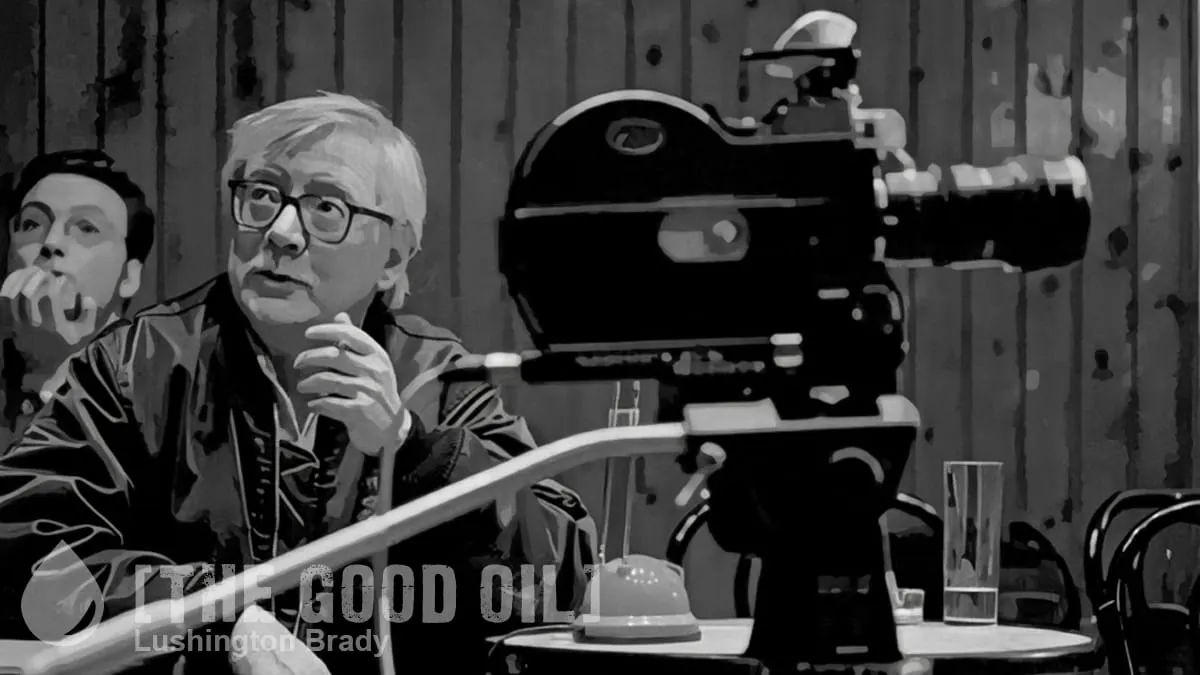
Jesús Franco Manera, better known as Jess Franco, stands as one of the most prolific and enigmatic figures in the history of cinema. His astonishingly prolific output – over 200 films in a near-60 year career – has been both reviled and revered, earning him the label of a “trash auteur” – a director who transforms low-budget, exploitative “trash” cinema into a personal, artistic expression through sheer vision and persistence.
His output encompassed a dizzying array of genres, including horror, erotica, exploitation, comedy and even musicals, often produced on shoestring budgets and under various pseudonyms to evade industry scrutiny or union restrictions. Not to mention financial responsibility: Franco was not averse to using footage shot for one movie and parlaying it into another, without informing the actors involved, let alone paying them.
Still, this exploitative cult auteur had a profound influence on depictions of eroticism in mainstream cinema. At times, his distinctive and delirious style, blending surrealism, sensuality and subversion, approached something near to genuine art. His in/famous scene of a man playing a saxophone into the crotch of a naked woman, in The Devil’s Honey (1986), is memorable if nothing else. Vampyros Lesbos (1970) went where even Roger Vadim dared not and changed the depiction of eroticism in the horror genre forever. Perhaps surprisingly, given his trash status, Franco was also a pioneer of female-centric storytelling.
So, who was ‘Uncle Jess’, as his fans affectionately called him?
Born on May 12, 1930, in Madrid, Franco’s early life was steeped in artistic influences that shaped his eclectic approach. Growing up in post-Civil War Spain under the repressive regime of General Francisco Franco (no relation), he pursued music at the Real Conservatorio de Madrid, mastering piano and harmony while also earning a law degree. His passion for jazz, a recurring element in his scores, led him to compose under pseudonyms and he penned easy-read novels as David Khune.
In the 1950s, Franco began his cinematic career as an assistant director, including for Orson Welles. After being kicked out of film school for non-attendance, he honed his skills through shorts and documentaries before debuting with Tenemos 18 años (“We are 18 years old”) (1959), a surreal road-trip comedy that hinted at his future penchant for absurdity and female-centric narratives.
In 1969, censorship under the Franco regime forced him into exile. Ultimately, exile was a rocket under his career, as he worked across Europe, collaborating with producers like Harry Alan Towers and Artur Brauner. This nomadic phase fuelled his most iconic works, often shot in Portugal, France, Germany and Switzerland, where he could explore taboo subjects freely.
At the heart of Franco’s oeuvre are key themes that intertwine eroticism, horror and psychological transgression. Eroticism is paramount, often portrayed not as mere titillation but as a hypnotic force driving characters into madness or liberation. Films like Vampyros Lesbos and Female Vampire (1973) fuse vampire lore with lesbian desire and depict bloodlust as an extension of sexual ecstasy. Sadomasochism, inspired by the Marquis de Sade, recurs in works such as Eugenie... the Story of Her Journey into Perversion (1969), where power dynamics and pain blur with pleasure.
Franco’s horror films often veer into the surreal, with themes of death, resurrection and contagion or death, e.g., the ‘contagious’ forces in Virgin Among the Living Dead (1971). Paternal perversion and female rebellion appear early, as in Tenemos 18 años, evolving into vengeful heroines in She Killed in Ecstasy (1970). Anti-authoritarian undertones critique fascism and religion, evident in his exile-era films that mock Catholic dogma and Spanish repression.
Soledad Miranda was one of Franco’s ‘muses’, appearing in many of his films. The Good Oil
Overall, Franco’s themes explore desire as a disruptive, dreamlike power that warps reality, reflecting his surrealist influences from Luis Buñuel and comic books.
Franco also developed an array of signature techniques, often perforce, but at the same time cleverly elevating budgetary constraints into stylistic signatures. For instance, improvised shooting, with minimal scripts, such as She Killed in Ecstasy’s mere eight-page outline, fosters a raw, dream-like quality, prioritising sensation over plot. Jazz-infused scores, many composed by Franco himself, add a rhythmic and hypnotic layer, syncing with visuals to induce a trance-like state. Fractured editing and non-linear narratives disrupt time, while low-budget effects, rather than being merely cheap, also enhance a cinematic dreaminess where reality and fantasy dissolve into one another. His infamous use of the zoom lens, while often derided as amateurish, nonetheless creates a voyeuristic intimacy, plunging viewers into erotic or horrific moments with disorienting speed.
Indeed, if anything sums up Franco’s films, it’s a voyeuristic quality that Spielberg’s early ‘immersive’ directing could only aspire to. Methods born of necessity (i.e., low budgets) are cleverly worked into a ‘cinema of drift and trance’.
Beyond technique, signature tropes recur through Franco’s films, forming a mosaic of obsessions. The most obvious being his depictions of feminity – women dominate most of his films, embodying erotic power – often as vampires or avengers – and subverting gender norms. Exotic European locales, nightclubs, S&M rituals and dream sequences recur. Horror films like The Awful Dr Orlof (1962) explored the kind of body horror that would make David Cronenberg’s name a decade later.
Although firmly fixed in the trash-cult subculture, aside from rare ventures into the mainstream like the Hammer Count Dracula (1970) (Christopher Lee’s personal favourite), Franco exuded an influence on wider cinema that escapes mainstream audiences, even as they unconsciously became exposed to them by Franco’s better-known followers. In the 1960s–1970s, as censorship waned, his films pioneered explicit erotic horror, paving the way for mainstream films incorporating erotic elements, from Basic Instinct (1992) to Quentin Tarantino’s nods in Jackie Brown (1997).
When Jesús Franco passed away in Malaga in 2013, he left a body of work that redefined exploitation cinema, infusing it with personal surrealism and erotic depth. His themes of desire and transgression, techniques of hypnotic abstraction and tropes of sensual horror influenced mainstream depictions of eroticism, from cult revivals to broader genre evolutions. Though often dismissed, Franco’s legacy endures in his delirious vision.