
Table of Contents
Like previous Diving into Obscurity subject Murray Grindlay, this week’s subjects have spent decades writing hits that you’ll all know in an instant, but you’d struggle to pick them out of a lineup. Especially next to the infinitely more recognisable faces of, not just the people their songs made famous, but even their own siblings, Malcolm and Angus Young of AC/DC.
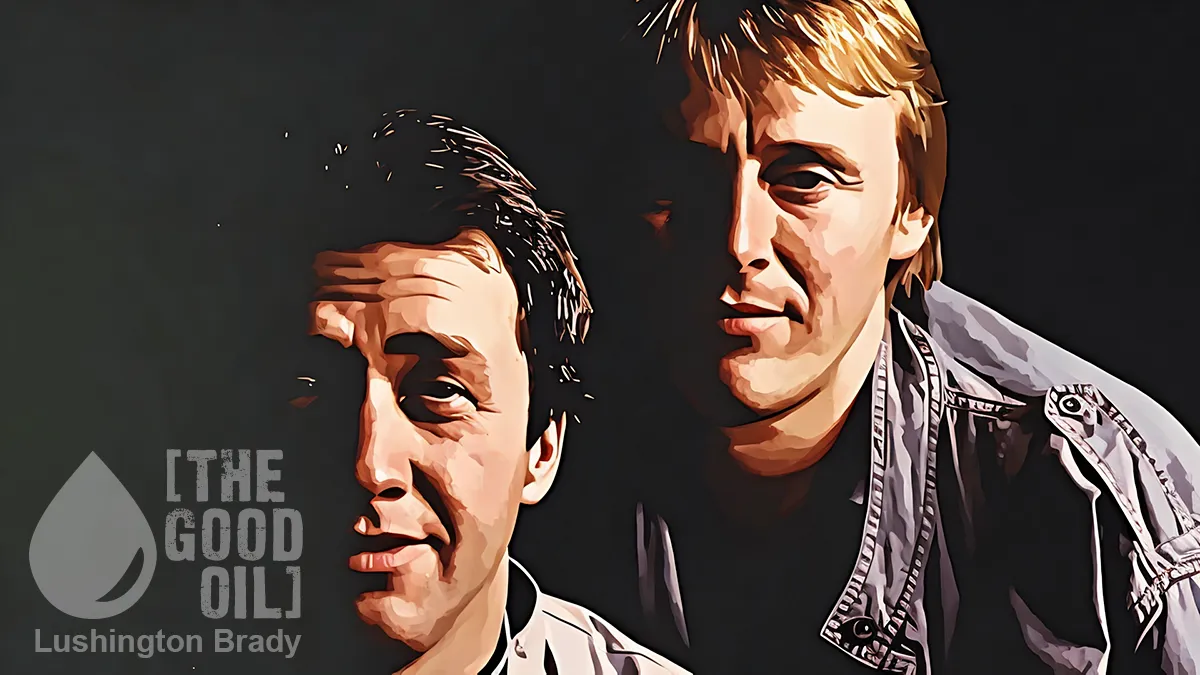
Today, I’m looking at the career of Harry Vanda and George Young: songwriters and producers who shaped an entire era of popular music while remaining largely invisible to the public.
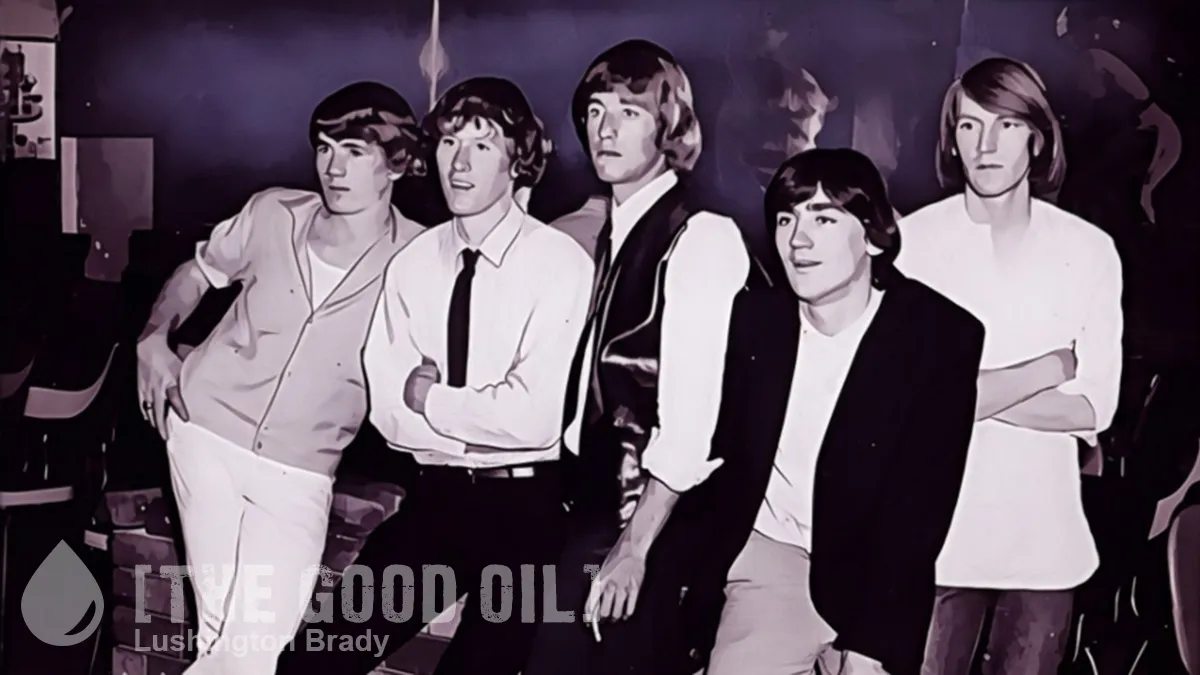
As founding members of the Easybeats, they began their careers in the mid-1960s as front-line performers, enjoying the screaming success of the global hit “Friday on My Mind”. Yet it was only after the group dissolved that the pair discovered their enduring role: architecting hit records from behind the curtain. As writers, producers, arrangers, mentors and sonic experimenters, they became central figures in Australian music and influential contributors to international pop.
To get an idea of just how influential, listen to this playlist on Spotify and be prepared to sing a long. A lot.
Their catalogue, extending from John Paul Young to AC/DC, from the Easybeats to enigmatic solo projects under the moniker Flash and the Pan, illustrates a rare combination of commercial instincts and creative restlessness. The story of Vanda and Young is ultimately a story of hitmakers who never stopped reinventing themselves, even while preferring to let others stand in the spotlight.
Like many of the mid-’60s Australian pop explosion, the duo’s career began in the ‘Ten Pound Tourist’ migrant camps. Harry Vanda (born Johannes van den Berg in the Netherlands) and George Young (born in Scotland) met in the Nissen huts of Sydney’s Villawood Migrant Hostel. It was at Villawood in 1964 that the Easybeats’ first rehearsals were held – in the camp’s laundry room.
The Young-Vanda partnership emerged as the creative core of Australia’s first internationally successful rock band. Their writing fused British pop sensibilities with exuberant rock energy – concise, melodic and full of youthful urgency. When the band moved to London in 1966, they sought global success and it arrived in the form of the immortal “Friday on My Mind”, written by Vanda and Young and produced by Shel Talmy. The song’s ringing guitars, propulsive rhythm and relatable working-class angst earned it hit status across Europe and the United States. It also set the template for the duo’s songwriting: economical yet emotionally evocative; musically tight yet bursting with personality.
As the Easybeats went into decline, dissolving in 1969, Vanda and Young instead pivoted to the next phase of their careers – one that would define Australian pop for decades. No doubt bitterer and wiser for the Easybeats’ struggles in England with management and labels, where Vanda and Young had already operated under various stage names (Paintbox, Tramp, Eddie Avana, Moondance, Haffy’s Whiskey Sour and Band of Hope), back in Australia they allied themselves with Ted Albert’s self-named independent label, music publishing and recording company.
Alberts soon became home base for their creative explosion. In an era when Australia’s recording industry was still comparatively small, Alberts’ set-up offered them unprecedented freedom: they could write, produce, experiment, mentor new artists and develop ideas with little constraint.
This period is often called the “Alberts sound” era and Vanda and Young were unquestionably its architects. Their approach combined tight riff-driven rock with a polished, radio-friendly sheen. Unlike many producers of the time, they were deeply hands-on – arranging parts, coaching vocalists and shaping the final mix with meticulous care. They were experimenters as well: tape loops, unusual guitar effects, layered harmonies and unconventional percussion frequently appeared in their productions.
But while their musical fingerprints became widely recognisable, the general public rarely knew their names. That anonymity suited them. They preferred working from the studio, allowing artists to bring their energy to the front while they built the musical infrastructure behind the scenes. The “Alberts Family” became a creative ecosystem on its own, creating a pipeline of hits for a roster of household names: John Paul Young, erstwhile Easybeats frontman Stevie Wright, glam rocker William Shakespeare, she-rockers Cheetah and the Angels, just to name a few.
Perhaps their most historically significant behind-the-scenes role was their work with AC/DC, formed by George Young’s younger brothers Malcolm and Angus. From the band’s earliest days, Vanda and Young served not only as producers but as mentors, shaping AC/DC’s raw power into a coherent sonic identity. Indeed, their stamp is so distinctive on Stevie Wright’s 1974 and ’75 albums, The Hard Road (which spawned the massive and ambitious three-part hit “Evie”) and Black Eyed Bruiser, that they could be taken for early AC/DC, which, in fact, is just what many early critics concluded, dismissing AC/DC as yet another Vanda and Young project.
Vanda and Young produced all of AC/DC’s classic early albums: High Voltage and T.N.T. (1975), Dirty Deeds Done Dirt Cheap (1976), Let There Be Rock (1977) and Powerage (1978). Today, those ‘blue roo’ Alberts pressings are highly sought after collectibles. It was the latter two albums, especially, which laid the foundation for AC/DC road to conquering America and global superstardom.
Vanda and Young helped refine the band’s style, emphasising clarity, groove and punch: qualities that would become AC/DC trademarks. Their minimalist recording philosophy, focused on capturing the power of a live band with little studio trickery, contrasted with the more layered pop productions they crafted for others. This versatility showcases their keen understanding of genre and artist identity.
Though the world eventually came to recognize Malcolm and Angus Young as rock icons, the contributions of George Young and Harry Vanda were instrumental in those formative years. Again, they were hitmakers in the background, shaping legacies without occupying the spotlight themselves.
The pair were far from content to rest on the hard-rock laurels of AC/DC, the Angels and Cheetah, or the short-lived glam of William Shakespeare. Vanda and Young also crafted a string of disco-pop hits in collaboration with John Paul Young (no relation). Tracks like “Yesterday’s Hero”, “I Hate the Music”, and the global smash “Love Is in the Air”, showcased the duo’s songwriting acumen: warm, melodic, rhythmic and full of hooks. Though John Paul Young was the face of these songs, the sonic identity belonged to the duo behind the console.
Their experimentation continued with the art-pop project Flash and the Pan. If Vanda and Young wanted public anonymity, Flash and the Pan was their ideal vehicle. Formed in the late 1970s as a studio-based project for their own material, Flash and the Pan allowed them to release music without promoting it, touring or making themselves public personalities.
With songs like “Hey, Saint Peter”, “Down Among the Dead Men” and “Walking in the Rain” (later a hit for Grace Jones), Flash and the Pan is a remarkable venture in early electronica. Their sound was unique: combining new wave, art-pop, electronic production, deadpan spoken or semi-spoken vocals and quirky storytelling. The result was music that felt both contemporary and entirely individual. The band’s name served as a humorous nod to the expression “flash in the pan,” implying something fleeting, although their impact proved more enduring.
Flash and the Pan’s music often explored surreal, cinematic themes – urban decay, existential confusion, societal commentary – wrapped in catchy melodies and bold production. Their voice as Flash and the Pan differed notably from their pop and rock output for other artists: it was drier, stranger and more ironic. Their success was especially strong in Europe, where they cultivated a devoted following.
Yet even at their peak, Vanda and Young avoided personal publicity. Setting a template for decades-later duo Daft Punk, few fans even knew what they looked like. In a music world driven by personality and image, Flash and the Pan remained intentionally essentially faceless – a rare feat and one consistent with their broader career philosophy.
Across multiple decades, Vanda and Young were pillars of not just the Australian but the global music industry. Their songwriting and production made careers. They bridged eras: from the beat-group 1960s to the hard-rock 1970s, from disco-pop to new wave. Few behind-the-scenes creators have matched their range or longevity.
Though they achieved success as performers early in their career, like ‘fifth Beatle’ George Martin, their enduring contribution is as creative engineers behind others’ successes. They exemplify the quiet power of songwriting and production – the ability to define an entire musical culture without needing to appear onstage.
Harry Vanda and George Young have one of the most remarkable partnerships in modern music, not because they constantly sought the spotlight but because they consistently avoided it. Their legacy demonstrates that some of the most influential artists are the ones the audience rarely sees. Operating behind consoles and in writing rooms, they shaped careers, genres and national musical identity. Their catalogue is both a chronicle of Australian pop-rock history and a testament to the enduring power of thoughtful, inventive and joyful songwriting.
The Vanda and Young partnership ended in the 1990s when the pair largely retired. Harry Vanda started Flashpoint Music in Sydney with his producer/engineer son, Daniel Vandenberg, setting up one of Australia’s premier private studios. George Young passed away aged 70 in 2017, just weeks before brother Malcolm. In keeping with his lifelong low profile, no cause of death was publicly announced and it is unknown if he was buried or cremated.
![[The Good Oil] Stuff Up of the Day](/content/images/size/w1304/format/webp/2024/09/Stuff-up-image-1.webp)


