Table of Contents
If someone deliberately chooses to end their own life, it’s suicide. No amount of dressing it up with fancy eupemisms like “Voluntary Assisted Dying” can change that. But “suicide” is a bad word: so bad that journalists’ ethics proscribe openly discussing it. Laws prevent assisting or encouraging suicide. Hence, “VAD” campaigners never, ever use the “S-word”.
When campaigners refuse to use plain language, but resort to fancy euphemisms instead, you can be sure there’s something very wrong that they don’t want to discuss.
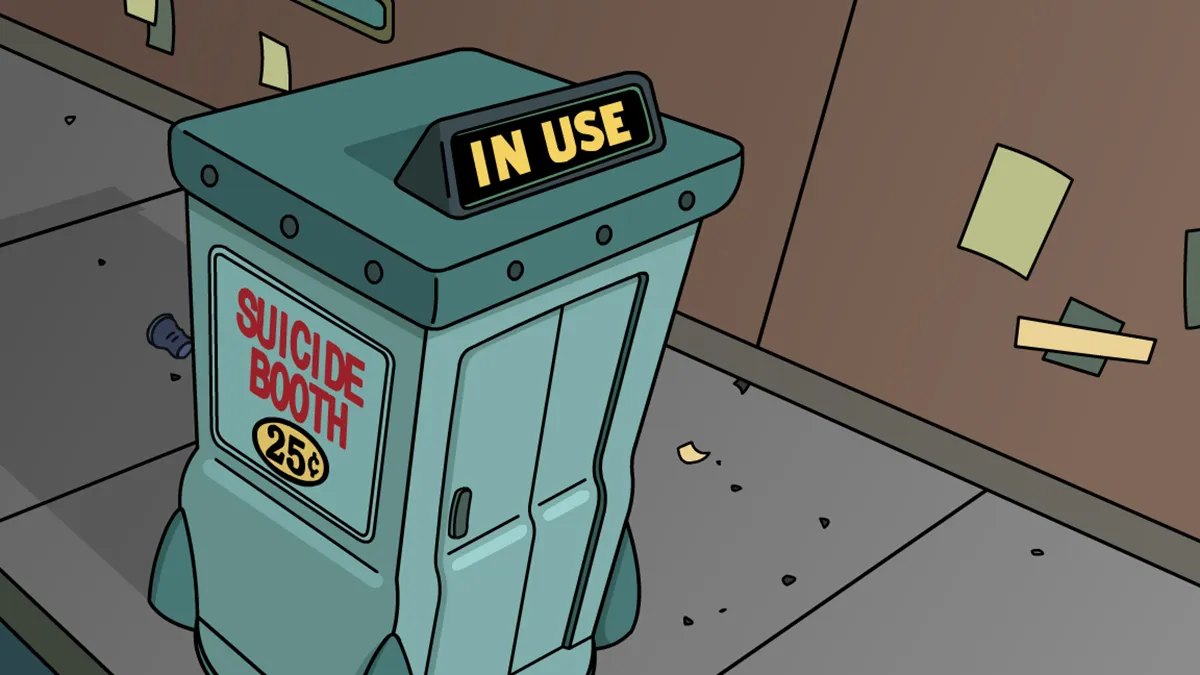
Because calling “VAD” “legalised suicide” suddenly makes it seem a whole lot less cuddly. And putting “suicide booth” in big, red letters on the front of your clinic isn’t going to do much for business.
A Swiss assisted suicide clinic where two US sisters are believed to have paid $11,000 each to die has cool white walls, elegant designer furniture – and a death room where patients can choose to die via intravenous drip or a lethal drink.
Hi, I’m Frau Tod, and I’ll be your death dealer today. Would you like to try our discount on hemlock, this week?
Laura Henkel, an Australian woman who allowed her filmmaker daughter to record her final moments at Pegasos, was seen laying on the death room’s bed during her final moments in December 2019.
She opted for death via intravenous injection, which can be seen beside her bed in an image from the documentary.
Henkel had just turned 90, was not suffering from any terminal illness, and said she was mentally and physically healthy for her age.
Here we see the motte-and-bailey gambit of the pro-suicide crowd exposed.
Advocates of “VAD” always resort to tear-jerking guff about “terminal suffering” and “imminent death”, and heart-rending anecdotes about “being left to die in agony”. But what they really want is for people to be able to off themselves whenever they just feel like it. Don’t believe me? Just ask Philip Nitschke, the rock star of the euthanasia movement:
All people qualify […] anyone who wants it, including the depressed, the elderly bereaved, the troubled teen.
Nitschke also advocates putting suicide pills on supermarket shelves. Pick one up with your next carton of eggs.
Advocates deceitfully get laws passed by hedging them with “safeguards” (as the Australian Medical Association points out, the very necessity of such stringent safeguards ought to be warning enough of how dangerous such legislation really is): “safeguards” which are watered down further and further, the instant the laws slither through. “Intolerable suffering and imminent death” becomes “suffering”, becomes “on demand”.
And, as the Swiss clinic shows, the approval process is further and further “streamlined”.
Pegasos approves all adults of ‘sound mind’ regardless of their country of origin or residence, the company boasts on their website.
A third party must be there to confirm and identify the person who took their own life. Pegasos advices patients who do not have a witness to contact another assisted dying organization called Exit for help. It is unclear whos served as witness for Ammouri and Frazier […]
Pegasos has no required waiting period for assisted suicide but does require consultations to be completed.
Suicide? Good. Out of the door. Line on the left. One cup of cyanide each. Next.
‘Pegasos accepts that some people who are not technically ‘sick’ may want to apply for a VAD. But this does not mean the person is ‘well’.
Daily Mail
Note how rubbery all of those criteria are.
Why not just cut to the chase and put Futurama style Suicide Booths on street corners. At least that would be honest.