Table of Contents
If you’ve ever whiled away a wasted hour or so chuckling through Terrible Real Estate Agent Photos, you’ll know that all manner of weird and whacky stuff shows up in real estate listing photos. Toilets in kitchens seem to be bizarrely commonplace, as are creepy doll collections that are apparently what passes for ‘ambience’ in some circles.
It’s not often, though, that you spot looted Nazi art while browsing through shots of ’70s kitchens and Garden Chairs of Solitude.
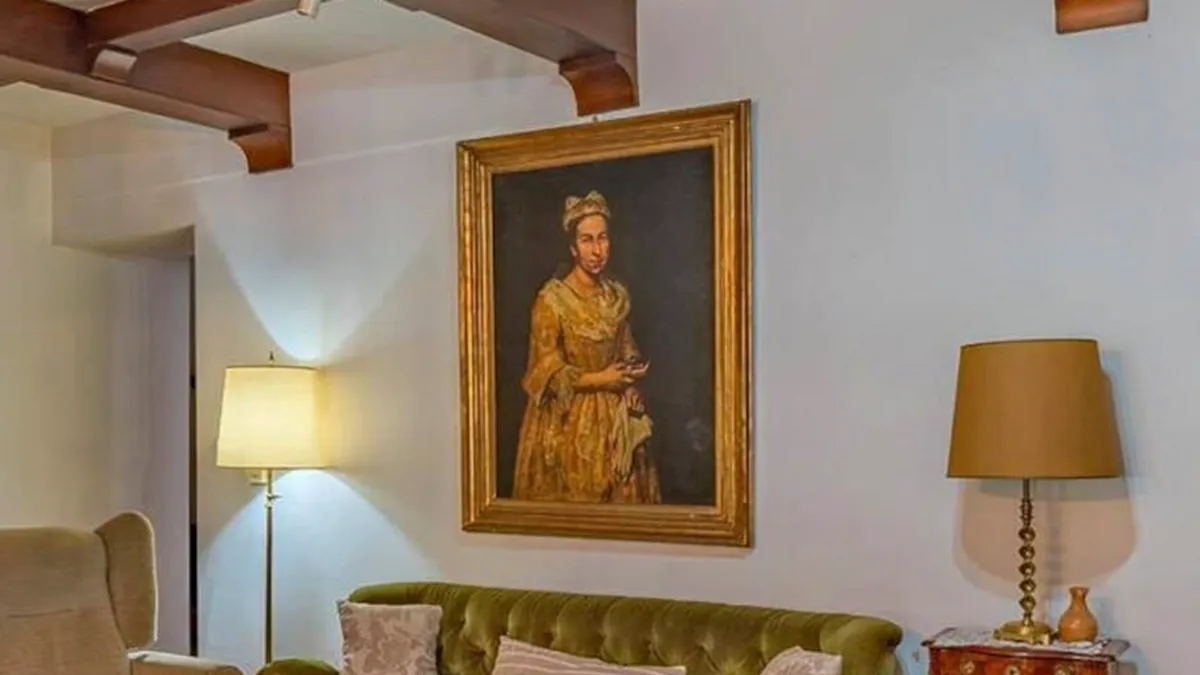
An 18th-century painting stolen by the Nazis during World War II was just rediscovered after it was spotted in photos of a house listed for sale in Argentina.
The painting, Portrait of a Lady by Italian baroque artist Giuseppe Vittore Ghislandi, was one of more than 1,100 seized from Jewish art dealer Jacques Goudstikker by the Nazis during the invasion of the Netherlands in 1940. Other pieces from Goudstikker’s collection were later recovered, but Portrait of a Lady remained missing for more than 80 years.
The painting was finally located by Dutch reporters who had spent years tracking it down. Now, Goudstikker’s sole remaining heir is hoping to finally get her father’s painting back.
It wasn’t entirely coincidence that the looted artwork was spotted, though. Dutch investigative reporters who’d spent nearly a decade looking for the lost painting had begun to focus on Friedrich Kadgien, a high-ranking Nazi and SS member who served as Hermann Göring’s financial advisor.
Göring was one of the many Nazi officials known to have taken some of the artwork in Goudstikker’s collection. And at least two pieces owned by Goudstikker, including Portrait of a Lady, were believed to have passed from Göring to Kadgien.
Like many Nazis, Kadgien fled to South America after the War. Documents showed that he took diamonds, jewellery and two stolen paintings with him. He died in 1978, leaving his property at the Argentinian resort town of Mar del Plata to his two daughters. When journalist Peter Schouten visited the house, a shadowy figure inside refused to answer the door. But Schouten spotted a golden lead: a “For Sale” sign in the garden.
So, he went back to his hotel and look up the real estate listing.
“We were scrolling through the photos when my husband suddenly said, ‘Look, isn’t that the painting?’” Schouten told ABC News. “I told him, ‘No, that can’t be true. The Dutch government has been looking for this painting for 80 years… it can’t just be hanging above a sofa in Mar del Plata.’ But there it was.”
The newspaper then sent the images from the real estate website to the Cultural Heritage Agency of the Netherlands (RCE), which affirmed that the painting in the house really was Portrait of a Lady. While the agency is certain of the painting’s legitimacy, it cannot confirm that it is definitely the stolen painting without examining it in person.
Kadgien’s daughters are refusing to talk to journalists via email and have blocked them on messaging apps. The estate agents, Robles Casas & Campos, promptly removed the photos containing the painting and the property listing from their website.
Goudstikker’s only heir, daughter-in-law Marei von Saher, is hoping to recover the painting – and other looted works the Kadgien family may still have squirrelled away.
Portrait of a Lady is not the only piece from Goudstikker’s collection that may remain in possession of the Kadgien estate. Documents show that he also escaped Europe with a 17th-century painting by Dutch artist Abraham Mignon.
It’s believed that this painting appeared in a Facebook photo posted by one of Kadgien’s daughters in 2012, but the current location of the work remains unknown.
Given the flood of Nazi fugitives who fled to Argentina after the War, who knows how many long-stolen artworks might be hanging on Buenos Aires’ living room walls. Maybe check the real estate listings for any sellers with German surnames.