Table of Contents
Every now and then, one serendipitously happens upon a book that profoundly shakes previously held beliefs. For many years I fully subscribed to the ‘alarmist’ narrative about climate change, in particular, and the environment generally. But then, in the mid-2000s, too many brute facts began to assault the armour of the narrative. My previously firmly held beliefs began to tremble.
Then, browsing the local library one day, a large-format book caught my eye: Bjørn Lomborg’s The Skeptical Environmentalist.
Reading it was a revelation. Lomborg systematically assaulted, in great logical detail and rigour and with peer-reviewed citations aplenty, nearly every platform of what he called “The Litany”. “The Litany” is the grimly familiar ‘green’ world view that the planet has fallen from a pre-industrial state of paradisaical grace to a Hell of ever-worsening environmental catastrophe. Tellingly, Lomborg didn’t – and still doesn’t – argue that everything environmental is just peachy-keen. Rather, things are better than they were even just a few decades ago and getting better.
Even on climate change, Lomborg is a believer: but not in ‘climate action’, as it’s practised. Lomborg argues that current strategies are wasteful and worse than useless. Instead of the futile, King Canute-like, strategy of throwing trillions at fruitlessly trying to stop climate change, we would be better off spending the money adapting.
The reaction from the environmental establishment was not debate but an attempted excommunication. Scientific American devoted a special package to attacking the book as biased and error-ridden. Union of Concerned Scientists accused him of misrepresenting science and overstating good news.
In Denmark the response went further. The Danish Committees on Scientific Dishonesty decided that The Skeptical Environmentalist was “clearly contrary to the standards of good scientific practice” and “objectively” fell within the concept of scientific dishonesty. Disgracefully, the committees based their finding on biased third-party critiques, presented no documentation of errors, and engaged in rank anti-Americanism, such as alluding to “powerful interests in the USA bound up with increasing energy consumption and with the belief in free-market forces.”
This was characteristic of every attempt to discredit Lomborg: no real attempt to disprove his actual arguments or evidence, simply scream ‘heresy!’
A year later Denmark’s Ministry of Science threw out the initial decision on numerous counts. They found the original decision “dissatisfactory” and “emotional,” but most importantly the ministry invalidated the decision because it was “not documented” and it was “completely void of argumentation” – something which a legally valid decision needs according to Danish law. The ministry sent the case back to the committees, which declined to reopen it.
In other words, called out, they simply resorted to sulking.
Two decades later, the world looks more like Lomborg’s spreadsheets than like the early-2000s apocalypse rhetoric. Emissions are rising more slowly than feared, climate-related disaster deaths have fallen, and poor countries still face more immediate threats from malaria, malnutrition and lack of basic infrastructure.
And Lomborg has found an unlikely and almost certainly unintentional ally.
Into this landscape, Bill Gates has recently stepped with a climate memo that reads uncannily like a Lomborg column.
Something that no doubts horrifies Gates more than catching the clap from a Russian sex slave.
On 28 October 2025, ahead of the COP30 summit in Brazil, Gates published “Three tough truths about climate” on his Gates Notes site. There he argues that although climate change will have serious consequences, “it will not lead to humanity’s demise,” and that people “will be able to live and thrive in most places on Earth for the foreseeable future.” He warns that an obsessive focus on near-term emissions targets has crowded out more effective ways to help people and calls for “a strategic pivot” toward improving lives, particularly in poor countries.
And that is exactly what Lomborg said 24 years ago.
“The biggest problems are poverty and disease, just as they always have been,” and limited resources should go to interventions that deliver the greatest gains for the most vulnerable. That is Lomborg’s central thesis restated by one of the most influential philanthropists on the planet
Enter the Climate Inquisition.
Gates’ memo has sparked outrage among climate activists for soft-pedaling catastrophe, for questioning temperature as the main metric of success, and for insisting that health and prosperity are the best defences against a warmer world.
That even Bill Gates is changing his tune underscores just how threadbare the supposed ‘consensus’ was, all along. And just how un-scientific ‘The Science’ really is.
There is a broader lesson. Modern societies claim to revere science, but too often turn scientific disputes into moral battles in which heretics must be shamed or silenced. Lomborg’s experience shows what happens when a researcher challenges a powerful narrative with inconvenient numbers. The attempt to punish him did not change the data. It only delayed a necessary conversation about trade-offs, priorities and the best use of scarce resources.
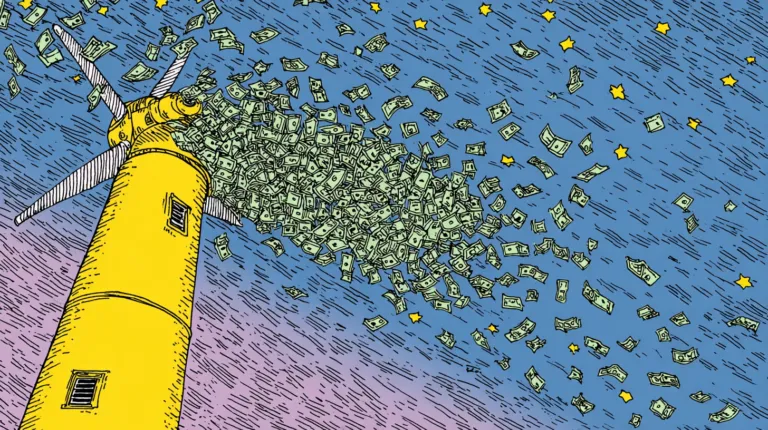
And saw trillions of dollars, which could have changed the world for developing countries, thrown away on worse-than-useless vanity projects.