Table of Contents
John McLean
Citizen typist. Enthusiastic amateur.
New Zealand’s latest political polls have spoken. Labour Party leader Chris “Chippy” Hipkins, currently languishing in the political wilderness, is the person whom New Zealanders would most prefer to be New Zealand’s prime minister. The same polls indicate that the Labour Party is New Zealand’s most popular political party.
With a general election scheduled for 7 November this year, Hipkins is therefore a person of significant interest, an individual worth understanding more about. The Man, the Myth, the would-be political Lazarus Legend.
Hipkins has of course already achieved an exalted level of fame, having risen to the dizzying heights of prime minister after Jacinda Ardern abdicated the throne – and abrogated everything else – at the beginning of 2023, the year of New Zealand’s last general election. Almost three years ago. My how time flies.
SHE WHO SHALL NOT BE NAMEDJohn McLean 5 October 2023
Hipkins is Ardern’s ideological twin and it’s well within the realms of possibility that he’ll be New Zealand’s next prime minister. Mainly because, far from being a party of principle, Labour will hop into bed with anyone and anything in order to regain political power. And with Winston Peters having now ruled out taking NZ First into coalition with Labour, the Māori Party or the Greens, the party political blocks have now squared off in the fight for 2026 general election victory. It’s a flat out race to the line. Nat/NZ First/ACT versus Lab/Māori Party/Greens. If the latter block wins, then Hipkins will be prime minister once again. Simple as that (unless it’s a UNIPARTY!).
So who’s this “Chippy” chap?
Hipkins was born and raised in the Hutt Valley. But he ain’t no working-class man or hero. His mother Rosemary Hipkins is a Critical Race Theorist who beavers away at the New Zealand Council for Education Research. She’s done so since 2001. That’s a quarter of a century of ardent educational activism.

It’s claimed that Chippy’s father Doug made woodworking kits and it’s from this wooden folklore that Chippy claims to be a “passionate” Do-It-Yourselfer. But in truth, Hipkins’ only knack is for performative politics and sponging from the public purse.
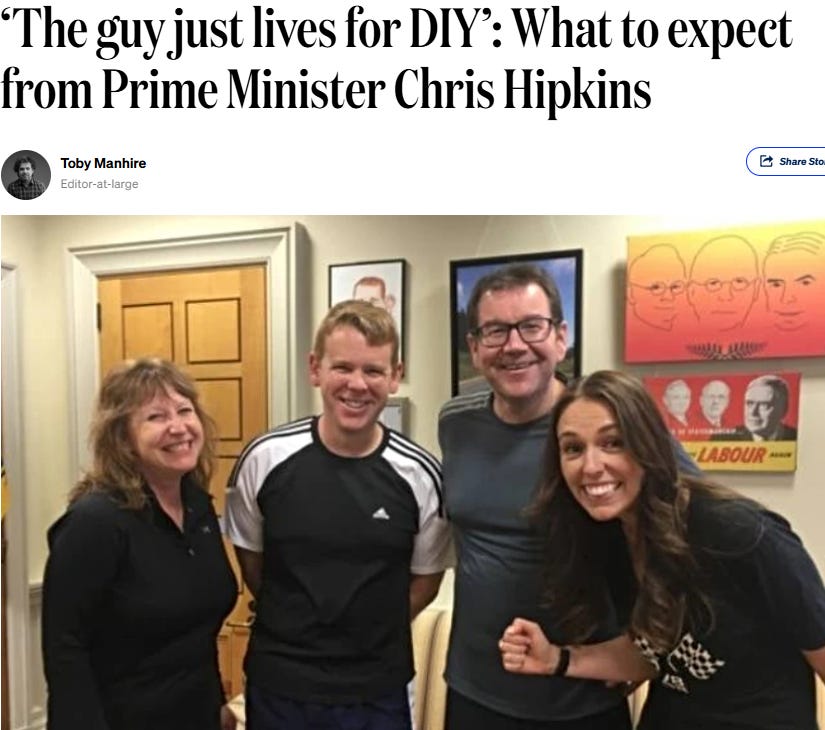
Chippy is just another student politician on steroids who’s never had a proper job. He went from student politics (BA in political science and criminology, from VUW), to working in parliament for Trevor Mallard and Helen Clark, to being elected to parliament (where he has remained ever since) in 2008.
Under the Labour-led coalition government that came to power following the 2017 election, and the Labour government following the 2020 election, Hipkins made a menace of himself as a multi-minister, leaving a trail of destruction and underachievement.
Hipkins’ initial ministry was as minister of education. In that capacity, he put indoctrination of New Zealand’s children and youths with Critical Race Theory and Māori separatism at the very heart of New Zealand’s education system (his mother must’ve been over the moon). He also instituted the disastrous (hugely expensive, now disbanded) “Te Pūkenga” scheme to merge New Zealand’s 16 polytechnics into a single centralized entity.
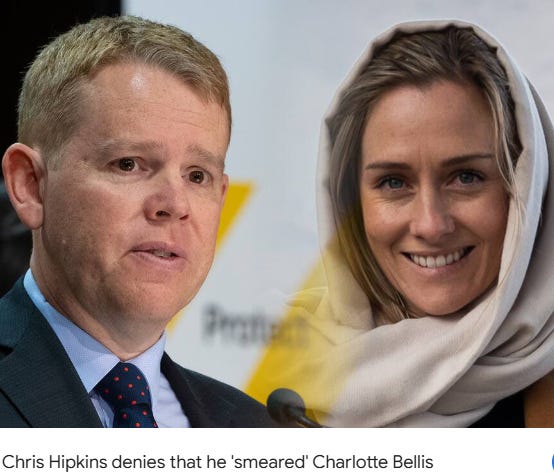
As minister of health from July 2020, Hipkins was the political architect of New Zealand’s divisive, authoritarian response to the Covid-19 virus – vaccine passes, banning everyone from New Zealand (except Ardern’s favourite DJs and the Wiggles for Neve), those protracted lockdowns, mask mandates, etc. He showed his true colours and vindictiveness by breaching the privacy of, and lying about, New Zealand journalist Charlotte Bellis. Charlotte had left Qatar for fear of falling foul of that terrorism-sponsoring Gulf State’s criminalization of unmarried women becoming pregnant. Hipkins unleashed on Charlotte for her intolerable insubordination to the Covidoxy. She’d displayed the temerity to complain about being barred from returning to New Zealand to give birth.
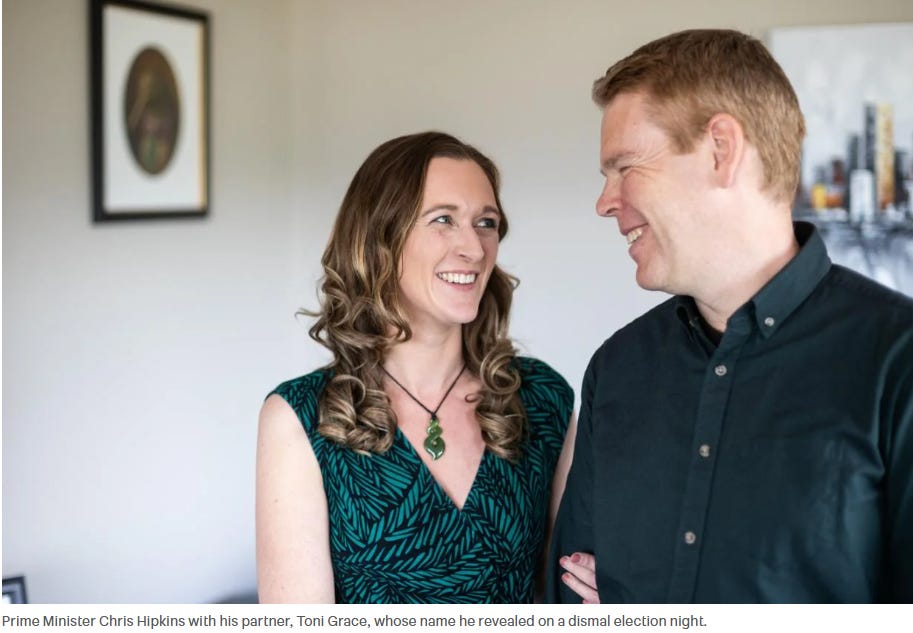
In June 2022, Hipkins replaced the parlous Poto Williams as police minister, continuing Labour’s zealous implementation of two-tier race-based policing (or no policing at all). He didn’t stick around as minister of police long enough to appoint sex pest deviant Jevon McSkimming as deputy police commissioner – that was Ginny Andersen. But, to give him his due, Hipkins has no problem jumping on younger women. His first wife, Jade, is five years younger and his former staffer and now fiancé, Toni Grace, is seven years his junior.
Hipkins was the only one to put his hand up to become prime minister when Jacinda Ardern quit in January 2023. As prime minister, he led Labour to abject defeat in the 2023 election, with half the party votes it had received in the 2020 election. Since then, about all Hipkins has done is object to the suspension of Māori Party MPs for their attempts to turn parliament into a kapa haka festival.
What can we therefore make of the phoenix prime minister in waiting? Despite being described in some quarters as a centrist and pragmatist (including in his carefully curated Wikipedia entry), he’s everything but. He remains an ideologically driven activist, a politically performative thespian.
There’s nothing whatsoever old-school Labour about Hipkins. Any government Hipkins gets to again lead after the next election will be radically more extreme than even the 2020–2023 Labour government. The Labour Party’s Māori caucus of Willie Jackson, Willow-Jean Prime, Peeni Henare will meld well with the Māori Party fanatics in rekindling the stalled project to race-ify New Zealand. And Labour’s economic ineptitude will marry nicely with the Greens’ ambitions to deindustrialize and otherwise impoverish New Zealanders.
A resurgent, insurgent Leftearoan regime will be much better prepared to implement its agenda this time round. They wouldn’t shillyshally or make the same mistakes again. The groundwork for an RNZ TVNZ amalgamated woke propaganda machine has already been laid and will be brought to rotten fruition. The systematic dismantling of New Zealand’s democratic institutions and freedoms will proceed apace. Co-governance here we come.

Several factors militate in favour of a left coalition government, with Hipkins at the helm.
First, New Zealand remains a nation with hordes of social welfare beneficiaries. Excluding national superannuitants, New Zealand funds 450,000 beneficiaries, virtually all of whom (if they vote at all) will vote for Labour, the Māori Party or the Greens. In addition, well over 300,000 families receive “Working for Families” tax credits (thinly disguised welfare). The vast majority of enfranchised members of such families vote Lab/TPM/Greens.
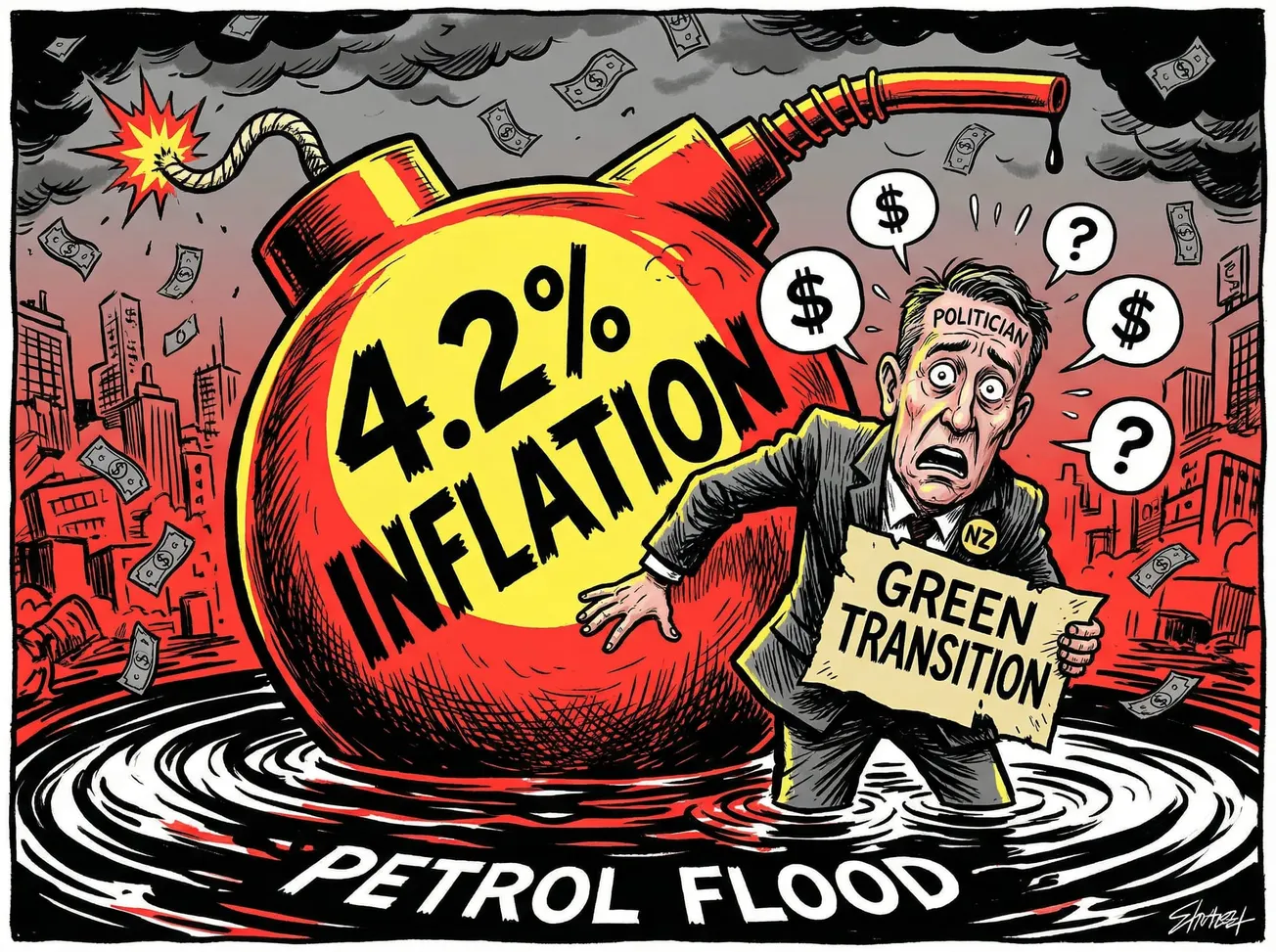
Secondly, New Zealand’s economy is not recovering. Inflation and the cost of living are on the rise again, unemployment remains stubbornly high and the national debt is soaring. Impoverished New Zealanders vote in their own self-interest, i.e., for more of the free sh*t that the New Left promises.
NEW ZEALAND PARLIAMENT’S MĀORI SEATSJohn McLean 18 June 2024
Thirdly, the continued existence of the Māori electorates and seats in parliament significantly heightens the prospect of a left coalition government. This is despite the apparent ructions within the Māori Party. If the left prevails in an election decided by an overhang of MPs and disproportionate numbers of Māori MPs as a result of the Māori electorates, the current government’s failure to abolish Māori seats in parliament will be revealed as political suicide.
New Zealanders should be under no illusions. Any vote for Labour will be exactly equivalent to voting for the Greens or the Māori Party.
IMO, the next election is the most important in New Zealand’s political history.
New Zealand is a plucky little country with a snappy name that is unfortunately going through a flat patch. But our nifty nation will, with sound leadership, bounce back.
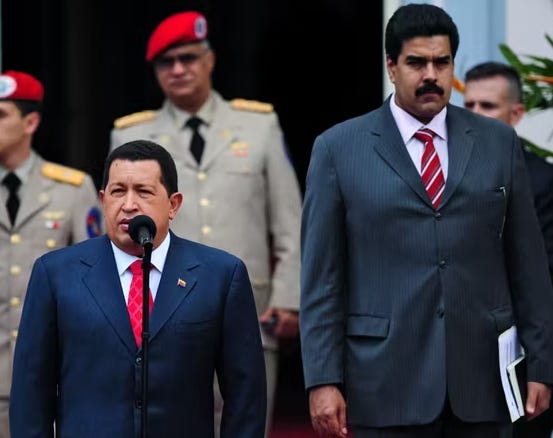
New Venezuela under Hipkins however – not so flash. A second Chippy term as prime minister will herald disaster for the vast majority of New Zealanders. That’s not catastrophisation. It’s a simple truth. Everyone must stayed tuned and be very careful what they vote for.
This article was originally published on the author’s Substack.