Table of Contents
Summarised by Centrist
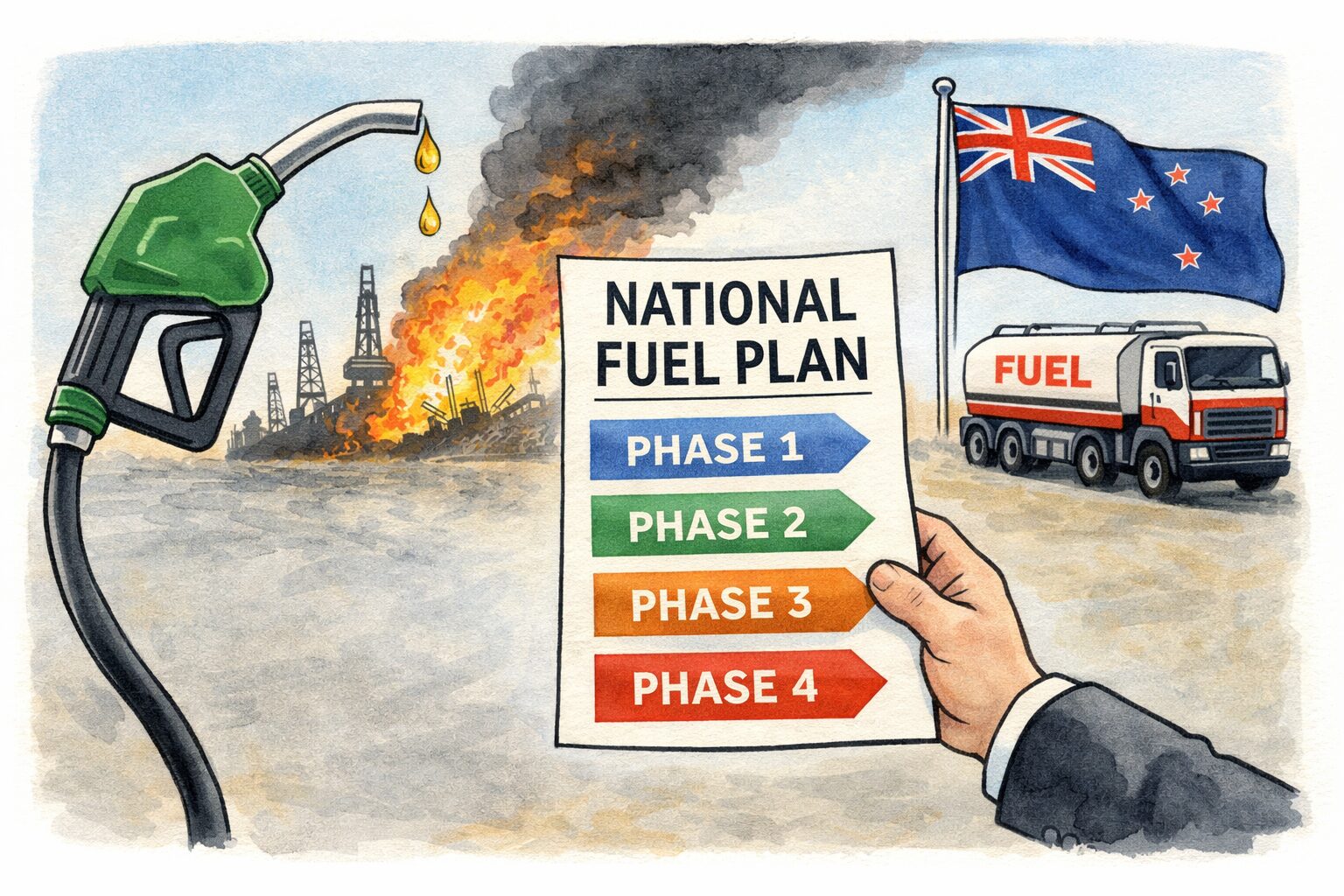
The government has released updates to the National Fuel Plan, saying it is “planning carefully, acting early” in response to fuel supply uncertainty linked to the conflict in the Middle East.
Nicola Willis said there is “currently no need for fuel restrictions” and that ensuring New Zealand has the fuel it needs to “protect jobs, livelihoods and the wider economy” is the first priority.
The plan sets out four phases for petrol, diesel and jet fuel, with each fuel able to be assessed separately.
The government said the framework is designed to “keep fuel flowing where it matters most”, starting with monitoring, information sharing and voluntary demand reduction, before moving to stronger interventions if supply is “genuinely at risk”.
Ministers said decisions on whether to move phases would be made by the Fuel Security Ministerial Oversight Group using six criteria, including export restrictions, changes in stock levels, warnings from fuel companies that future orders may not be filled, breaches of minimum storage obligations, significant policy changes in Australia or from the International Energy Agency, and major regional distribution disruption.
Willis said phases 1 and 2 are intended to “prevent a move to more restrictive measures”, while phases 3 and 4 could involve prioritising fuel for emergency services, freight, food supply chains and industries seen as critical to the economy. Shane Jones said “New Zealand has sufficient fuel stocks,” but the government was preparing for scenarios in which future supply becomes harder to secure.