Table of Contents
In brief
- Chris Hipkins is right to protect his children from the fallout of a messy breakup.
- But he has not kept a consistent boundary between private life and politics, having publicly used his relationship and family image when it suited him.
- That makes his privacy plea look selective, especially after he attacked Sam Uffindell by boasting of his own “very high standards”.
A fair point, but not a clean one
Chris Hipkins is right about one thing. Children should not be dragged through a political bloodbath because their parents’ relationship has broken down. His plea to keep the spotlight off his family, especially his children, is reasonable on its face.
Back in January 2023, when confirming his separation, Hipkins said he had worked hard to keep his family out of the public limelight and wanted his children to have a “typical Kiwi-kid life”.
This week, as he rejected his ex-wife’s allegations as untrue and unsubstantiated, he again refused to get into a public “backwards and forwards”, saying that was not in the best interests of his family.
That is fair as far as the children are concerned. The problem for Hipkins is that he has not kept a clean boundary between private life and public politics. At key moments, he has chosen to bring parts of his personal life into the public arena himself and to do so in politically useful settings.
That does not cancel his right to protect his children now. But it does make his appeal to privacy look selective rather than absolute.
Privacy when it hurts, publicity when it helps
Hipkins publicly confirmed his split from Jade Paul shortly after becoming prime minister, framing it as a family decision and asking for privacy. Months later, on election night in October 2023, he used his concession speech to reveal his new partner, Toni Grace, to the country for the first time, thanking “my partner, Toni” from the stage.
He later described meeting Toni as one of the highlights of that year. That was Hipkins deliberately choosing to share a personal milestone in the middle of a nationally televised political moment.
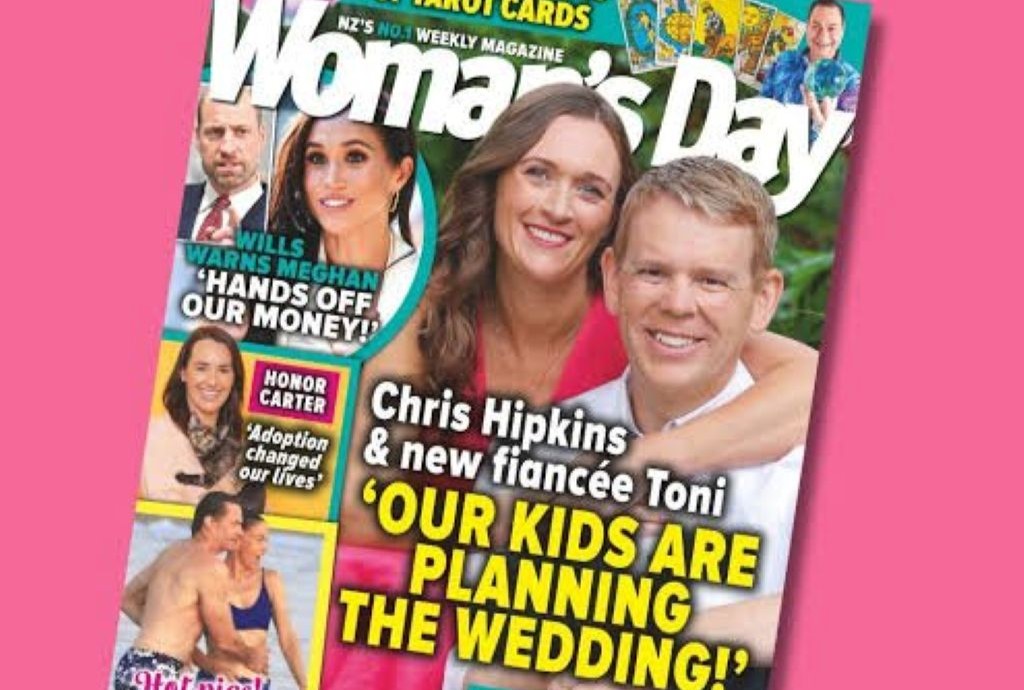
This year, Hipkins and Grace appeared in glossy lifestyle coverage discussing their engagement, home life and blended family.
He has every right to do that. But once a politician uses parts of their private life to project warmth, stability, and relatability, it becomes harder to insist that the same territory is completely off-limits when the picture turns less flattering.
That is the real issue here. Hipkins leveraged his personal life to help shape a public image. Once a politician turns private life into political capital, public interest does not simply disappear when the image starts to crack.
His curated personal image, which he chose to present to voters, does not deserve blanket protection from the public eye.
The Uffindell ‘very high standards’ line now cuts back at him
The charge of double standards sharpens when you compare Hipkins’ current position with how he treated Sam Uffindell.
Uffindell’s case was potentially more serious, albeit dated, with no indication of any continuing bad behaviour. He admitted that, as a teenager, he had violently assaulted a younger student, later saying: “I was a bully at school and I’m not proud of it.”
RNZ also reported further allegations from his university years, which he denied, and he was temporarily stood down from National’s caucus while those were investigated. That history became fair game politically because it involved admitted violent conduct and obvious questions about character.
But during the final 2023 leaders’ debate, after Christopher Luxon accused him of failing to control his Cabinet, Hipkins replied that his ministers were held to “very high standards” and that when they failed to meet them, “they don’t continue in their jobs”.
He then delivered the line that became one of the debate’s most memorable moments: “People in glass houses shouldn’t be throwing stones. None of my MPs beat people up with a bed leg.”
That was a calculated political hit. Hipkins used another politician’s past conduct to advertise his own moral standard and to tell voters that he, unlike Luxon, drew a firmer line on behaviour and character.
That is why his current appeal to privacy does not sit cleanly. He cannot present personal conduct as politically relevant when it damages an opponent, then treat questions about his own carefully managed image as illegitimate the moment they become uncomfortable.
He is right to shield his children from the fallout. Most people would agree with that. But he is not entitled to act as though the broader public image he consciously crafted for voters is beyond scrutiny.