Paul Birch
Paul Birch is a former police officer and counter-terrorism specialist.
Over two decades in policing, I watched a once-trusted institution surrender itself to ideological capture. What began as concern for public confidence hardened into a top-down obsession with moral posturing – so much so that by 2024, I could attend a leadership course where the instructor tried to tell attendees that people in the Caribbean were forcibly rounded up and put onto the Empire Windrush.
This mindset has come at the direct expense of enforcing the law. The result is a suffocating culture in which honesty is punished, morale has collapsed, officers lose their nerve and the public get a service based on their ethnicity.
The most damning, single expression of this ethical collapse was the murder, in December 2025, of 18-year-old student Henry Nowak, whose last moments were made even more appalling by a grotesque failure of police judgement. After his killer accused him of racism, the officers seemed more alert to the reputational danger of mishandling that accusation than to the obvious reality of who was in danger and who needed immediate, life-saving protection.
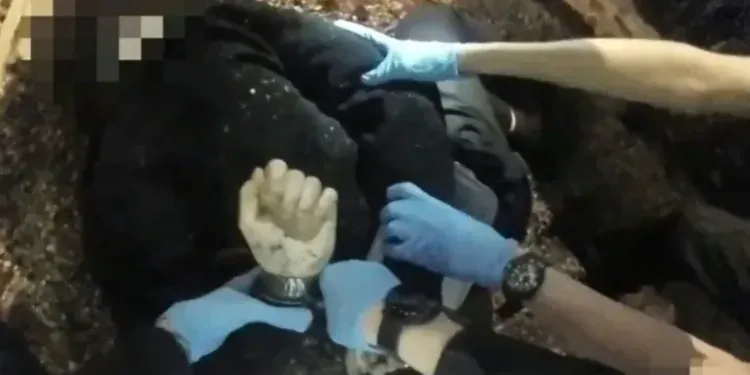
Hampshire and Isle of Wight Constabulary has only now been dragged, kicking and screaming, into releasing the officers’ body-worn video footage, and it is every bit as appalling as can be imagined. During my career I had to watch Islamic State videos, yet this ranks among the most harrowing material I have ever seen. Henry said multiple times that he had been stabbed, yet an officer replied, “I don’t think you have, mate.” Yes, it was dark, and the murderer, realising just what he’d done, was prattling away in the officers’ ears. But they heard Henry state he’d been stabbed and that he couldn’t breathe. And their emergency life support training would have made them aware of the possibility of internal, invisible bleeding.
For generations, British policing claimed to stand for impartiality, restraint and equal application of the law. That reputation has now been destroyed. Policing is now shaped less by legal principle than by political anxiety, identity politics and social justice dogma. After a succession of high-profile failures culminating in this one, it is no longer credible to dismiss that charge as culture-war exaggeration. It is shown plainly in the conduct of the police themselves.
The rot sets in when officers become so frightened of causing offence, provoking protest or being accused by the organisation of prejudice that they stop policing with confidence, clarity or courage. In cases like this, fear of not taking an accusation of racism seriously enough can overwhelm the basic duty to protect the vulnerable, assess the facts and enforce the law equally. This is not an unfortunate side-effect. It is an obvious, foreseeable result of years of signals from the top. Senior leaders, through their activism (for that is what it is), have created a culture in which the most career-threatening accusation – racism – can freeze judgement at the exact moment when potentially life-saving action is needed.
The officers themselves cannot hide behind the institution. Their duty was to read the scene, identify the real victim and act on the evidence in front of them. Instead, they flinched at the killer’s accusation of racism and treated the the danger of seeming insufficiently sensitive more urgently than the immediate physical danger facing Henry. If someone says he has been stabbed, the first priority is to see to the wellbeing of that person. The seriousness of any injuries decides the priority with which officers treat people, no matter who is the victim or suspect. Although there is no common law duty of care owed by police officers to protect individuals from harm, they do have such a duty when they have assumed responsibility to care for them – which, in this case, they plainly did after arresting Henry and putting him in handcuffs.
The failure of the officers at the scene was not abstract, theoretical or procedural. It was a personal collapse of judgement with fatal consequences. But it was also the predictable product of a culture that has trained officers to fear ideological wrongthink more than operational failure.
None of this has happened by accident. Senior officers have spent a long time promoting bias training, equity programmes, hate-incident recording and wider diversity agendas which have steadily taught officers to treat accusations of racism as uniquely dangerous. This drift took hold in the years following the murder of Stephen Lawrence and the resultant Macpherson Report, but it absolutely exploded after the death, in 2020, of George Floyd and the global contagion of Black Lives Matter hysteria.
Whatever language progressivism wraps itself in, its practical effect has been to produce coppers who are more frightened of appearing prejudiced than of failing a young man dying in front of them. Senior leaders have entrenched this truly toxic mindset with their own rhetoric, repeatedly presenting what is meant to be a neutral institution as a conduit for inclusion, structural change and social transformation.
The Independent Office for Police Conduct (IOPC) is now investigating the officers’ behaviour in the Henry Nowak case. Of course it should. Their failures were grave, obvious and inexcusable. But accountability cannot stop at the frontline. Institutional culture is shaped by senior leadership, and senior leaders must answer for creating a climate in which fear of racism allegations could so thoroughly warp frontline judgement.
I know full well that policing is difficult and, on occasion, that challenging and instantaneous judgements need to be made. We can all make mistakes. But difficulty is no excuse for cowardice. The police are not there to placate activists or manage the emotional demands of ideological factions. They are there to uphold the law and protect people. When that mission is bent to fit the demands of political fashion, trust rots. And because the culture has been warped towards political risk management, senior leaders deserve an especially heavy share of the blame.
Yes, the individual officers in the Henry Nowak case committed a catastrophic error. But the origins of this lie with a politicised, activist police senior management whose obsession with the notion of an all pervasive ‘racism’ and, frankly, a general suspicion of white people and credulous trust of non-white people, has exerted such overwhelming professional pressure that it twists rational decision-making and destroys any chance of honest judgement.
This article was originally published by the Daily Sceptic.