Table of Contents
In brief
- Activists and commentators rushed to blame climate change within hours of the Mt Maunganui landslide, despite unresolved facts.
- Historical data show heavier rainfall in 2005 without failure, undermining claims that this was unprecedented.
- Satellite imagery indicates major tree removal between 2017 and 2019 directly above the slip zone.
- Evidence suggests land management decisions, not CO₂ or climate policy, materially increased the risk.
As the grief turns to anger over Thursday’s deadly landslide on Mt Maunganui (Mauao), the blame game has well and truly begun.
The landslide’s immediate cause was a 274mm deluge of rain in the 24 hours to 9 am Wednesday, which Met Service had claimed was the highest rainfall in Tauranga since records began in 1910.
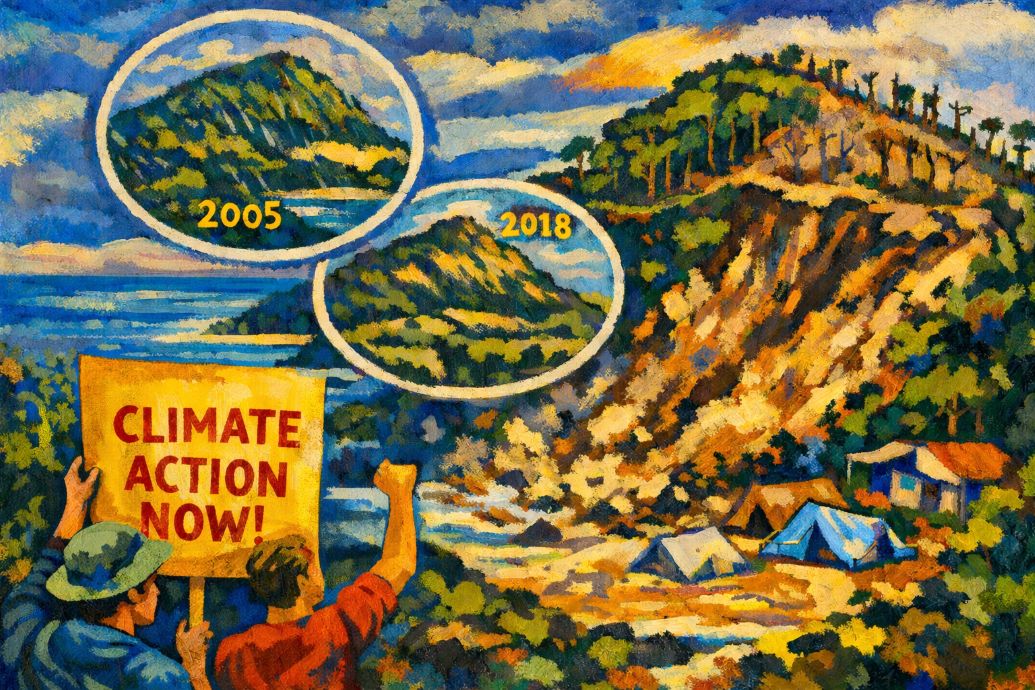
That immediately triggered a literal “I told you so” from climate scientist James Renwick, and spurred a group of Coromandel climate activists to heckle Prime Minister Chris Luxon later on Friday – just one day into the search for victims – as they waved placards demanding “climate action now”.
On Saturday, commentator Bryce Edwards stepped into the fray with a bold statement that now was the time to address the climate elephant:
“There always comes a point, after a ‘natural disaster’, when someone says that it is ‘too soon’ to ask hard questions. The Post’s editorial today predicted this perfectly: ‘There will be some who say it is too soon to talk about climate change while the search for bodies is ongoing. They will say the commentary is ‘politicising’ the tragedy. But the reality is that rather than too soon, it may be too late.’
“That line will annoy people. But it’s still true: disasters are political, because the risks were set by decisions made long before the rain arrived. Such disasters are political because they are where weather collides with decisions about land use, infrastructure, safety regulation, emergency management and, increasingly, climate policy. When people die, the question is not whether politics is involved, but whose politics has been quietly shaping the risks in the background.”
So, what do we actually know? Is there any credibility to the claim that climate action can ensure NZ avoids extreme weather?
Let’s deal with the elephant in the room: even if the climate activists were correct about this being driven by anthropogenic CO₂ emissions (they’re not), the mechanism by which the heat is being delivered (the oceans) means CO₂ is only a minor player.
Air heats up weight-for-weight four times faster than water. Stripped of the complex physics equations to save time, this means that if CO₂ has raised air temperatures by 1 °C in 100 years, then it has managed to raise ocean heat by far less over that period.
CO₂ radiation at 3 watts per square metre on the sea surface is not the primary cause of a marine heatwave 5 °C higher than average.
Instead, solar radiation – up to 1000 watts per square metre on a sunny day – is the primary short-term heat generator affecting ocean surface temperatures. And numerous studies are now emerging saying that cleaner skies since WW2 are allowing more sunlight to reach the planet’s surface and thus heat the oceans.
And yes, that solar heat in the oceans can come back to bite sometimes. In 1934/35, New Zealand experienced its hottest summer because of a massive marine heatwave. A year later, in the summer of 1936, New Zealand’s most powerful recorded cyclone cannonballed across the country.
But the biggest reason the climate activists’ claim is wrong is that the oceans can take decades, and even centuries, to process heat. This means there’s nothing “climate action” can do to avoid extreme weather generated by ocean heat. The lag times are too long, and the physics is inescapable. Nothing that we do today, if the activists are right about the inertia of the CO₂ effect, will have a meaningful effect in the lifetimes of our children.
And was last week’s rain even a record?
For a start, the Met Service’s claim that this was Tauranga’s wettest day fell to pieces when city residents asked, “What about 2005?” A monster rainstorm dumped 347mm of rain in a 24-hour period on Tauranga on 17/18 May 2005, leading NIWA’s Jim Salinger to claim it, justifiably, as a new record:
“Tauranga Airport recorded a massive 346.8 mm of rainfall in 24-hours. This was well above any other daily rainfall total there in records, which commenced in 1910.”
Contrast the 2005 announcement with this on Wednesday last week from the Met Service:
“In the past 24 hours, from 9 am to 9 am, 274mm of rain fell in Tauranga, making it the wettest day on record. The records began in 1910,” said Meteorologist Mmthapelo Magkabutlane.
When you dig deeper, however, the contrast is even more stark. Total Tauranga rainfall in January 2026, up to Saturday 24th, amounts to 402.5mm. That’s the accumulated amount that could have saturated the ground on the mount.
During May 2005, on the other hand, NIWA reported: “Record rains lashed Bay of Plenty, with severe flooding. Tauranga recorded 634 mm (695 per cent of normal), its wettest calendar month for any time of the year in more than a century, including its heaviest 1-day rainfall on record (347 mm on 18 May).”
Around 600 homes in Tauranga and neighbouring towns were damaged by floods and slips in that May storm.
By any assessment, Mauao suffered a much bigger soaking in 2005 than it did in 2026 but the hillside above the holiday camp did not give way.
GOOGLE EARTH CLUES
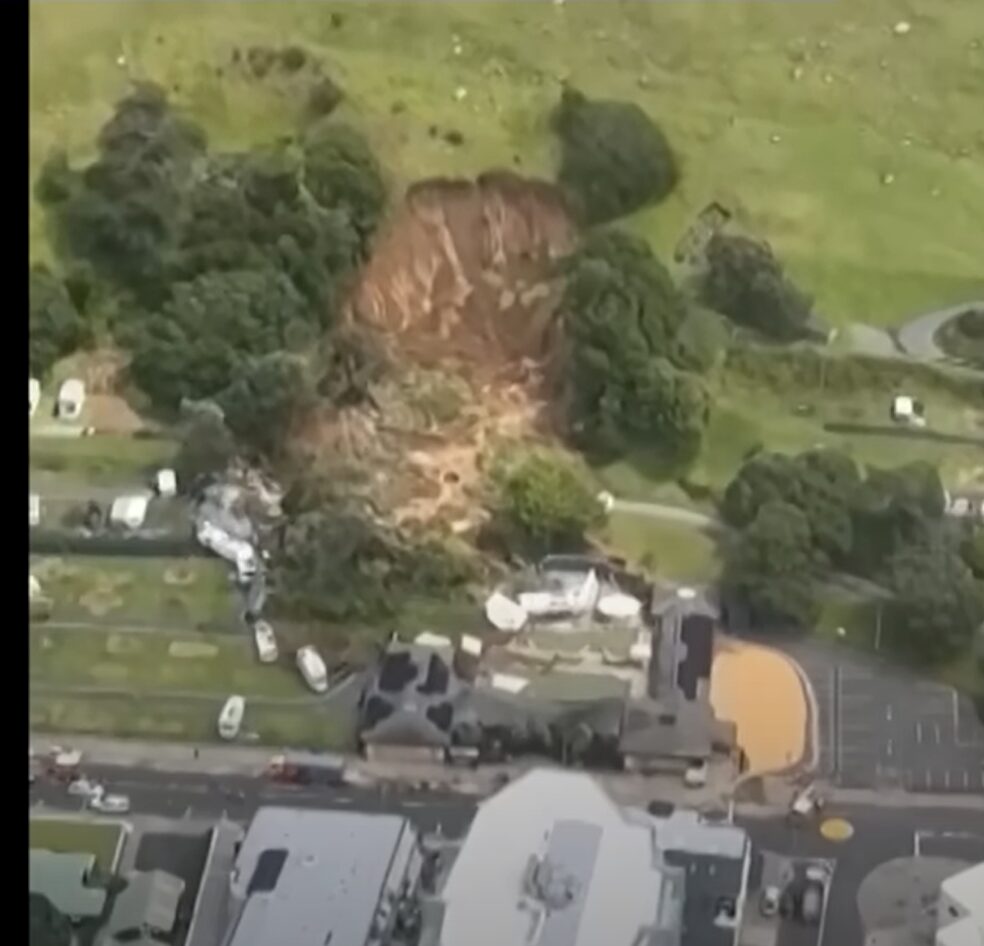
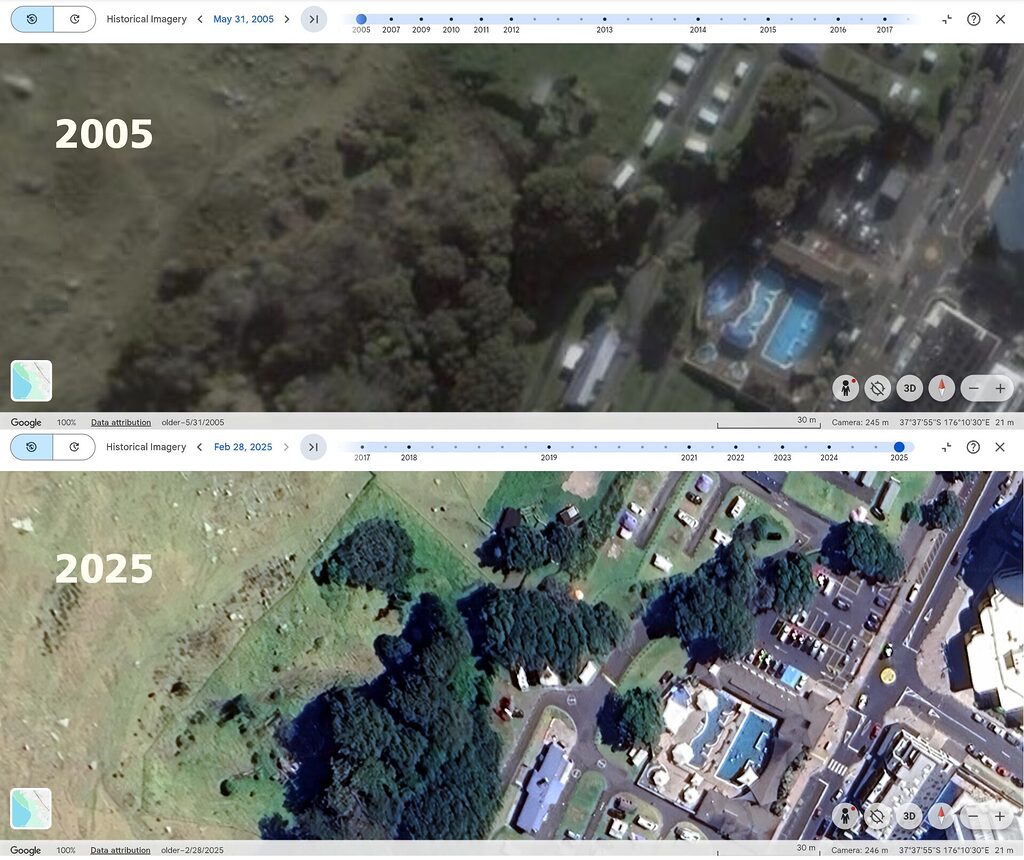
Google Earth photos between 2005 and 2025 may reveal the reason.
They show nearly double the amount of trees in the eventual landslip area back then, and a corresponding 50% drop in tree cover by the time of Google Earth’s 2025 photo.
Tellingly, photos of the slip reveal it began above the existing 2026 treeline, in exactly the area once covered by trees in 2005.
So what happened?
The Earth photo sequence shows massive tree removal between the 2017 and 2019 satellite photos. The seeds of the landslide disaster appear to have been sown then and there, as there was no replanting visible.
Geotechnical engineer Rod Kane, in a Facebook post Saturday, noted that tree roots left in the ground after chopping start to rot, and over time they allow water to surge into the rotting root cavities and sluice the hillside. It appears this may have been exactly what happened.
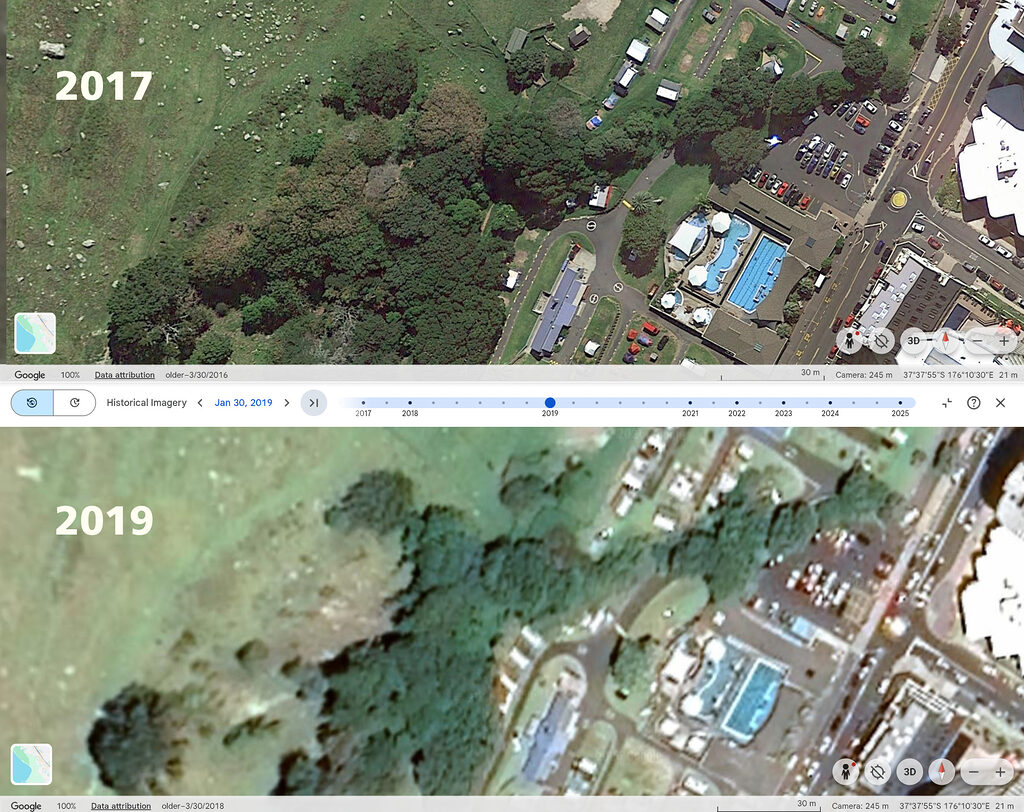
Kane’s post discussed a joint Tauranga Council/Iwi decision in 2023 to remove exotic oaks, pine and chestnuts from Mauao for Māori spiritual and anti-colonial reasons, but those trees were further away and not connected to the slip area, which, remember, was cleared in 2017.
Instead, news reports indicated concern in 2017 about myrtle rust attacking Mauao’s Pohutukawa, and it appears those trees were the type culled from the hillside above the camp. Fears of a reinfestation could explain the failure to replant.
PAST SCARS
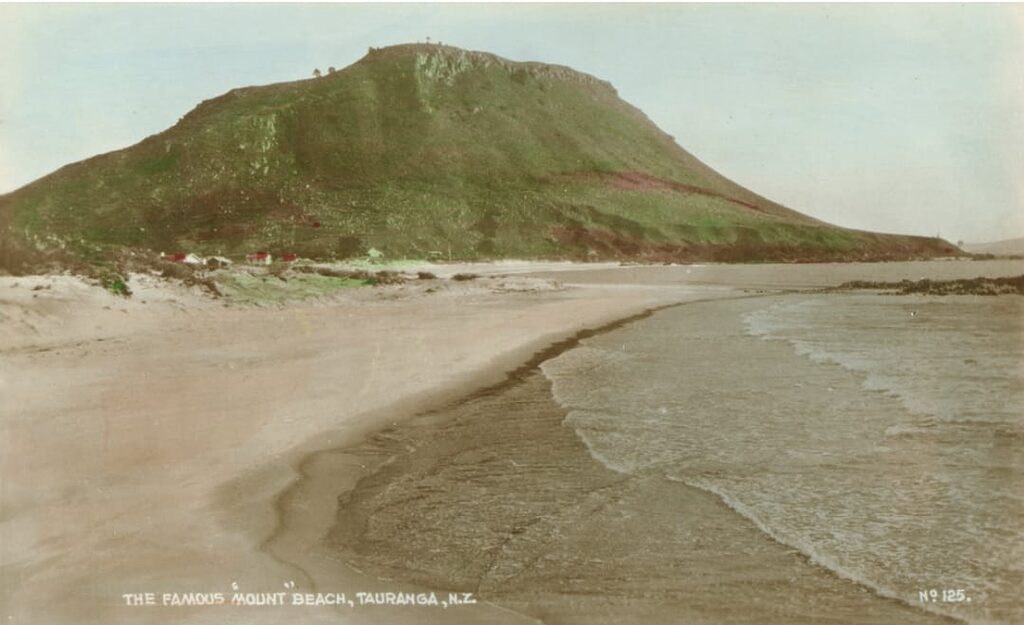
Old photos of Mauao show plenty of evidence of past landslide scars, so that is a well known risk factor that doesn’t need “climate change” to explain it.
The fact that the mount absorbed 50% more water in May 2005 without slipping onto the camp is strongly indicative that the trees protected the slope.
Equally, the collapse of the slope 8 years after half the trees were removed is also strong evidence of at least a correlation.
Iwi and council, to their credit, have promised an independent inquiry to examine decisions leading up to the tragedy.
It is true that, without the rain, a landslide was unlikely. We live in a high rainfall country; however, that risk factor was ultimately unavoidable. It is also true that the 2017 tree removal, for as yet unknown reasons, left a spiderweb of root cavities able to take torrential rainwater deeper, increasing the likelihood of a landslide. But rather than taking the easy way out and blaming the climate, there is strong circumstantial evidence that human error played a decisive role in this tragedy.
In the weekend news coverage, details emerged that early risers had noticed other slips on the mount. One phoned 111 at 5.47 am on Thursday to suggest an urgent police visit to organise the evacuation of the campsite. The 111 operator allegedly told him to “ring the council”.
This, in my view, was a major error by 111. Had the advice been acted on, it’s likely the police could have injected focus and urgency into the expert assessment, and that the abnormal water pouring from the hillside and pooling in the camp would have been recognised, leading to the camp’s evacuation.
In the case of the Mt Maunganui disaster, the warning signs were all there, but the council staff inspecting other landslides on the mountain that morning didn’t see a need to check water pouring out of the hillside above the holiday camp. In our lurch by a thousand footsteps into bureaucratic nanny-statism, we have abandoned our own spidey senses and abdicated responsibility for our personal safety to bureaucrats and authority figures. We can see a hillside about to collapse above us, but not recognise the signs. As I said earlier, look closely at photos of Mauao: it bears many scars from historic landslides.
And just as the image of a council contractor watering a tree in a rainstorm shows, sometimes we rely too heavily on those who have been trained to do only what a jobsheet tick-box tells them.
Nowhere was that “jobsworth” mentality more on display than in the police or FENZ first responders who ordered builders to stop trying to rescue trapped campers crying for help because one of the builders “wasn’t wearing shoes”.
Our hearts and prayers go out to all of those affected by this tragedy, and brickbats to the climate grifters trying to link SUV emissions to ocean heat and then to extreme weather. There’s a time for debate, and it shouldn’t have been this early.
The best thing all of us can do is reflect on the fact that sometimes bad weather, or earthquakes, or tsunamis or volcanic eruptions happen in these lush Pacific shaky isles, and there’s always a risk, even when you think there isn’t.