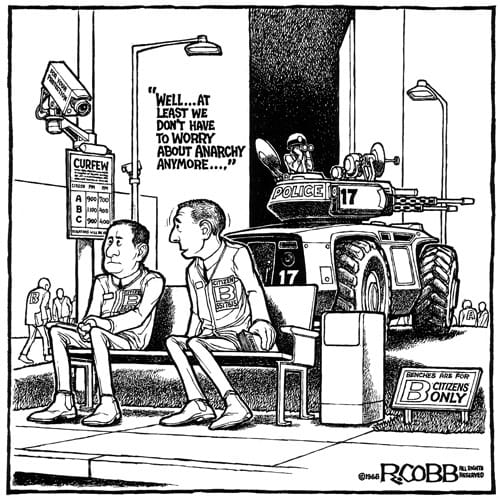
Way back in 1984, the year, when we were congratulating ourselves on having avoided the Orwellian dystopia of 1984, the book, we little imagined what we were in for. If a visitor from the future had told us that, in just a few decades, we’d be living in an almost total surveillance state, we’d have scoffed in disbelief.
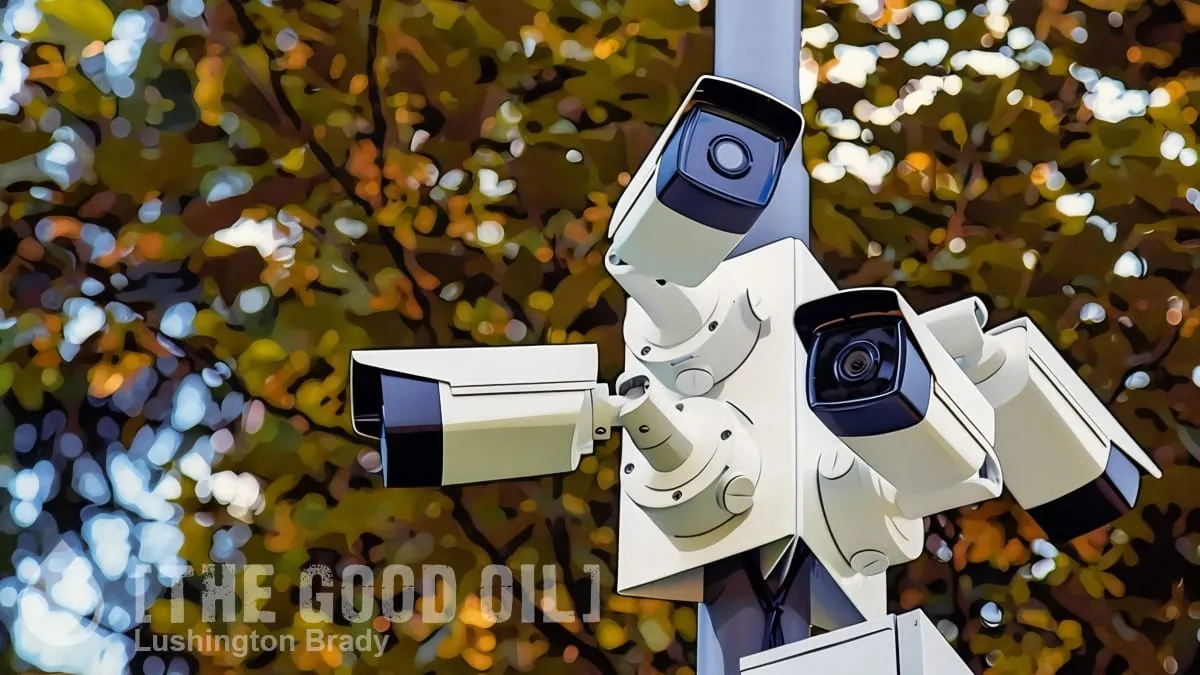
Cameras watching nearly every street and building. Cameras tracking our cars’ movements. Tracking devices in every pocket. Our family photos and every little activity splashed on public websites for governments and corporations to peruse at their will.
We’d ask, aghast, how we ever came to such a pass. And be appalled to hear: mostly voluntarily.
But not entirely. Few of us, after all, want speed cameras tracking our cars all the time. Nor are we that keen on the cops using facial recognition cameras to track us. Yet, here we are.
An Australian-first trial of live AI facial recognition technology by a police force has been criticised by privacy experts and legal advocates.
The mass AI surveillance pilot has been rolled out in Western Australia and is being closely watched by law enforcement agencies across the country.
Since the trial began in June, cameras linked to facial recognition software have scanned more than 130,000 people in Perth and Fremantle, comparing their faces against a police watchlist in real time.
But, every cloud having a silver lining, I can’t help but feel a tickle of schadenfreude when hand-wringing activists whine that they will disproportionately affect Aborigines.
After all, if the cameras used to track down wanted criminals ‘target First Nations people’, what is that telling us?
It is the same pattern we saw with Black Lives Matter and police body-worn cameras. Activists screamed for mandatory cameras, convinced the footage would prove systemic racist murder of unarmed black people. Then the cameras rolled, and the narrative collapsed. Time after time the video showed the opposite: suspects escalating routine stops into violent confrontations, reaching for weapons, or fighting officers who had shown remarkable restraint.
Remember the ‘hands up, don’t shoot’ myth after Michael Brown in Ferguson? The evidence, including witness statements and physical findings, showed Brown had attacked the officer and was charging when shot. Bodycam and dashcam footage from countless other encounters – Rayshard Brooks grabbing a taser and firing it, Jacob Blake resisting and carrying a knife, or the steady stream of videos where suspects ignore lawful commands and turn aggressive – demolished the cartoon of trigger-happy cops hunting innocents. Suddenly the same activists decided bodycams were ‘racist’ tools of the ‘carceral state’. The technology had simply recorded reality too accurately.
Western Australia’s facial-recognition trial is already producing the same predictable squeals. Police say the early results are promising: more than 130,000 faces scanned in the first week alone against a watchlist of about 4,000 people, generating 33 alerts and 18 arrests, with only one false positive. Other state forces are watching closely. You betcha that sends a chill down my spine and, apart from the odd traffic misbehaviour, my record’s clean as a whistle.
Still, you gotta find the laughs where you can.
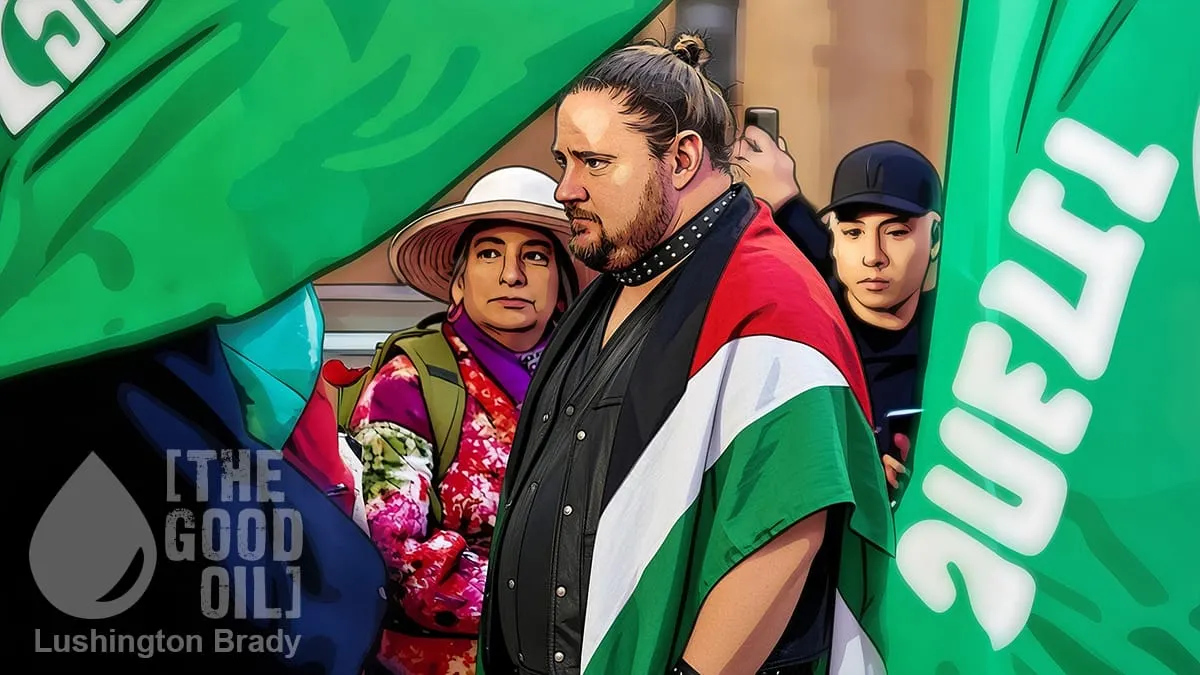
Aboriginal Legal Service of Western Australia’s (ALSWA) legal services director Peter Collins […] said the trial was one of the growing ways the WA Aboriginal community was being over-surveilled by police.
“It can only have been by design, not chance, that facial recognition technology has been rolled out in those suburbs and places where everyone is aware that significant numbers of Aboriginal people either live or frequent,” he said.
For much the same reason you tend to find fire engines where fires are. Cops tend to go where the crimes are, after all.
Melbourne Law School associate professor Jake Goldenfein said facial recognition technologies have known accuracy issues with particular demographic groups.
“Historically, these systems have performed worse for people of colour and for women, and especially worse for women of colour,” he said.
I’ll avoid the obvious jokes and simply drop this for your consideration:
That is because the algorithms used in the systems are trained on a data set of predominantly white and male faces.
Well, didn’t Marama Davidson tell us that white males are the cause of all violence? Somehow, it’s hard not to suspect that, if they did train the system on ‘women of colour’, the same activists would be screeching about ‘racism’ and ‘targeting vulnerable minorities’.
When a technology is designed to find people already on police radar for serious offences, missing persons or risks to public safety, it will inevitably reflect the actual patterns of offending. If one demographic appears more often, that is data, not design. The activists’ real objection is not the cameras themselves: it is that the cameras refuse to lie for the preferred narrative.
We have sleepwalked into the surveillance state largely by choice, handing over data for convenience and safety. The residual coercion – speed cameras, facial recognition, the rest – will only expand. The least we can demand is that the systems work, that they catch the guilty and that we stop pretending the resulting statistics are a conspiracy rather than a mirror.