Table of Contents
Christopher Hitchens may have been an unrepentant atheist even when he found himself in a foxhole, but for most people times of fear and stress awaken a heightened sense of God. The Wuhan pandemic is no different. When they find themselves in times of trouble, many people are turning to the still, small voice that speaks from the whirlwind of events.
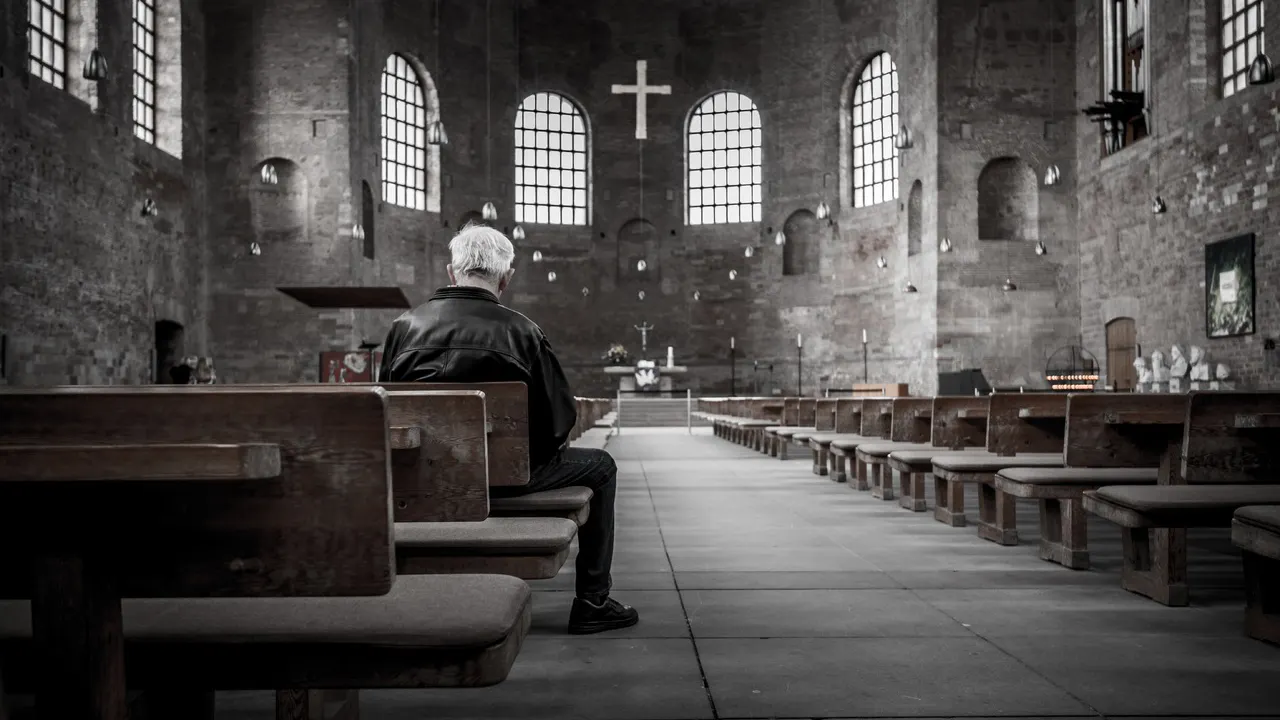
Churches may have closed their doors, but more Australians are opening their minds to spirituality and prayer.
Researchers have found Australians say they have been praying more during the COVID-19 crisis, suggesting the pandemic has led many to reassess their priorities in life.
While Christianity has always had its place for “crazy, solitary Catholic mystics” as Jack Kerouac described himself, C. S. Lewis reminded us, in The Screwtape Letters, that Christianity is a faith expressed in the community of believers. Even one so small as the family dinner table.
Katie Stringer from Leichhardt, a teacher and mother of three children aged from 6 to 13, said she and her family had been praying more at home together during the pandemic. They read passages from the Bible during family meals and in the car during school drop-off.
Mrs Stringer said the closure of their local Anglican church forced them to “assess their spiritual connection”.
“It reminded us our faith is also our responsibility and not just the responsibility of the minister in our church,” she said. “We needed to be proactive in talking to God.”
Australia has long been a culture sceptical of ostentatious religiosity, not to mention suspicious of “rantin’, ravin’, screechin’, preachin’, cranky blanky parsons”, in the words of an old folk song. But that doesn’t mean that Australians are deaf to the whispered voice of faith.
Social researcher Mark McCrindle surveyed 1002 people between July 24 and 28 and found more than a third (35 per cent) said they were praying more and 41 per cent were thinking about God more. A quarter said they were reading the Bible more.
Nearly a half (47 per cent) said they had thought more about their mortality and the meaning of life.
“The research is showing that this COVID situation has rattled Australians and got them thinking about the big purpose of life,” Mr McCrindle said. “It’s got them re-prioritising their life.”
This is more than just a panicked reflex of anxious minds seeking solace.
Charles Sturt University Associate Professor Ruth Powell, who studies Australian spirituality said she was not surprised by the survey results. Her own research as director of the National Church Life Survey has shown a third of Australians pray or meditate “in normal times”.
“In this context when a proportion say I think I am praying more …. it’s not surprising if it has been heightened at this time,” she said.
“What we know from our own research is that Australians are already moderately religious or spiritual.
“It’s often in times of crisis that you do go to the big spiritual questions.”
Macquarie University Professor Marion Maddox, an authority on the intersection of religion and politics, said it was not surprising many people would be thinking more about their spirituality and mortality during an existential crisis[…]
Professor Stephen Pickard, director of the Public and Contextual Theology Research Centre at Charles Sturt University said for some, the coronavirus pandemic was a time for slowing down, welcome solitude and more time with family. But for others, it was a time of loneliness, isolation, fear and financial hardship.
He said the McCrindle survey suggested that sustained periods of isolation had been conducive to prayer and the discovery of spiritual resources people may not have realised they had. He said the uncertainty and stress of the coronavirus pandemic had “opened up a crack in the universe as we know it” and for some “a window to God’s presence around us in a way we hadn’t anticipated”.
It’s said that there is a “God-shaped hole” in all of us. A sceptic might call it an evolutionary holdover, a believer would call it the soul yearning for God. Either way, it’s true for the majority of people. Actual atheists are still the minority in Australia. While relatively few Australians regularly attend church, nearly three-quarters believe in God or a “universal spirit”. A Nielsen poll summarised Australia as a nation with a Christian past and Christian traditions where most of the population believe in God and holds fairly conventional Christian beliefs.
With the conventional routine of everyday life suddenly, rudely disrupted, many are re-discovering a faith that they’d almost forgotten they have.
If you enjoyed this BFD article please consider sharing it with your friends.