Summarised by Centrist
New Zealand’s newly signed free trade agreement with India is expected to deliver only modest economic gains in its early years, with the full benefit taking more than a decade to materialise.
The Ministry of Foreign Affairs and Trade modelling shows that once the agreement is fully implemented, annual GDP will be just 0.07% higher than it otherwise would have been. That equates to around $401 million in 2024 dollar terms. Note these numbers are only informed guesses.
The modelling also makes clear the gains will not be immediate. MFAT notes that increases in trade start from a low base and that India’s current income and consumption profile limits early upside. As a result, the initial economic impact is expected to be modest.
While some Indian import duties will be removed from day one, others will be phased out gradually over a 10-year period. By 2037, more than 80% of New Zealand exports to India are expected to be duty-free.
Trade expert Stephen Jacobi said the deal is unlikely to replicate the rapid gains seen under the China free trade agreement, but still represents a useful step in a world where such agreements are becoming harder to secure.
The government has promoted the deal as a major breakthrough, but the official modelling suggests its economic impact will be incremental rather than transformative, at least in the short to medium term.
Editor’s note: Article 13.2 of the FTA “affirms” the United Nations Declaration on the Rights of Indigenous Peoples (UNDRIP), but does not make it binding in New Zealand law. The clause is qualified by each country’s “respective positions,” preserving the government’s stance that UNDRIP has no domestic legal effect. However, this sits awkwardly with the coalition agreement, which commits the government to treating UNDRIP as non-binding in New Zealand. Its affirmation in a formal trade agreement gives it ongoing relevance as an interpretive reference point, potentially shaping how parts of the agreement are understood or applied over time.
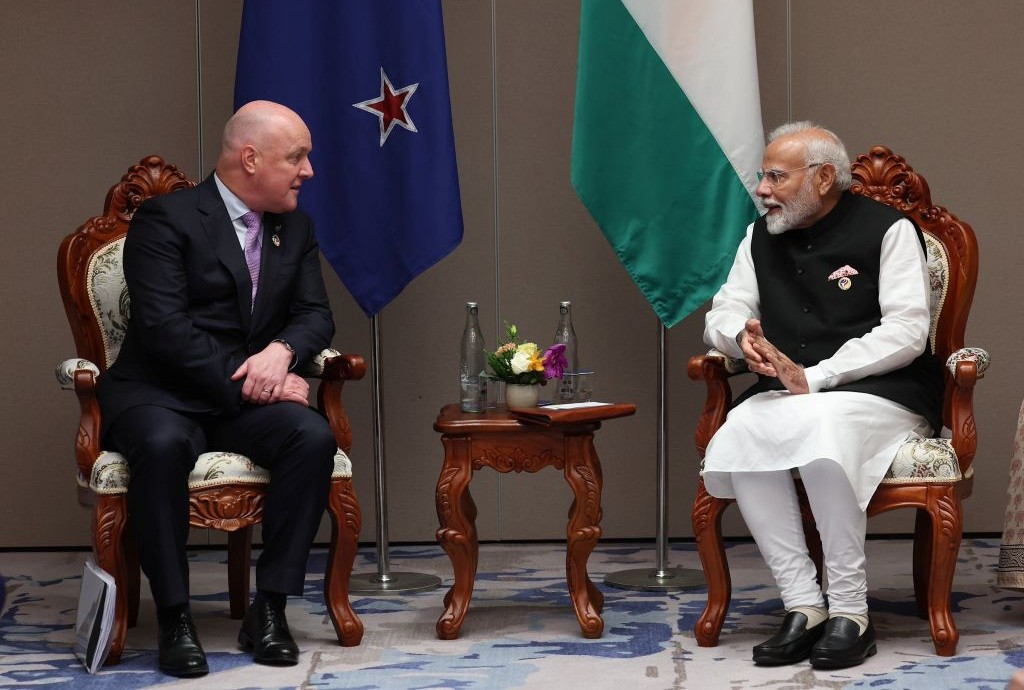
Image: MEAphotogallery