Table of Contents
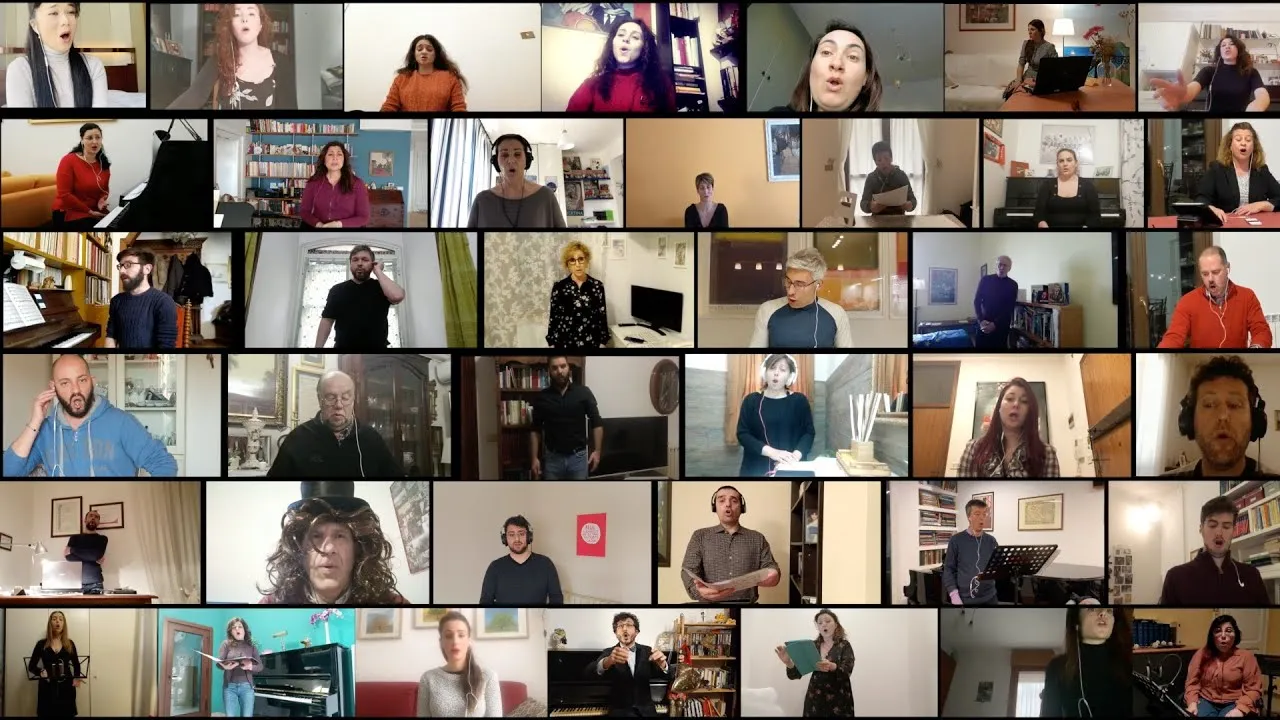
This virtual choir piece was recently completed by the International Opera Choir in Rome. Project Manager Raffaella Baioni and directed by Giovanni Mirabile. Each singer recorded their contribution on their mobile phone. The various files were then assembled by a sound technician. This is the result!
On their youtube channel they state:-
“Covid-19 has profoundly changed the daily lives of Italians, confined to stay home and combat the viral emergency. Even the world of showbiz has taken a big blow and musicians, singers, directors, etc. We are all forced to cancel performances and concert activities with economic loss and unspeakable damage to mental well-being.
International Opera Choir – Coro Internazionale Lirico Sinfonico, like other choral ensembles, had to suspend every activity in order to obey to the new restrictions.
To ease this situation of great tension, we have decided to open the doors of our virtual rehearsal rooms, so that each singer comes closer to each other through music.
And if it’s true that the “Chorus of the Hebrew slaves”, commonly known as “Va’ pensiero”, in the circumstances of Giuseppe Verdi’s time was a reflection of the oppression inflicted on the Italian people before Italy’s reunification, picturing the Jewish people in chains under Babylonian captivity, today we feel close to that sentiment of lost homeland and loss of freedom to live our life peacefully.
The “Va pensiero” is a part of our history, and as soon as anyone begins singing the motif the words come back to mind. The hymn has always been considered a potential substitute to the national anthem, and according to many scholars no other pieces can truly represent the Italian people like the the “Va pensiero”.
A big thanks to all the medical personnel currently involved in the fight against the Covid-19 emergency. This video is for you!”