It’s funny how we don’t hear much complaining about the disappearance of ostlers, buggy whip makers and coach-builders, these days. When their jobs were obliterated by the advent of a new technology, the internal combustion engine, they either adapted or were forced to find new jobs. Some took the former route: coach-builders had a large hand in the early automobile industry and teamsters traded the reins for a big ol’ steering wheel. The rest were left behind by history.
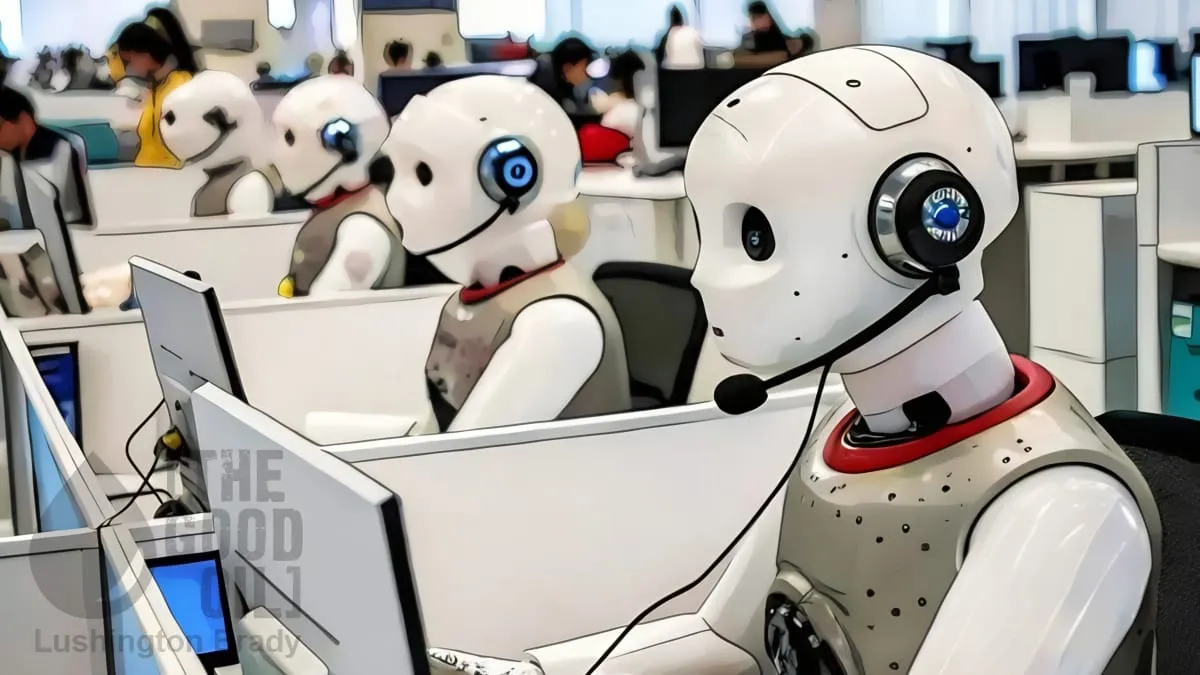
AI is going to have much the same outcomes. Some current occupations will all but disappear, others will adapt. Entire new roles will likely be created. That’s the conclusion of a new report from consultancy firm Deloitte.
The firm has declared 2026 “the year of AI”. Its latest employment forecast argues that the real winners will be organisations that thoughtfully combine human and machine strengths rather than treating the technology as a blunt instrument for mass sackings. While 82 occupations are flagged as likely to be disrupted, Deloitte also identifies several “AI-enhanced” roles expected to see stronger demand when paired with the technology.
Deloitte Access Economics partner David Rumbens says occupations where human skills remained central were more likely to benefit.
“Where AI complements skills like judgement, creativity and empathy, we may actually see stronger demand for those workers,” he said.
“That includes roles like CEOs, teachers and nurses, where AI can boost productivity, but the human element is still critical.”
Recruitment specialist Evelina Samuels describes a clear shift already underway. “What were once highly operational administration roles are now far more analytical,” she says. Junior positions are being redesigned into “people analytics” roles focused on interpreting data that AI has already processed. The message to workers and graduates is straightforward: build capability that works with AI, not against it.
“The people who will stand out aren’t the ones who know every AI tool: they’re the ones who can use it thoughtfully and apply judgement,” she said.
So far, the AI-unemployment tsunami hasn’t hit in a substantial way. But, given the immaturity of the technology, that’s akin to The Magnificent Ambersons’ injunction to “Get a horse!” rather than a clanking, unreliable newfangled automobile.
The report says that employment is still growing and redundancies remained relatively contained, with economists stressing AI was just one force shaping decisions alongside rising interest rates and broader economic uncertainty. The report instead highlights a growing divide: some roles are expanding while white-collar, knowledge-based jobs are seeing a hiring slowdown.
The analysis points to a growing divide in the employment market, where some roles are expanding while others – particularly white-collar, knowledge-based jobs – are seeing a hiring slowdown.
In occupations most exposed to AI, including software programmers, web developers and even librarians, vacancy rates are already declining faster than the broader labour market.
The list of jobs most exposed to AI has also widened. What was once concentrated in clerical and administrative roles now extends into professional and managerial occupations – many requiring higher levels of education and expertise.
The report said even roles that relied heavily on human interaction were not immune, including tour guides and licensed club managers.
Mr Rumbens said the “disrupted” label did not mean the jobs would be eliminated, but that parts of the work might be assisted or streamlined by AI.
A textbook case would be graphic design. AI can already churn out superficially attractive designs, but it sucks at stuff like text. So, while AI is undoubtedly going to ruthlessly winnow a field already overstocked with chaff, it won’t leave a scorched earth behind. Instead, art directors are likely to use AI as a rapid comping tool. In all, it will likely be analogous to the effect of the first computer graphics programs on typesetting. Letraset and hot metal have mostly disappeared, but typesetting still requires the human touch.
Still, occupations most exposed to AI – software programmers, web developers, librarians and even tour guides and licensed club managers – are already recording faster declines in vacancy rates than the broader market. The ‘disrupted’ label does not mean these jobs will vanish overnight. It means parts of the work can be assisted or streamlined by AI, which may lead to lower staffing levels over time.
Some business leaders are more blunt about the likely outcomes. AirTree partner Daniel Petre told an AI summit last week that productivity gains will not automatically translate into more jobs.
“We pretend that we’re going to get this massive productivity gain, and everyone will be employed the same. That's just not true,” he said.
Others struck a similar tone. Telstra CEO Vicki Brady warned the company was likely to be smaller by the end of the decade, while Commonwealth Bank chief executive Matt Comyn said: “Not every role we have today will be preserved.”
Then there are cases such as Lisa Harmer, a former senior communications and marketing professional. Note the ‘former’. Harmer was a convinced AI-evangelist, leading the integration of it into her team’s workflow. Then she was made redundant.
At the high end of the market, organisations are downgrading high-paying executive positions, often those in the $500,000 range, into mid-level roles closer to $250,000 as they cut costs. The result is a growing pool of experienced candidates chasing fewer opportunities, which is exactly what happened in the legacy media, as senior journalists and sub-editors were replaced by Fiverr-level cubicle monkeys in the Third World.
The result has been survival of the print media, barely, but at the cost of complete ‘enshittification’, as it’s dubbed.
The pattern is familiar. New technology disrupts. Some workers and firms adapt quickly and thrive. Others discover too late that the world has moved on. The lesson from the ostlers and coach-builders still holds. History does not owe anyone a job that technology has made redundant.
Those who treat AI as a tool to be mastered rather than an enemy to be feared will have the best chance of staying ahead of it. The rest will discover, as previous generations did, that adaptation is not optional.