Table of Contents
Ursula Edgington
Ursula Edgington is an educational consultant, author and adult tutor. She completed her PhD in education in England and has lived in the Waikato for over ten years.
Bribery and corruption was in the news last week when Mark Lester and Sean Bryan were sentenced to three years’ imprisonment: guilty of illegally ‘steering’ more than Au$20 million in inflated contracts to Bryan’s company via Spark.
The judge stated this was the “largest ever private sector corruption case involving a publicly listed company providing crucial services to New Zealanders”.
But some would say this is a one off. Surely NZ is held in high esteem for its global reputation of fairness, equity, transparency, integrity and low levels of corruption and fraud, right?
Factcheck: NZ has never commenced a single prosecution for foreign bribery, the NZ Serious Fraud Office has never received any reports of foreign bribery from auditors or accountants and there is no national strategy to combat foreign bribery.
So, if there’s zero prosecutions, no foreign bribery and corruption exists in NZ? But those of us who know NZ, know very well foreign bribery, fraud and corruption are rife here. Let’s uncover some facts…
One interesting investigation on this topic comes from the OECD’s special working group for the Convention on Combating Bribery of Foreign Public Officials in International Business Transactions.
NZ became a member of the convention in 2001 and agreed to implement changes in law and procedures to align with the 46 other member states:
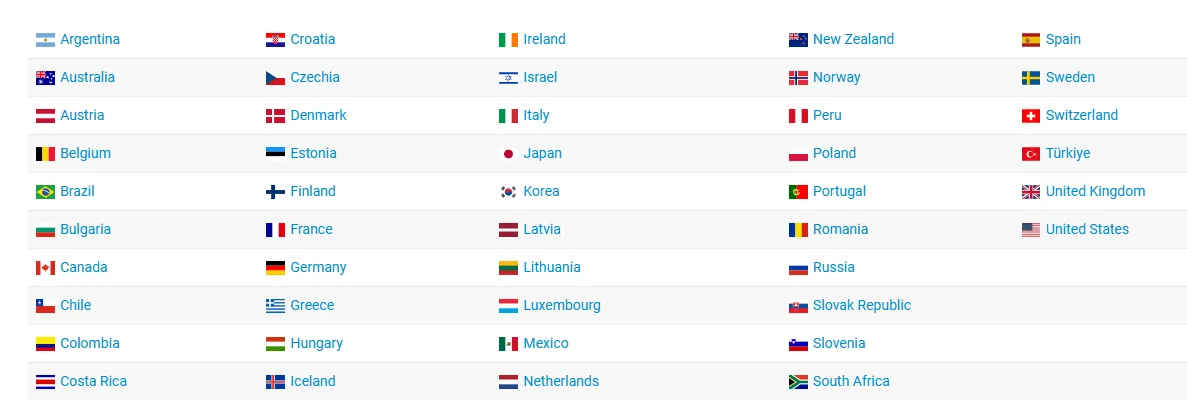
NZ has two years to respond to the latest findings of the working group, which I summarise here. It’s pretty damning. But first, what is the Convention on Combating Bribery all about and why is it important?
Why is it important to stop Foreign Bribery?
In its own words:
The convention focuses on the ‘supply side’ of bribery, and seeks to combat individuals and companies offering, promising or giving a bribe to foreign public officials in the course of business transactions abroad.
Such transactions may include the award or renewal of commercial contracts, or obtaining special licences, permits or visas. But of course, there are also other, (partly) ‘invisible’ bribes, like expensive holidays, champagne dinners, jewellery or other advantages…
For some damning evidence of these, you can read what I’ve already written about the massive numbers of quangos and consultants that benefit from NZ taxpayers funds, the fake ‘charities’ that benefit from tax-exempt status and the property theft sold as a ‘retirement village’.
All these jigsaw pieces of corruption are held together by the evidence of the forever Revolving Doors between Public, Private, Philanthropathic Partnerships (PPPPs). Overall, foreign bribery raises the cost of doing business, distorts free markets, gives others unfair advantage and undermines economic development, while also having the potential to harm consumers through inferior products and services. It also serves to amplify The Narrative and censor dissenting voices. As Richard Jeffs states, this kind of exploitation is the root cause of the globalist’s stakeholder capitalism.
Why is NZ at Risk?
In 2022, New Zealand was the 33rd largest of the 46 member countries based on GDP and ranked 17th among convention membership based on GDP per capita. Small and medium-sized businesses (SMEs) account for a massive 98.8 per cent of all New Zealand businesses and generate over a quarter of New Zealand’s GDP. And 16 per cent of New Zealand SMEs are involved in goods export. [New Zealand’s largest and only multinational company is a dairy company, Fonterra, which I wrote about in the context of Government Covid propaganda here.]
In the latest 2024 Monitoring Report for NZ from the OECD Working Group, the authors highlight how most of our business is foreign. For instance, NZ is the largest exporter of timber in the world, with most of that product sold to China.

The irony is, the stronger the PR message, for instance ‘Clean, Green, 100 per cent Pure’ and ‘well-regulated, fair and uncorrupted’, the more likelihood that the opposite is true. The Financial Action Task Force noted the abuse of NZ shell companies for transnational money laundering. Limited partnerships were vulnerable due to the low cost of establishment, as well as New Zealand’s [fake] reputation as a well-regulated jurisdiction. Sue Barker has also written extensively about the shortcomings of the NZ Charities Act in promoting a public good.
The OECD monitoring process is compulsory for all member countries and includes site visits including meetings with the public, interviews with private sector individuals and stakeholders. The OECD 2024 Report identifies that little progress has been made since NZs 2013 Phase 3 evaluation.
Many interviewees for the Working Group’s report repeated meaningless ideologies, for instance their perception that NZ has an excellent global reputation for upholding standards of integrity and that was why we attract so much foreign investment(!) NZs favourable ranking on Transparency International’s annual Corruption Perception Index was also cited. However, this index is focused on perceptions of domestic corruption and does not include foreign bribery risk in its methodology, nor the realities of these complex crimes.
If NZ wanted to make progress on the objectives of the convention, and reduce foreign bribery and corruption, the sources of info would mainly be the accountants, auditors, the media, police, Serious Fraud Office (SFO), overseas military and Income Tax office (IRD). What does this report say about these entities’ role in information-gathering for the convention?
NZ Serious Fraud Office
The SFO is New Zealand’s lead agency for the referral, investigation and prosecution of any foreign bribery cases. Across all crime types, the SFO usually has 30–40 investigations and prosecutions open at any one time. At the beginning of 2024, the SFO reported 39 front line operational staff, comprising 14 investigators, 10 forensic accountants, 10 investigating lawyers, three electronic investigators and three evaluating lawyers. The SFO’s total budget was reportedly ~NZ$17 million (2023–24 financial year) and its investigative remit also includes broader private sector fraud and corruption (including corporate, commercial and investment fraud), public sector fraud and corruption, and the integrity of our electoral system. SFO staff are mainly drawn from the detective ranks of NZ Police.
The SFO has apparently not conducted any training with overseas-based police or other NZ staff who could be in a position to identify bribery and fraud. Nor does the SFO consult with NZ Police at the outset of any investigation. The Memorandum of Understanding (MOU) between the SFO and NZ Police was not updated to reflect current best practice and several processes were out-of-date. For example, the MOU states that NZ Police is responsible for investigating allegations that “fall below the SFO threshold”. However, the SFO confirmed at the on-site visit that it does not apply any threshold in relation to commencing an inquiry into bribery and corruption allegations. Strange?!
Inland Revenue
The IRD has ~1,000 staff involved in investigations and >40 in a ‘Special Audit’ role, specialising in criminal work. IRD Special Audit staff would encounter clues about potential incidents of foreign bribery. These officials are trained on information sharing with the SFO and NZ Police and are routinely reminded to proactively share information with these agencies. There is uncertainty regarding whether officials from Cook Island, Niue and Tokelau are defined as ‘foreign public officials’ for the purposes of New Zealand’s foreign bribery laws. This needs clarifying legally. But in reality, this is unlikely to happen because almost all NZ Gov officials have roles in and/or close connections with these independent islands.
NZ companies do not have to disclose all relevant beneficial ownership information, despite amendments to accountability laws in 2014. This adds difficulty in researching (as we know all too well) the source of any potential bribery allegation in NZ. For example, shareholders named as lawyers or trusts are ubiquitous.
Where’s the Investigative Journalism?
Historically, foreign bribery allegations are often initially reported by investigative journalists overseas, and the OECD Working Group were apparently surprised that these stories were not picked-up by any New Zealand media. Instead these cases were brought to the SFOs attention by the OECD Working Group. Embarrassing and tragically hilarious! And no surprise to those of us who know that legacy media (especially in NZ) is dead as a coffin nail.
Head in the sand?
The outcomes from this gap in training, ambiguity in law and lack of proactive policies is evident in the OECD findings:
- New Zealand has never commenced a prosecution of foreign bribery and detection levels remain low.
- Only two of the total 17 foreign bribery allegations have ever proceeded to an advanced stage of investigation and only four of the investigations related to legal persons.
- New Zealand does not have a national strategy to combat foreign bribery and there’s clearly a lack of awareness of foreign bribery because no training exists.
- There was a lack of clarity in Ministry of Foreign Affairs and Trade (MFAT) policies: staff didn’t know how or where to report acts of foreign bribery.
- Adding to detection challenges, New Zealand has very limited mechanisms to incentivise self-reporting by companies. Limited private sector outreach is undertaken despite New Zealand’s strong economic ties with the Pacific where there are higher levels of perceived corruption.
- No foreign bribery allegations have been detected by the SFO through media reports, the NZ Foreign Intelligence Unit (FIU), Assistance Recovery Unit (ARU) or public sector agencies who have regular engagement with New Zealand businesses. Only one complaint report to date has clearly fallen within the scope of a protected disclosure (see below).
Where is the Whistleblowers’ Protection?
As Ministry of Health Whistleblower, Barry Young will be aware, NZ introduced a new whistleblower protection scheme in the form of The Protected Disclosure Act (2022). This law was partly in response to previous OECD audits, claiming to provide protection for staff in the public and private sectors which potentially could encourage reporting. There is also a new online SFO tool for reporting bribery. But anyone with any experience of trying to expose corruption in NZ will know this is just tokenistic nonsense.
The reality is, as I explained in this case study of academic freedom in NZ universities, staff with uncomfortable truths to tell are regularly bullied, victimised and forced out with a gagging clause (non-disclosure agreement), and often subsequently blacklisted for the rest of their career.
Foreign Bribery in the UK
By way of comparison, let’s quickly look at my home country’s OECD Monitoring Reports, the most recent being 2021. In the UK, despite an increased level of enforcement of foreign bribery laws, the total number of finalised and ongoing cases remains relatively low. Since Phase 4 in 2017, the status of foreign bribery enforcement is as follows: three foreign bribery cases have been concluded (SFO), resulting in:
- Conviction of 12 individuals and nine acquittals, plus one civil recovery order (one individual)
- Conviction of one legal person in 2018 to GBP18 million
- Prosecutions are ongoing in four cases, of which one is a civil case (SFO).
- At least 32 investigations are underway
Conclusions and Concerns
NZ is heavily dependent upon foreign interactions, especially with China, for its economic survival. Many of these countries are well known to be engaged with complex and potentially illegal trading practices. For decades, NZ legacy media has repeated propaganda that embeds the ideology of NZ not only as ‘clean, green’ environmentally, but also that this country is ‘clean’ in terms of its financial transactions, too. The realities are far from this claim. Anecdotally, conflicts of interest are all-pervasive, with one-degree of separation within NZ becoming a joke rather than deserving of serious scrutiny. Declaring a conflict of interest is NOT the same as taking action that specifically avoids that individual or company accruing beneficial advantage as a result.
It’s clear how sources of evidence that could be proactively supplying the police and SFO with evidence of foreign bribery and corruption are not fit for purpose. Policies are either absent or out-of-date. Furthermore, the awareness of foreign bribery and corruption amongst New Zealanders in general is virtually non-existent: the propaganda is powerful! Does foreign bribery and corruption exist in New Zealand? Of course it does! What is the extent of the problem? No one knows. And reading this report, it’s unlikely we will find out anytime soon.
Why am I writing about this? Because the solution to this ‘problem’ of an illusionary financial crime in NZ could be seen to be held in Digital ID. It is highly plausible that in efforts to ‘improve’ the ‘potential’ corruption, that a cashless society would be promoted. But my guess is, that would never reach the hidden machinery that is actually involved in foreign bribery and corrupt practices, as these are too powerful.
What are your thoughts? How corrupt is New Zealand, and how could we expose more of these wheelings and dealings without digging ourselves into a deeper digital prison?
Republished from the author’s Substack by the Daily Telegraph New Zealand.