Table of Contents
There are some historical events that turn out to be truly epochal. Some are relatively peaceful: the signing of the Magna Carta and the birth and death of Jesus. Human nature being what it is, though, most of them are wars.
The Thirty Years’ War ended in the Peace of Westphalia, which ushered in the nation state. World War I is the scorched earth that cut short the extraordinary la Belle Epoque of the 19th century and spelled the end of empires (with the coup-de-grace coming 18 years later).
Another history-turning war was the American War of Independence. This was not just the foundational moment in the history of the United States: its shots were truly heard round the world, not just doing much to inspire the French Revolution, but also affecting the course of Britain’s Anglophone colonies in the South Pacific.
In many ways, in fact, it could be considered the first truly global war.
The French became aggressive in 1778, turning a war that had begun as a struggle in and for America into something much bigger. The British and French clashed in every area of the planet where they were in competition – in the West Indies, which became a major theater of operations; West Africa, where each side tried to seize the other’s slave trading bases, and in India, where the rival East India Companies struggled for dominance.
Most importantly for the British, French intervention threatened the home territories with invasion. As the British redeployed their forces to meet the challenges of this wider war, their chances of recovering the rebel colonies diminished greatly.
France ultimately cut off its nose to spite its face. The French government figured that the war was an unmissable opportunity to get one up le Albion perfide. A small number of more perspicacious Frogs worried that a successful colonial rebellion might inspire the dusky hordes in their own colonies to start getting uppity.
Instead, it was the French masses themselves who ended up getting ideas inspired by the Americans. Just six years after the Americans’ successful revolution, French peasants were inspired to try on their own. We all know how that ended.
Well played, French monarchy. Well played.
Initially, though, not even the Americans themselves initially envisioned completely breaking away from Mother England.
When the war began in April 1775, the colonies sought more autonomy within the British Empire, not complete separation. The Continental Congress, which led American resistance, petitioned King George III that summer, denying that independence was the Americans’ objective, and appealing to him to protect the colonies.
At this critical juncture, British ministers, and the king rebuffed the Americans and started to treat them as open and avowed enemies, making many of the colonists think that independence was the only option.
Even so, not all Americans backed the Revolution. In fact, the committed Patriots were a minority. A roughly equal percentage of colonists were fence sitters, while a significant minority were staunchly loyal to Britain.
The conflict was more of a civil war than a conventional international contest. Estimates vary, but probably somewhere around a fifth of white colonists refused to accept a complete break with Britain.
Many of them had supported resistance to the claims of the British Parliament to tax the colonies, but they could not stomach a rejection of the link with the British crown. Some of these loyalists took up arms on the British side, and many of them migrated to Canada at the end of the war, providing the basis for its Anglophone population.
One notable loyalist was Benjamin Franklin’s son, William, last colonial governor of New Jersey. The divide persisted beyond the end of the war. Despite attempts at reconciliation by William, who lived out his life in London in exile, Franklin senior persisted in his bitterness. William was all but cut out of his father’s will, inheriting only some property already in his possession and some nearly worthless property in Nova Scotia.
Yet, had history only taken a slightly different turn, it might well have been the father seeking the forgiveness of the son. The war was in fact very nearly won by the British toward the end of its first year.
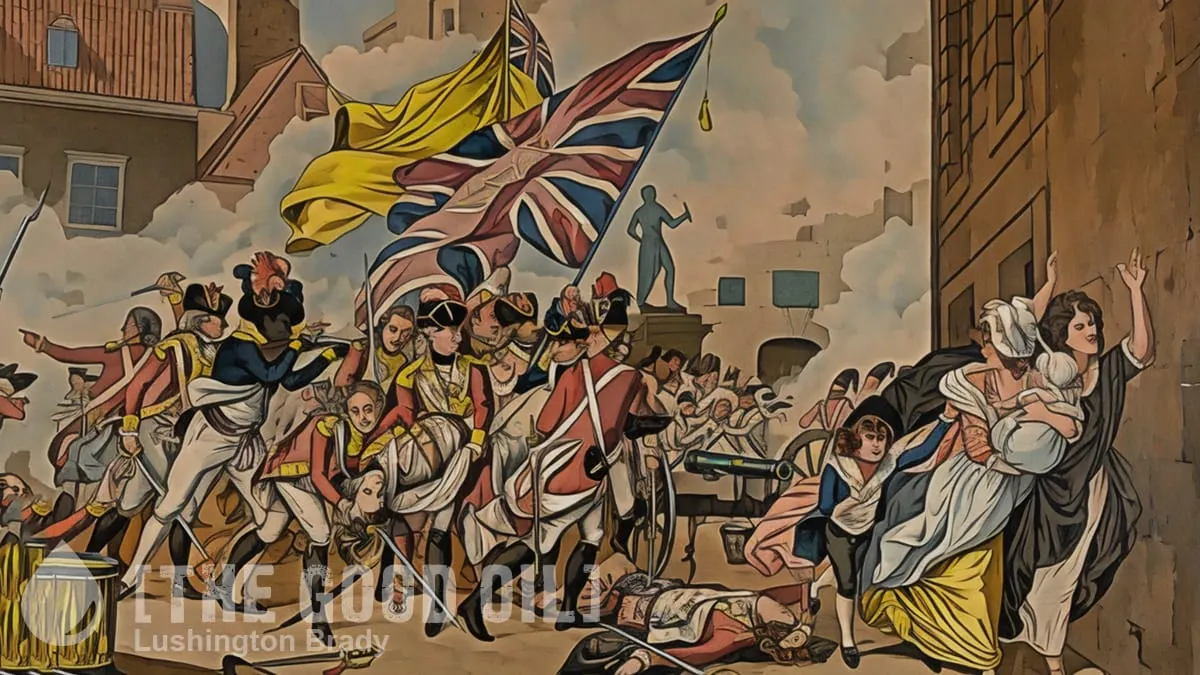
In late summer 1776, the British army caused a major defeat on Washington’s forces at the Battle of Long Island (also known as the Battle of Brooklyn). The British then went on to occupy New York City and chased the disintegrating remnants of the American army across New Jersey to the Delaware River.
By mid-December, many British officers assumed that the rebellion was on the verge of collapse. But just after Christmas, [George Washington] boldly counter-attacked, reviving American spirits and ensuring that the war continued. Contemporaries blamed General Howe, the British commander, for not seizing the opportunity to crush the rebellion when he had the chance.
Indeed, contrary to Mel Gibson’s slanderous portrayal of Howe in his film The Patriot, the British commander if anything went too easy on the rebels.
Historians have been kinder, recognizing that, even in the 1776 campaign, the British faced major logistical challenges supplying their army at such a distance from home, and that Howe had no wish to alienate Americans further by using brutal methods.
Had Howe indeed been the monster Gibson portrayed the British as, in his risible fiction, history would have been very, very, different.