Table of Contents
In a sign of increasing defensive posture against the possibility of a Chinese invasion of Taiwan, Japan is arming itself with long-range missiles.
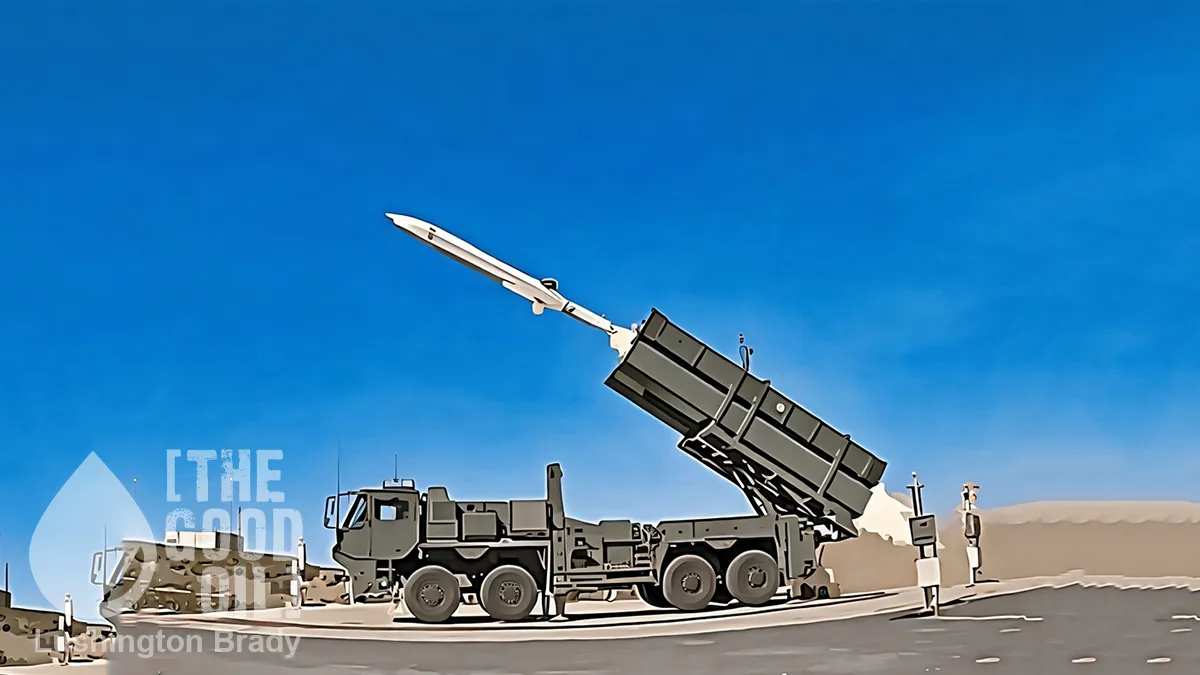
Japan is preparing to deploy its first batch of domestically developed long-range missiles, with their launchers arriving at an army camp yesterday, as the country accelerates its offensive capability in response to rising challenges in the region.
The upgraded Type-12 land-to-ship missiles are to be deployed at Camp Kengun in Japan’s southwestern prefecture of Kumamoto by the end of this month, completing the process of deployment, Japanese Chief Cabinet Secretary Minoru Kihara said without giving details.
This is one of the southernmost provinces on the Japanese home islands, closest to the East China Sea and Taiwan. You’d think the locals would be more aware than most of the danger of proximity to any Chinese invasion of Taiwan.
Army vehicles carrying the launchers and other equipment arrived past midnight in a highly secretive mission criticized by residents. Dozens of people stood outside of the camp, shouting “Stop long-range missile deployment” and holding banners carrying messages of protest.
Opponents have complained about the lack of transparency and said the deployment would instead escalate tension and make the missiles the target of attacks.
“The prefecture has never been notified,” Kumamoto Governor Takashi Kimura told reporters yesterday. “It is extremely disappointing that we learned this from media reports.”
It apparently hasn’t occurred to them that China has already escalated tensions. Not just with their increasingly belligerent behaviour in the China Sea and sabre-rattling over Taiwan, but with their explicit threat last month to threatening to “cut off” PM Sanae Takaichi’s “dirty head”. It would be frankly suicidally naive, not to say negligent, of the Japanese government to sit back and do nothing.
The deployment is clearly part of Takaichi’s moves to put Japan’s military on to a more offensive posture than they’ve taken since the end of WWII. Given the obvious threat of China – which Takaichi says would be an ‘existential threat’ to Japan, should the communist giant invade Taiwan – the new PM wants to hold a referendum to amend Japan’s pacifist constitution, giving the island nation a more direct role in its own defence.
While opinion polls show a growing majority of Japanese support the constitutional change, and the ruling LDP clinching the supermajority in the Diet necessary to advance the proposal, such protests suggest that passing such a reform is still an uphill battle. Even without the reform, though, the Japanese government is not sitting on its hands.
The Japanese Ministry of Defense last year moved up the schedule of the missiles’ deployment by one year. Japan has accelerated a military buildup in the southwestern region, while China has escalated tension around Taiwan.
The upgraded Type-12 missile, developed and produced by Mitsubishi Heavy Industries, has a range of about 1,000km and can reach mainland China, a significant extension from the 200km range of the original.
It is to be deployed next at Camp Fuji in Shizuoka, west of Tokyo, later this year.
Japan considers China a growing security threat and has pushed a military buildup on southwestern islands near the East China Sea. It has deployed PAC-3 interceptors and midrange surface-to-air missiles on many of the islands, including Okinawa, Ishigaki and Miyako.
Japanese Minister of Defense Shinjiro Koizumi last month said Japan would deploy the midrange surface-to-air missiles on Japan’s westernmost island of Yonaguni, just east of Taiwan, by March 2031.
If only our governments in Australia and New Zealand were so clear-eyed and so prepared to ready for such an obvious threat building in the South Pacific.