Table of Contents
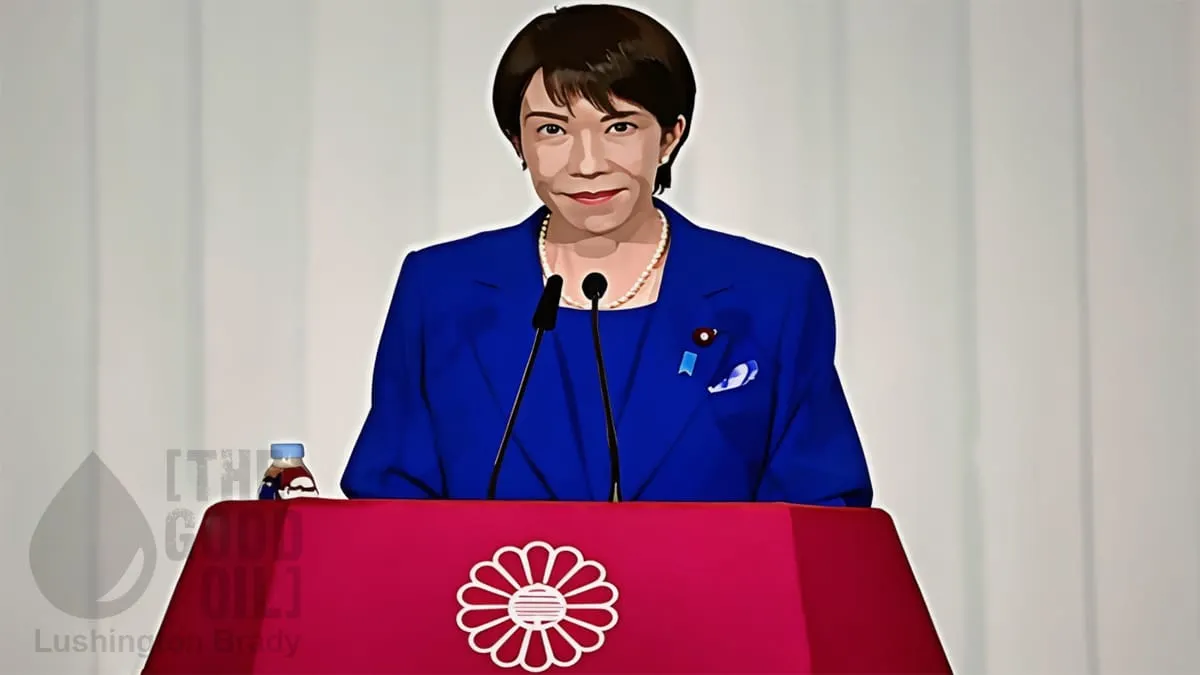
Japan finally has a new prime minister, a successor to the doomed Shigeru Ishiba. Will Sanae Takaichi, the country’s first woman PM, be able to rebuild the fortunes of the Liberal Democratic Party, who’ve governed Japan since WWII, for all but a few recent years?
Firstly, while many conservative Western observers have been eager to link Ishiba’s demise to Japanese anti-mass-immigration protests, immigration was barely more than a peripheral, latecoming issue. The simple fact is that the LDP has been living on the razor’s edge for over a year, mired in corruption allegations and a stagnating economy. Barely scraping in to minority government after he called a snap election following predecessor Fumio Kishida’s resignation, Ishiba was a political dead man walking.
So for months Japan has been wrestling with two related questions: first, can the LDP build a stronger coalition to govern effectively and, more importantly, who would be Ishiba’s successor. The two lead candidates quickly emerged as Sanae Takaichi and Takayuki Kobayashi, just 44 and a fourth-generation politician and son of a former PM, the immensely popular Junichiro Koizumi.
Takaichi prevailed. Despite launching her bid with the pop song “Overnight Success”, her ascent was a long time coming.
It took Takaichi three attempts, and countless calls and visits to her fellow lawmakers, to defy expectations and attain the top post.
While her popularity with the party’s rank-and-file members had long been a given, she seemed to struggle throughout the campaign to enlarge her base among her colleagues in parliament.
In the end, though, she made history to become the first woman to win an LDP leadership race.
Who is the woman commentators are calling ‘Japan’s Thatcher’?
Born in a middle-class family in Nara Prefecture in 1961, Takaichi’s pedigree differs from that of many of her LDP colleagues from political dynasties.

Not least having been a motorbike-riding, heavy metal drummer. She still cites His Excellency Demon Kakka and X Japan as her favourite bands.
After graduating from Kobe University, she joined the Matsushita Institute for Government and Management, a foundation set up by the founder of Panasonic, Konosuke Matsushita, which has produced a number of eminent politicians. Among them is Yoshihiko Noda, the current leader of the Constitutional Democratic Party of Japan.
Matsushita remains one of Takaichi’s heroes.
Following a stint as a fellow for a member of the U.S. House of Representatives, Takaichi pivoted to a career as a political commentator on TV Asahi’s fixture nighttime program, “Asa Made Nama TV” (“Live TV Until Morning”), among other shows.
Her first election campaign, for a seat in the Upper House of the Diet in 1992, failed. But just the next year she won a seat in the more powerful Lower House, running as an independent in the election where the LDP lost its majority for the first time since 1955. After briefly joining the short-lived ‘big tent’ Shinshinto party, she joined the LDP in 1996. Here she forged a friendship with another newly-elected MP, future Prime Minister Shinzo Abe.
It was in Abe’s first Cabinet in 2006 that she was first appointed to a government position, as minister in charge of science and technology and other portfolios. In the successive Abe-led LDP governments from 2012, she served several stints as minister of internal affairs, as well as party policy chief.
She last served in government as minister of economic security from 2022 to 2024 under Prime Minister Fumio Kishida.
Over the years, as she raised her profile, Takaichi gradually sharpened her positions on everything from economic and social policy to foreign affairs in order to embody the ideals championed by the LDP’s most conservative caucus.
Takaichi has a reputation as a policy geek: last year she published two policy-heavy books, including “The Study of National Strength”.
“I love Japan and the Japanese people from the bottom of my heart, and I have unwavering faith in their inner strength,” she often said on the campaign trail last month.
Not unlike her inspiration Margaret Thatcher, Takaichi has often been an outsider in her own party.
Her views on China, as well as her longtime support for expansionary fiscal policies and hard-line positions on social issues such as the surnames of married couples, have often put her at odds with the moderate voices in her party.
As a result, the support of the party’s rank-and-file members was a crucial component of her Saturday win. While she has recently worked to soften her image, her conservative brand seems to have benefited her in the race, as the party’s local chapters took a decisive tilt to the right.
To shore up her government’s support, Takaichi is likely to expand their ruling coalition with the addition of the centre-right Democratic Party for the People.
Her election has been hailed by US President Donald Trump, who called her “a highly respected person of great wisdom and strength”.