Plus ça change, plus c’est la même chose. The more things change, the more they remain the same. Back in 1892, high speeds were rare on New Zealand railways. They still are.
But there is always an exception, and on July 20, 1892, a new world record was set.
The Wellington and Manawatu Railway (WMR) Company’s locomotive No. 10 established a world speed record for the narrow 3 foot 6 inch (1067 mm) gauge, averaging 68 km per hour on a two-hour run and hitting a top speed of 103 kph.
From the time of the WMR’s formal opening on 3 November 1886, its American-built Baldwin locomotives, comfortable passenger carriages and well-appointed dining cars frequently outclassed their counterparts on the government-owned New Zealand Railways (NZR) network. No. 10 was one of two 2-6-2 ‘Prairie’ locomotives (similar to NZR’s N class) the company had ordered from Philadelphia’s famous Baldwin Locomotive Works in 1891.
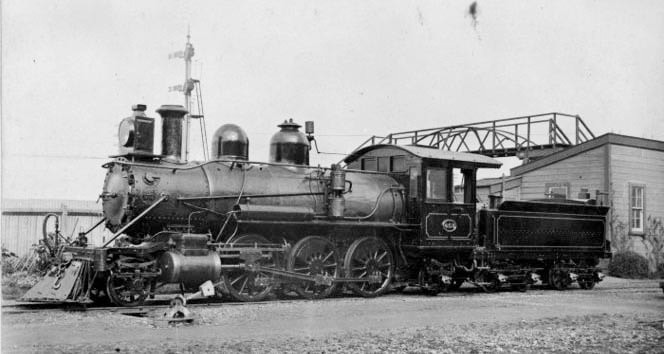
In July 1892 No. 10 ran a speed trial over the 135-km WMR route between Wellington and Longburn, just south of Palmerston North, hauling a single passenger car and van. Driver Fryer and Fireman Taylor were joined in the cab by the company’s Locomotive Superintendent James Fulton, his assistant James Marchbanks, and the well-known rail journalist Charles Rous-Marten, who timed the run. The trip was completed in 1 hour 58 minutes running time, an average speed of 68 kph; between ?taki and Longburn the average was 78 kph. As the train crossed the Makurerua (or Makerua) Swamp near Tokomaru it reached a top speed of 103 kph.
High speeds were rare on New Zealand railways, and this performance was equal to that of some of the best (standard-gauge, 4 foot 8 inch) English express trains of the era. Although the narrow-gauge speed record was later bettered in South Africa and Indonesia, the WMR’s 1892 achievement helped establish its reputation as a world-class railway. […]
When the WMR Company was taken over by NZR in 1908, No. 10 was renumbered N 454 and later served in Wairarapa and Westland. Withdrawn from service in 1928, the historic record-breaker was dumped in the Waimakariri River. Its twin sister, No. 9 (renumbered N 453), is being restored at Paekakariki.
NZHistory