Table of Contents
Summarised by Centrist
Labour’s new NZ Future Fund has drawn sharp criticism from economists who warn it could worsen, not fix, New Zealand’s economic weaknesses.
The fund is a proposed sovereign wealth vehicle that would reinvest dividends from state assets into domestic companies.
Speaking on RNZ’s Morning Report, Dr Eric Crampton of the New Zealand Initiative said the fund’s design was “fragile by construction,” arguing it would lock up capital that should remain flexible and force the government to plug the resulting $800 million annual hole in revenue through higher taxes or spending cuts. “Those dividends currently fund health and education,” Crampton said. “If they’re diverted, the government will have to find that money somewhere else,” he added.
Crampton questioned the need for such a fund, saying New Zealand’s problem wasn’t a shortage of capital but a poor investment climate and unstable policymaking that deters foreign investors. “If you want growth,” he said, “fix the rules, cut red tape, and stop flipping policy every few years.”
Simplicity’s Sam Stubbs, also interviewed, was cautiously supportive of the concept but warned that without careful management, the Future Fund would simply reshuffle existing money rather than generate new investment.
Dr Oliver Hartwich, speaking on The Platform, described the proposal as “the wrong tool for a real problem.” He said Labour’s scheme amounted to “bureaucrats picking winners” while distorting markets and crowding out private investors. Hartwich also criticised the plan’s “dual mandate”, to pursue both financial and “social” returns, as a political loophole allowing the government to claim success no matter what the outcome.
Both economists compared Labour’s model unfavourably to Singapore’s Temasek fund, which can freely buy and sell assets.
Labour’s plan says the government can’t sell the “seed assets” it puts into the fund, shielding them from future privatisation and creating what Crampton called “a political firewall against reform.”
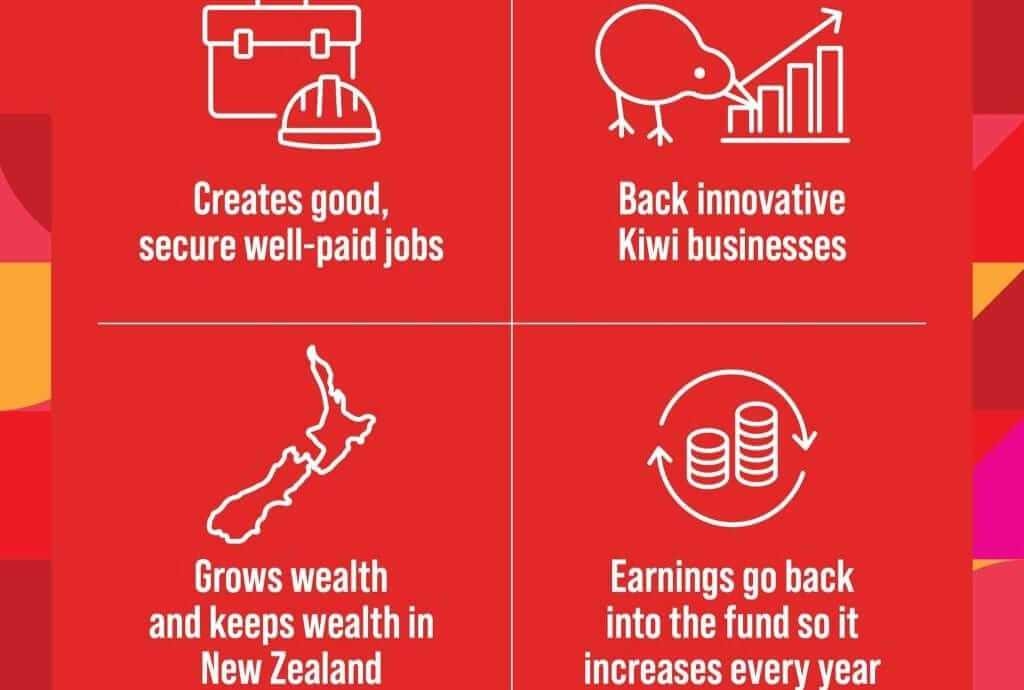
Labour says the NZ Future Fund will invest in “innovative Kiwi businesses” and infrastructure to “build resilience and keep New Zealand’s future in New Zealand.” Critics see it as another KiwiBuild-style experiment — heavy on branding, light on numbers.
Hear more over at The NZ Initiative and YouTube