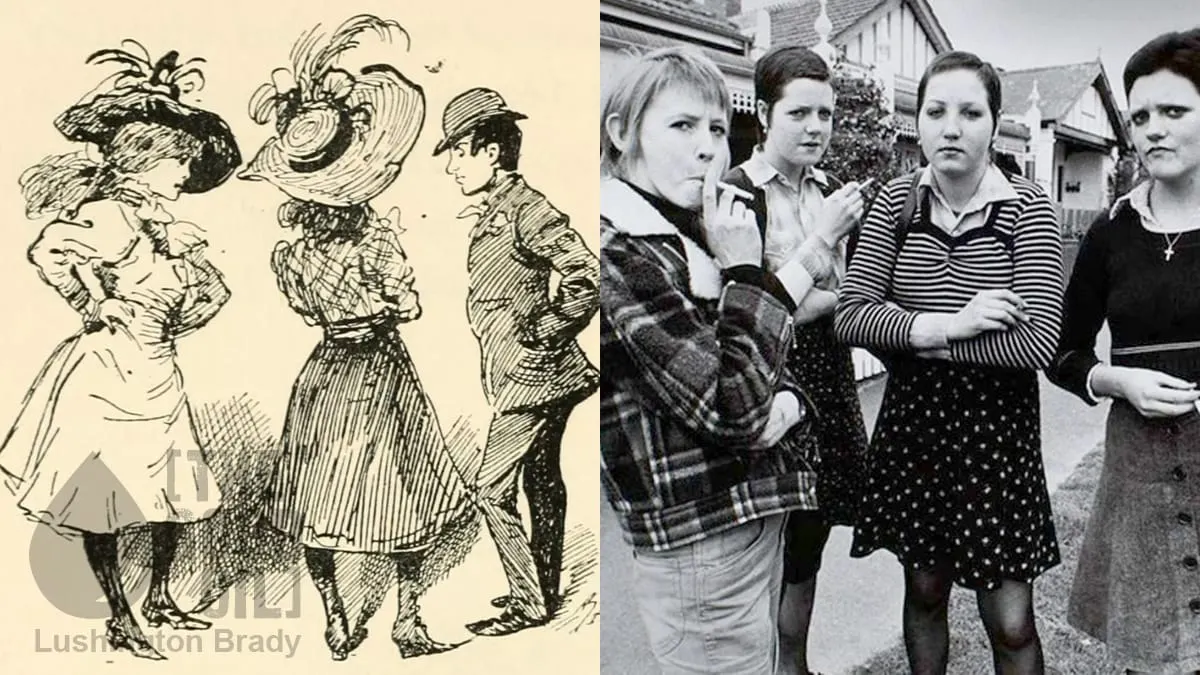
Someone on X the other day reminded me about ‘Sharpies’. For those who don’t know – which is pretty much the entire world who didn’t grow up in Melbourne in the 1970s – Sharpies were a youth subculture largely confined to that time and place, and today mostly forgotten about. Probably for the better. But Sharpies perhaps deserve a pride of place as possibly the last uniquely Australian youth subculture; the end of a long tradition stretching back almost to the beginnings of modern Australia, with British settlement.
These subcultures carried a distinctly local flavour, partly shaped by the nation’s convict heritage, geographic isolation, working-class ethos, and a persistent undercurrent of anti-authoritarianism. Unlike their British or American counterparts, Australian youth subcultures frequently embody the “larrikin” spirit – the name of one of the first distinctive Aussie youth subcultures – a mischievous defiance tempered by mateship and resilience, while reflecting broader national myths of egalitarianism and irreverence. From the early colonial era through to the present, these groups have not merely imitated overseas trends but have forged uniquely Australian identities.
Australian youth subculture may, in fact, be said to originate even earlier than the Larrikins of the later 19th century. Within a half-century of the First Fleet, the emergence of “currency lads and lasses” marks the genesis of a distinctly Australian youth identity amid the penal colony’s transition to free settlement. These were the first generations of native-born white Australians, children of the British convicts and settlers who arrived with the First Fleet in 1788 and subsequent transportations.
The term “currency” derived, like many expressions of youthful rebellion, as a defiant re-taking of what was coined as an insult, much as American blacks reclaimed “nigger” as “nigga”. The term “currency” derived from the colonial economy’s inferior local money, be it rum, promissory notes, or the famous ‘Holey Dollars’ (out-of-circulation Spanish dollars punched through the middle) in contrast to the ‘superior’ British sterling pounds. By analogy, native-born colonials were labeled “currency” to imply inferiority or illegitimacy. In a classic youthful linguistic middle-finger, native-born youth soon took on the epithet as a badge of pride.
The earliest printed reference appears in the Sydney Gazette in 1822, advocating social events for “currency lasses,” while Peter Cunningham’s 1827 account in Two Years in New South Wales described them positively: “Our colonial-born brethren are best known here by the name of Currency, in contradistinction to Sterling... Our Currency lads and lasses are a fine interesting race, and do honour to the country whence they originated”.
Physically and culturally, currency youth began to diverge from their British-born parents. Contemporary observers noted they were often taller and healthier – “cornstalks” in local slang – due to better nutrition and outdoor lifestyles in the bush and the growing towns. (This physical distinction in fact marked Australians and New Zealanders even in WWI: British ranks later recalled that, because of their confidence and physical stature, ANZACs seemed to them to belong to the officer class.)
They spoke with an emerging Australian accent, blending English dialects with local innovations, and displayed a “singular disinclination to finish any work completely”, alongside a fierce attachment to their homeland. Few who visited England longed to stay; most hailed their return as a delight.
This generation embodied nascent Australian traits: irreverence toward class hierarchies (less deference to “sterling” elites), egalitarianism born of shared convict origins, mateship, and a practical, anti-authoritarian bent forged in a harsh environment. Horatio Wills, himself a currency lad born in Sydney to a convict father (and later the father of the inventor of Australian Rules Football, Tom Wills), founded The Currency Lad newspaper in 1832 to champion native-born interests against exclusivist British settlers.
By the 1850s gold rushes and Eureka Stockade, these traits had crystallised into a broader colonial identity: resilient, nationalistic, and skeptical of distant authority. Currency youth were not a formal “subculture” in the modern sense but represented the foundational demographic shift that made subsequent youth rebellions possible: a generation that felt inherently Australian rather than transplanted British.
Additionally, by the 1850s Australia was well on the way to becoming one of the most urbanised nations in the world, and in the big cities of Sydney and Melbourne – more specifically, their slums – a true youth subculture was emerging. One which had all the hallmarks of the classic ‘juvenile delinquent’: the Larrikin.
The term “larrikin” entered Australian English around the 1860s–1870s, likely from British dialect (Worcestershire/Warwickshire roots meaning a mischievous or frolicsome youth, related to “larking about”). Popular etymologies credit Irish policemen in Melbourne mangling “larking” into “larrikin” in court, though linguists trace it to English origins. Initially denoting urban roughs or hoodlums, it described working-class teenage gangs known as “pushes”: organised groups like the Rocks Push in Sydney or Melbourne’s Little Lon pushes (based around the notorious slums of Little Lonsdale Street).
Larrikins were rowdy, anti-social, and defiant: they obstructed footpaths, used foul language, engaged in gang fights (“stoushes“), vandalism, and occasional violence, including assaults and even gang rapes in sensationalised accounts. They glorified bushrangers, dressed in flashy but cheap finery (high-heeled boots, colorful scarves), and revelled in contempt for police and “toffs.” This was no mere youthful mischief; it reflected deeper grievances: poverty, Irish convict legacies, urbanisation’s dislocations, and resistance to Victorian moralism in a penal society’s offspring.
New Zealand also had “larrikinism” reported as early as the 1890s, with street mobs in Christchurch or Auckland engaging in similar anti-social behavior: mud-pelting, vandalism, and youth gangs in crowded alleys. It was viewed as a product of urbanisation and poverty, much like Australia’s. However, New Zealand lacked the same scale of organised “pushes” or literary immortalisation; the term appeared but did not evolve into a mythic national figure equivalent to C. J. Dennis’s “Sentimental Bloke”. Instead, larrikin-like energy fed into broader concerns about juvenile delinquency.
The official responses were a familiar moral panic. Newspapers sensationalised “larrikin outrages”, police intensified surveillance and arrests, and magistrates imposed harsh penalties. By the 1880s–1890s, pushes terrorised streets, prompting calls for greater policing. The subculture peaked in the 1890s but declined after 1900 due to urbanisation, organised sports channelling male energy, and stricter law enforcement.
Yet its legacy endured through cultural immortalisation. Cartoonist Ambrose Dyson punned a series of cartoons, “In ‘Push’ Society”, for The Bulletin in 1900, but it was a peculiar novel in verse which truly immortalised the larrikin. C.J. Dennis’s 1915 “The Songs of a Sentimental Bloke” transformed the larrikin from thug to lovable rogue. No less a figure than Henry Lawson sang its praises in his foreword to the first edition. Illustrated by Hal Gye’s cherubic larrikins, the book sold over 60,000 copies in its first year, becoming Australia’s best-selling poetry volume. At a time when Australia was a world leader in cinema, the book was adapted to film in 1918.
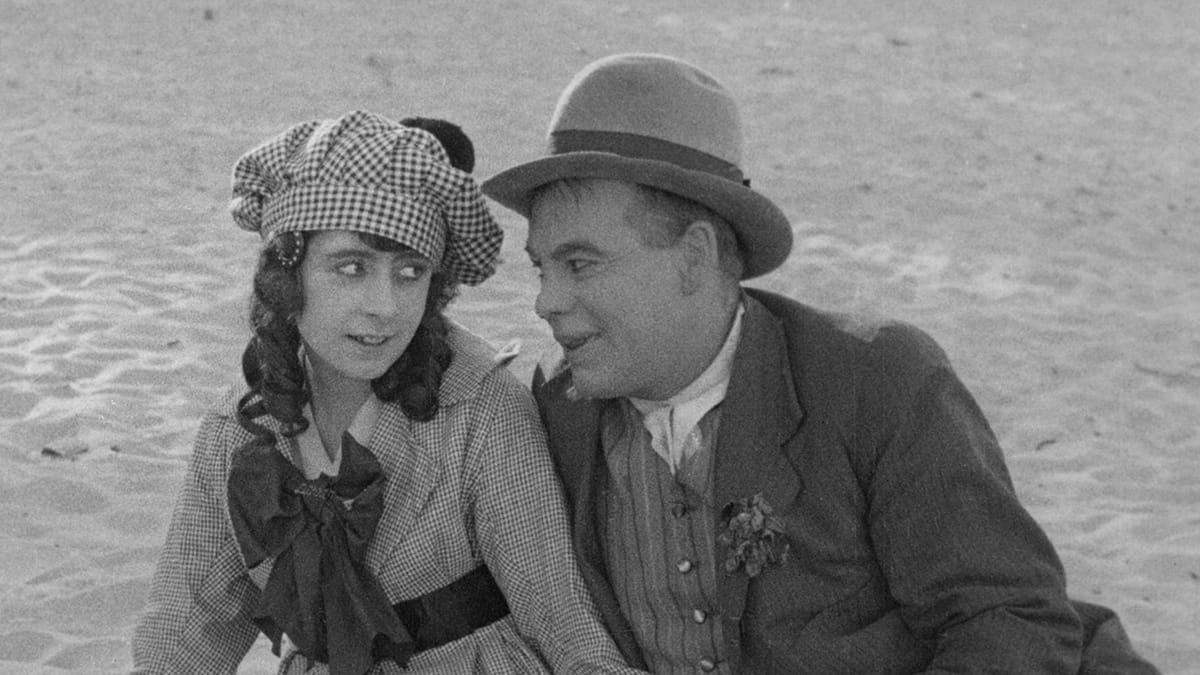
Narrated in raw Australian slang, it follows Bill, a Melbourne push member in Little Lon, who falls for Doreen (who “stands for all good women”, Lawson said), abandons his rough ways (gambling, fighting), marries, and finds domestic redemption. Dennis, dubbed the “laureate of the larrikin,” humanised the archetype during World War I, aligning it with the ANZAC digger’s cheeky heroism. What began as a scourge became a national myth: the good-hearted underdog who thumbs his nose at authority but ultimately values mateship and fair play. This shift cemented larrikinism as a cornerstone of Australian identity – irreverent yet redeemable.
Post-World War II prosperity and American cultural influx birthed another distinctly Australian youth subculture in the heyday of youth subculture.
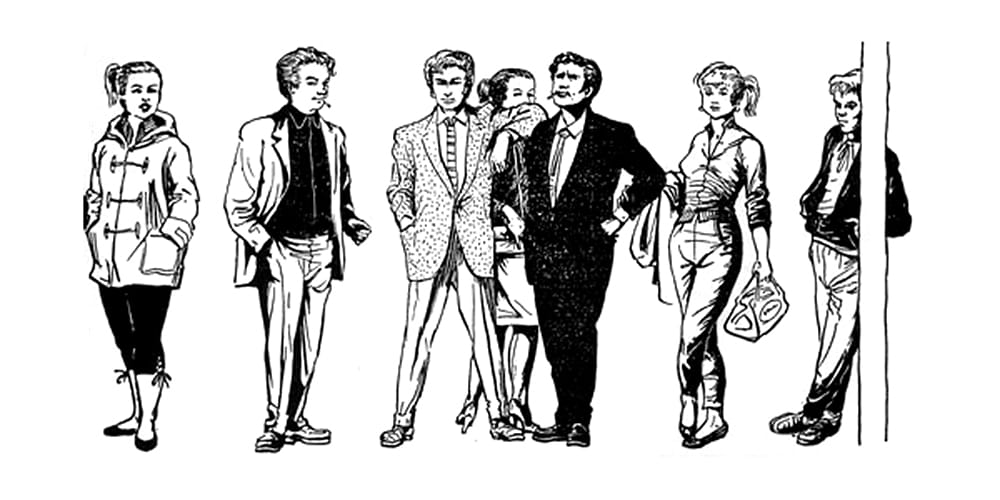
Bodgies and widgies were Australia’s distinctive take on rock ’n’ roll youth rebellion in the 1950s. Emerging in the mid-1940s from Sydney’s inner-city areas like Woolloomooloo and Kings Cross, bodgies (males) and widgies (females) were working-class teens emulating U.S. servicemen stationed in Australia during the war, no doubt deliberately vexing their elders who were busy sniffing at the ‘Overpaid, over-sexed and over here’ Americans. The term “bodgie” originated from black-market “bodgie” (inferior) American cloth and youths faking Yankee accents.
Gangs formed around milk bars, with the “Woolloomooloo Yanks” as an early archetype. By the mid-1950s, they had evolved into a full subculture: bodgies in zoot suits or American drape jackets, pegged trousers, moccasins, slicked-back quiffs (Brylcreem-heavy: hence Bob Hawke’s nickname, “the Silver Bodgie”), and later leather jackets or flannel shirts. Widgies sported short hair, jeans, tight skirts, pointy bras, and rope petticoats, defying feminine norms. They rode motorbikes or hot-rodded cars (modified Holdens, Fords), danced to rock ’n’ roll (Elvis Presley, Bill Haley, local Johnny O’Keefe), and embraced a hedonistic, consumerist ethos amid post-war affluence.
Unlike British teddy boys or American greasers, bodgies and widgies were uniquely tied to Australia’s American cultural cringe and working-class aspirations. Media portrayed them as delinquents – violent, aimless louts, prompting a Victorian Police “Bodgies and Widgies Squad”, similar to New Zealand’s 1954 Mazengarb Report on juvenile delinquency. They fought rival groups and clashed with authorities, yet their rebellion was often stylistic: rejecting British austerity for U.S. glamour. The subculture laid groundwork for later Australian rockers, persisting into the 1970s in some areas with a harder edge (AC/DC, Rose Tattoo influences). It highlighted youth’s negotiation of imported trends with local realities – cars over cafe racers, pub rock over pure rockabilly – while amplifying the larrikin tradition of cheeky defiance in a suburbanising nation.
Which brings me, at last, to the Sharpies.
The 1960s–1970s saw sharpies (or “sharps”) emerge as a quintessentially Melbourne phenomenon, evolving from bodgie roots into one of Australia’s most fashion-obsessed and territorial youth gangs. “It happened in the suburbs north of the river,” sang Angry Anderson, in Rose Tattoo’s sharpie epic, “The Butcher and Fast Eddy”. Where the smokestacks scrape the air and gangs of short haired boys roam the streets.
Sharpies were, indeed, predominantly working-class suburbanites from areas like Richmond, Collingwood, Fitzroy, and later outer suburbs (Thomastown, Blackburn South). Sharpies prioritised “dressing sharp” over rocker leather or mod polish. Sharpies distinctively wore tailored cardigans, jumpers, slim Levi or Lee jeans (often customised), T-shirts, and platform shoes or chisel-toed boots (good for head-kicking). Later iterations added striped jumpers, mullets, and bumbags. Girls often shaved their eyebrows. Sharpies also had a distinctive dance style, the ‘Sharpie Shuffle’.
Like most youth subcultures, music was key. A distinctively Australian brand of hard-edged pub rock, where Aussie musicians finally grew confident enough to stop slavishly aping British and American trends. Groups like Lobby Loyde and the Coloured Balls, Billy Thorpe, Rose Tattoo, Skyhooks, and early AC/DC, all loud, local, and aggressive, were sharpie icons. Although Lloyde, at least, was somewhat perplexed by his group’s association with sharpie violence: ‘We were the biggest bunch of hippies you could meet’, he later recalled.
Sharpies were gang-oriented, congregating at dances, town halls, and trains, where territorial brawls with mods, skinheads, or other groups were common, though ex-members claim violence was exaggerated and ritualised. A strict moral code – loyalty, no snitching – coexisted with hyper-masculine posturing. Prominent in Melbourne due to the city’s industrial suburbs and multicultural mix of Greek, Italian, Yugoslav influences, they spread modestly to Sydney and Perth. Photographers like Rennie Ellis and books such as Top Fellas (2004) and Rage: A Sharpie’s Journal (2010) captured their style. By the early 1980s, sharpies faded amid economic shifts, disco, punk fragmentation, and changing youth tastes. They represented a peak of localised Australian youth culture: fashion-forward yet street-tough, blending larrikin aggression with working-class pride in an era of suburban sprawl and cultural nationalism.
New Zealand had no direct equivalent to sharpies. Its 1970s youth culture included overlaps with rockers, emerging skinheads, and heavy metal fans, but nothing as fashion-obsessed or territorially stylised around local pub rock in the same way. Instead, the era saw the rise of ethnically influenced groups and the solidification of motorcycle clubs and Māori/Pasifika gangs. These gangs also saw what had begun as a youth subculture harden into intergenerational criminality and patched gangs. Unlike Australia’s more stylistic eshays or sharpies, these are often rural-urban, multi-generational, and tied to indigenous identity.
It’s hard to think of any youth subculture since the sharpies that was or is so distinctly Australian. Sure, punk emerged as spontaneously and independently in Australia as it did in Britain and America (the Saints indeed beat all the British punk bands to releasing a single), but it followed the same influences and arrived at the same conclusions (a bunch of yobs who couldn’t play too good, putting some old Eddie Cochrane riffs through overdriven amps, as the Saints’ Ed Kuepper later put it).
Even the eshay (or “adlay”) phenomenon, originating in Western Sydney’s working-class suburbs around the mid-2000s, seems indistinguishable from the British “chavs”. Eshays are defined by hyper-masculine street style, pig Latin slang (“eshay” from “lad”, Pig Latinised as “adlay”), and a culture of “cashed-up” bravado. Fashion includes polo shirts (Nautica, Ralph Lauren) buttoned to the neck, Nike TN trainers, Adidas shorts, tracksuits, bumbags slung across the chest, gold chains, and often mullets or fades.
They favour Australian drill, rap, and hip-hop, with anti-social stereotypes involving train-station loitering, graffiti, petty crime, and territorial posturing. Spread via social media to Melbourne, Perth, and beyond, eshays in some ways echo bodgies (American-influenced swagger) and sharpies (gang loyalty, fashion obsession) but are otherwise indistinct from their global counterparts. Other recent trends – skate culture, doofs (bush raves), or hip-hop scenes – similarly exist but lack the national specificity of larrikins, bodgies and sharpies. On the other hand, the eshays could be said to affirm the larrikin continuum: cheeky, working-class defiance in a globalised world.
In that respect, then, Australia’s youth subcultures reveal a through-line of resilient identity formation. Currency youth planted seeds of native pride and egalitarianism; larrikins added overt rebellion, softened by Dennis into cultural folklore; bodgies and widgies injected post-war consumerism and American flair; sharpies localised it with Melbourne’s sharp edge; and eshays adapt it to digital, multicultural realities. These groups have consistently challenged authority while celebrating mateship, style, and underdog resilience: hallmarks of the Australian character. In an era of fragmented online tribes, their legacy serves as a reminder that youth subcultures were once not mere fads but crucibles for national self-definition.
As Australia evolves, maybe it will reclaim the larrikin spirit, ensuring the ‘currency’ of homegrown rebellion remains anything but inferior.