Table of Contents
Ani O’Brien
Like good faith disagreements and principled people. Dislike disingenuousness and Foucault. Care especially about women’s rights, justice, and democracy.
I am a reader. I devour books. Non-fiction and fiction, high-brow and low. Just like sometimes I want to eat something greasy and calorie-laden and other times crave something more nutritious. I am a big believer in fiction teaching us just as much as non-fiction and loathe those who sneer at fiction readers as if we are somehow less serious.
This year I read fewer books than I have in recent years, but I still landed somewhere around 120–130 books. I don’t watch much TV okay! I have chosen my top reads and share them with you below. Please note that these books were not necessarily published in 2025, I simply read them this year.
Let me know in the comments what your top reads were this year and if you have read any of these.
BEST FICTION: Mania by Lionel Shriver
This book has gone straight onto my best-books-ever list.
Mania is my favourite book of 2025. It’s one of those rare novels that makes you feel as if the ground you’ve been walking on for years has shifted. Lionel Shriver takes an alternative history of the West and weaves it with such coherence and elegance that it feels less like speculative fiction and more like a warped mirror held up to the last few decades. The exaggeration is just sharp enough to be funny and just close enough to reality to be deeply uncomfortable.

I’ve seen people trying to dismiss Mania as some kind of right-wing reactionary screed against ‘woke’. That reading is lazy and this is not a book about ‘sides’. It’s about systems, incentives, and power and about how social and political corrections, however well-intentioned, can become as destructive as the problems they claim to solve. Shriver is ruthless in showing how authoritarian instincts emerge wherever moral certainty meets institutional power, whether wrapped in socialist rhetoric, technocratic managerialism, or the language of compassion. The pendulum swings, and it doesn’t care who thinks they’re on the right side of history.
Cancel culture, ideological purity tests, and the ugliness and cowardice of compliance are threaded throughout the novel. One of the questions Mania keeps returning to is whether capitulation is ever noble, especially when bending the knee protects your family, your job, your social standing, or whether there’s something spiritually corrosive about swallowing the absurd simply to survive.
What makes all of this bearable, and brilliant, is that Mania is genuinely funny. It’s satire with teeth, written with intellectual confidence. I laughed often, then immediately felt chilled by what I was laughing at. Even worse, I related to the protagonist to an alarming degree, and not always in flattering ways. I saw myself in the rigidity, the contrarian streak, the disagreeableness, the almost pathological resistance to authority. I recognised traits I criticise in myself and it stung.
I wasn’t bored for a single page and kept marvelling at Shriver’s cleverness, precision, and her refusal to coddle the reader. Mania doesn’t ask you to agree with it. It asks you to look honestly at the frailties and foibles of human nature when ideology hardens into dogma. Suspend your own politics and read it. If you value intellectual courage in fiction, this is a book that will stay with you a long time.
BEST NON-FICTION: The Case Against The Sexual Revolution by Louise Perry
My favourite non-fiction book that I read in 2025 is The Case Against the Sexual Revolution, and like all the best non-fiction, it didn’t tell me what I wanted to hear. Instead, it told me what I needed to think harder about.

Louise Perry approaches the subject with an intellectual seriousness that is incredibly rare in this space. She manages to avoid the traps that could have made her book a religious screed, a conservative nostalgia trip, or a moral panic pretending to be analysis. It is a sober, evidence-driven examination of how the promises of the sexual revolution such as liberation, equality, autonomy, happiness, have collided with biological reality, power imbalances, and human vulnerability. Perry does not argue that sex matters because of tradition; she argues that it matters because of consequences.
The book radically refuses to sentimentalise female ‘empowerment’. Perry is clear-eyed about who benefits most from a culture of casual sex, pornification, and radical sexual permissiveness and it isn’t young women. She dismantles the idea that framing everything as ‘choice’ magically neutralises risk, coercion, regret, or exploitation. Consent, she shows, is a woefully inadequate moral framework when one side consistently bears the physical, emotional, and reputational costs of sex far more than the other.
Perry treats women as adults rather than ideological mascots. She takes female suffering seriously and not just as a rhetorical device, but as a material reality. She is willing to say the unfashionable things like that some boundaries exist not to oppress women, but to protect them, that sexual freedom without responsibility often looks suspiciously like men setting the terms, and that pretending biology is infinitely malleable is a luxury belief ultimately paid for by the young, the poor, and the emotionally naïve.
This book rewards readers who are willing to suspend tribal loyalty. You don’t have to agree with every conclusion to recognise the honesty of the inquiry. The Case Against the Sexual Revolution is careful, humane, and devastating in its implications. It gave language and structure to instincts many people have but are afraid to articulate. That alone makes it essential reading and, for me, the standout non-fiction book I read this year.
THE REST OF THE BEST
Against the Machine: On the Unmaking of Humanity by Paul Kingsnorth
Literary non-fiction, a collection of essays, philosophy, economics, civilisational critique.
Against the Machine stubbornly does not sit anywhere on a neat political spectrum. If you go into it trying to work out whether Paul Kingsnorth is ‘left’ or ‘right’, you’ll quickly give up. His views seem to come from all sides at once or, more accurately, from somewhere orthogonal to the usual axes we’re encouraged to argue along.
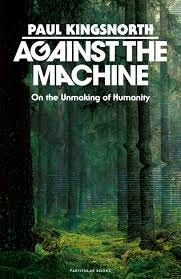
In the opening chapters, I found myself thinking about the New Zealand Green Party and its critique of the pursuit of endless economic growth, its insistence that progress is not synonymous with improvement. There’s a deep ecological scepticism here, a rejection of the idea that humans can endlessly optimise, engineer, and expand without consequence. Read narrowly, you could almost file those arguments under environmental leftism. But Kingsnorth, who cut his teeth in the environmental activist movement of the ’90s and ’00s, is no fan of modern eco-warriors. He sees them as unserious moralisers who are content to cover the countryside in steel in order to satisfy modern society’s lust for energy.
Later essays lean into something that felt much closer to a New Zealand First instinct: a concern for culture, continuity, rootedness, and lamenting the loss that occurs when traditions and moral frameworks are stripped away in the name of modernisation. There’s a social conservatism, but it’s less about rules and more about inheritance. What gets handed down to the next generation, what survives when we are gone, and what we lose when everything is treated as disposable.
What ties it all together is that Kingsnorth isn’t really arguing for a party, a platform, or a programme. He’s arguing against what he calls “the machine”. He describes it as the vast, impersonal system that demands growth, speed, abstraction, and compliance regardless of the human or cultural cost. Once you see that, the apparent ideological contradictions dissolve. His objections aren’t partisan, they’re civilisational. That’s why Against the Machine is so interesting, and so hard to dismiss even if you disagree with the idea of retreating into the past.
On Democracies and Death Cults: Israel and the Future of Civilization by Douglas Murray
Political and moral non-fiction analysing modern ideological warfare and the crisis of Western liberal confidence, using Israel as a case study.
There are books you admire, books you argue with, and then there are books that undo you. Democracies and Death Cults did the latter. I cried several times reading it, not out of sentimentality, but out of grief, fury, and frustration. This is not a comfortable book, and it is not meant to be.
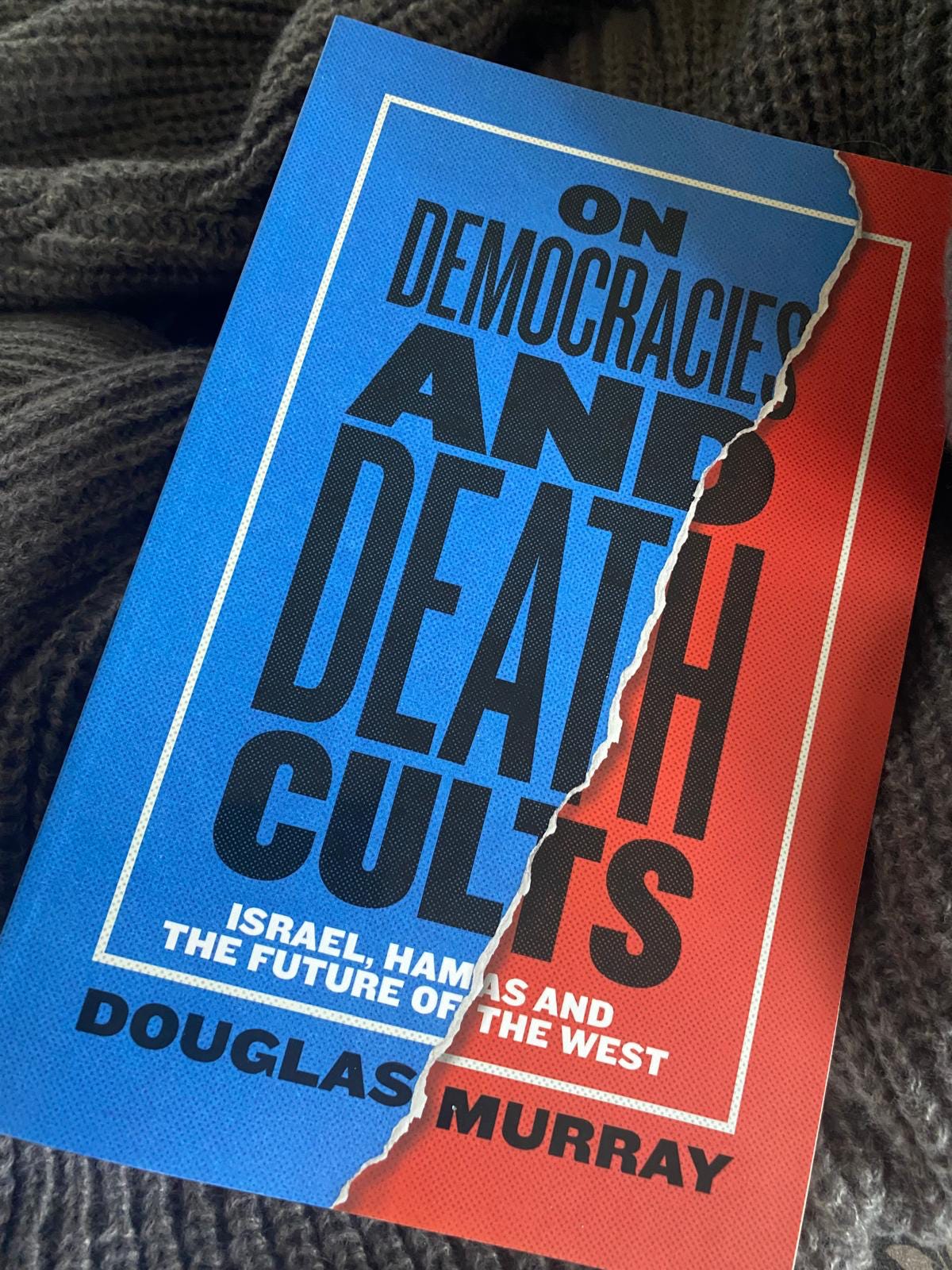
Douglas Murray has written what I think will stand as one of the most important records of what happened on 7 October 2023, and of what followed. Not just the facts of the Hamas atrocities themselves, which many people still refuse to face honestly, but the moral collapse that came after. The evasions and justifications. The grotesque inversion of victim and perpetrator that spread through Western media, academia, NGOs, and social movements at speed.
This book is vital in that it cuts through the propaganda that has been pumped relentlessly into public discourse since that day. Murray documents, calmly and relentlessly, how a massacre of civilians was reframed, relativised, contextualised, and ultimately excused, and how this process fuelled an absolutely toxic global resurgence of antisemitism. Not the crude kind people like to pretend is the only version that exists with white pointy hats, but the sophisticated, moralised hatred that dresses itself up as ‘anti-Zionism’, ‘resistance’, or ‘human rights’.
Murray makes clear how isolated Israel has become in the court of Western opinion and how democracies that claim to value life, liberty, and pluralism have shown a disturbing softness toward Islam’s death cult ideology. The asymmetry he describes shows one side celebrates death, martyrdom, and annihilation while the other is expected to apologise endlessly for surviving.
This is a book you read because someone needed to write things down plainly while the world is busy lying to itself and it deserves to be read. Democracies and Death Cults is harrowing, necessary, and morally instructive. In years to come, when people ask how so many lost their bearings after October 7, this book will be part of the answer.
Of Boys and Men: Why the Modern Male Is Struggling, Why It Matters, and What to Do About It by Richard V Reeves
Social policy non-fiction analysis of male disadvantage in education, work, and family life, with pragmatic reform proposals.
I went into Of Boys and Men with the defensive posture women tend to adopt when a book is framed as ‘finally, someone is speaking up for men’ because too often that’s code for grievance, resentment, and a barely concealed desire to send women back to the kitchen. Reeves is not that guy. He’s a progressive (occasionally a bit woke), a father of three sons, and he writes like someone who actually wants solutions rather than a culture-war dopamine hit. His tone is measured, data-driven, and often pretty feminist in its framing. He’s not arguing against women’s gains. He’s arguing that boys and men are falling behind in ways that are now too severe to ignore, and that pretending otherwise is turning half the population into collateral damage.
The book lands because of how it drags the conversation out of the binary of the left’s ‘toxic masculinity, all men are bad’ reflex versus the right’s ‘restore traditional gender roles’ nostalgia. Reeves says both sides are failing boys and he’s right. Reeves refuses the zero-sum framing that helping boys necessarily means abandoning girls. He argues we can think two thoughts at once which, in 2025, is basically an extremist position.
The most unsettling parts are the statistics and the sober discussion of how much of this is a structural issue rather than moral. Boys lag at school, men are increasingly detached from stable work and stable family life, and the “deaths of despair” stuff is a grim pattern. Reeves tiptoes (because he has to) into biology vs socialisation and ends up making a compelling case that our systems are structured around assumptions that suit girls better, especially in the years where boys develop later in impulse control and executive function.
Reeves challenges us to stop denying the problem, stop treating male struggle as a punchline, and start designing education, employment and family policy like boys and men are human beings who matter. Read it. It’s one of the few books in this territory that feels like an adult trying to solve something, not a partisan trying to win.
False Alarm: Why Climate Change Panic Harms Us All by Bjorn Lomborg
Non-fiction policy cost-benefit analysis of contemporary climate policies, arguing that climate alarmism produces ineffective and socially harmful outcomes.
False Alarm feels almost illicit to read in 2025, not because it’s extreme or contrarian for its own sake, but because it calmly violates assumptions you’re apparently not meant to question anymore. Bjorn Lomborg does not deny climate change. He accepts the science, the warming, and the risks. What he challenges, and this is the heresy, is whether the dominant climate response is rational, proportionate, or effective.
Lomborg insists on grounding the conversation in facts and numbers, actual emissions, actual temperature impacts, actual costs, and actual human outcomes. He exposes how climate politics have become saturated with apocalyptic rhetoric that collapses nuance and crowds out trade-offs. When everything is framed as a dire emergency, scrutiny itself becomes taboo. Lomborg’s book is centred on asking are we spending vast sums of money in ways that actually help people, especially the poorest, or are we indulging in policies that feel morally satisfying but achieve almost nothing?
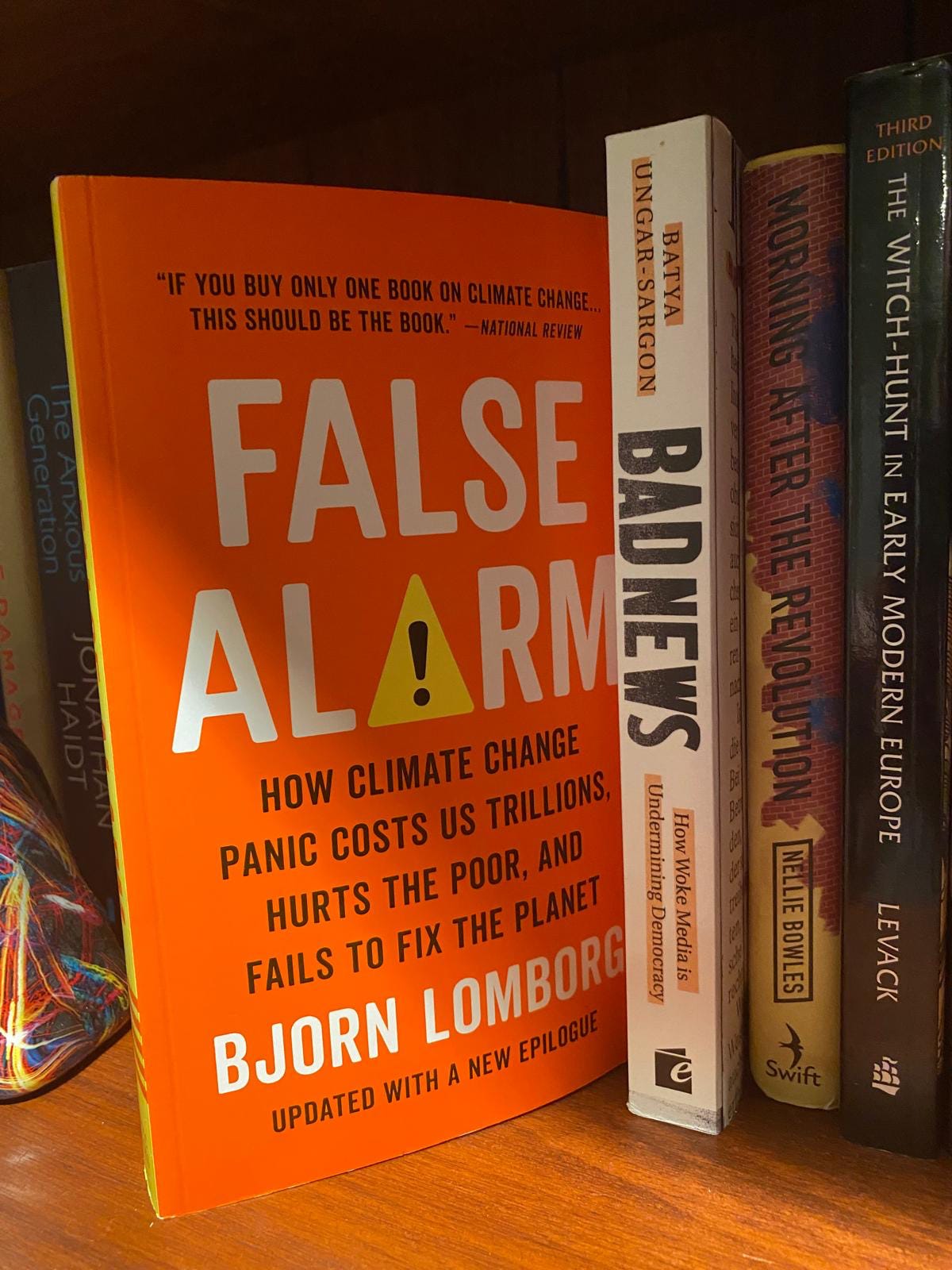
For New Zealand readers, the book hits especially close to home. Lomborg uses Jacinda Ardern’s unilateral decision to ban new offshore oil and gas exploration as a concrete case study in climate symbolism over substance. He analyses New Zealand’s net-zero ambitions and demonstrates just how negligible our emissions reductions are in global terms while the costs and impacts are immediate and local. Higher energy prices, reduced energy security, and fewer resources to spend on health, infrastructure, and genuine environmental adaptation. When Lomborg runs a proper cost-benefit analysis, his conclusion is that policies like this lower quality of life while making no meaningful difference to the climate.
Lomborg dismantles the moral vanity embedded in modern climate politics: the idea that sacrifice is inherently virtuous, regardless of outcome. He is scathing about performative policies that allow governments to signal virtue to international audiences while quietly offloading the costs onto ordinary people. In contrast, he makes a compelling case for adaptation, technological innovation, and targeted investment as far more humane and effective ways to reduce suffering caused by climate change.
False Alarm doesn’t downplay climate change, it challenges climate alarmism. It reintroduces cost-benefit analysis, human welfare, and realism into a debate that has become increasingly hostile to all three. Once you see the numbers laid out this clearly, it becomes very hard to defend policies that make people poorer today in exchange for almost nothing tomorrow.
Colonialism: A Moral Reckoning by Nigel Biggar
A moral and ethical analysis of British colonialism, challenging contemporary revisionist narratives and arguing for contextual judgement rather than moral absolutism.
Colonialism: A Moral Reckoning is one of the most intellectually demanding and politically explosive books I read this year. It’s a minefield, and Nigel Biggar knows it. This is not a book written to soothe, flatter, and reassure modern sensibilities. It is a deliberate attempt to disrupt the now-fashionable narrative that British colonialism was nothing but a unique, singular moral evil.
What makes the book genuinely interesting is that it is not, strictly speaking, a history book. Biggar is an ethicist, not a historian, and he approaches colonialism as a moral intrigue rather than a purely descriptive one. He weighs intentions, outcomes, historical norms, and contemporary ethical standards. This will infuriate readers who want history to function solely as a catalogue of sins, but it also forces a more honest question: by what moral standard are we judging the past, and why?
I didn’t agree with Biggar on everything, far from it. His defensiveness can slip into sanitisation, particularly when it comes to racism and the suffering experienced by indigenous populations, including Māori. Intent is too often allowed to crowd out impact. And yet, he lands some uncomfortable but necessary blows against lazy thinking around the idea that Britain invented slavery or conquest. He also dismantles the notion that colonialism was uniquely evil compared to all other empires and corrects the wilful forgetting that Britain also led the global abolition of slavery at enormous cost to itself. These are facts that have been buried under grievance culture and academic moral posturing in recent years.
Where the book is strongest is in its challenge to the weaponisation of ‘decolonisation’ as a political project in the present. Biggar is right that much of this discourse corrodes social cohesion, replaces complexity with cartoons, and demands moral purity rather than historical understanding. But he is also wrong, at times, to respond by tilting too far in the opposite direction. Colonialism was neither wholly monstrous nor comfortably redeemable. More than one thing can be true at once.
I do recommend this book, strongly, but with a caveat. Read it with your eyes open to Biggar’s agenda, just as you should read anti-colonialist texts with the same critical awareness. The truth about colonialism does not belong to activists or apologists. It sits, messily and uncomfortably, somewhere in the middle.
Bad Therapy by Abigail Shrier
An investigative critique of modern therapeutic culture, arguing that well-intentioned mental health interventions may be undermining resilience in children.
Bad Therapy attacks mental health care wholesale, asking a question we’ve made almost impossible to ask out loud: what if the way we are ‘helping’ children is actively making them worse?
Abigail Shrier approaches this topic with the same forensic clarity that made Irreversible Damage so controversial and so hard to dismiss. Bad Therapy is not anti-therapy, anti-psychology, or anti-care. But it is anti-dogma. Shrier documents how an entire ecosystem of well-meaning adults, namely therapists, schools, parents, and institutions, has converged on a model of childhood emotional fragility that rewards rumination, pathologises normal distress, and trains kids to see themselves as permanently damaged.
And man are the patterns recognisable. It is plain to see that children are now encouraged to endlessly ‘process’ feelings they would previously have moved through. Ordinary sadness becomes something to diagnose. Anxiety becomes a fundamental part of identity. Therapy, once a targeted intervention for serious problems, is now a default lifestyle accessory and Shrier shows how this can entrench distress rather than resolve it. The message kids absorb is not resilience, but vulnerability as status.
Shrier is particularly strong on incentives. She shows how the system rewards therapists and schools for keeping children inside a therapeutic frame indefinitely, and how parents, terrified of doing the wrong thing, outsource authority to ‘experts’ who are less neutral than they try to appear. The result is a generation taught to monitor itself obsessively, interpret discomfort as danger or threat, and defer agency to professionals.
Bad Therapy treats children as capable, not as glass figurines. Shrier makes a persuasive case that kids need fewer labels, fewer interventions, and far more confidence that they can survive difficulty. Not every feeling needs to be excavated. Not every struggle needs a narrative. Sometimes the healthiest response is to let kids just grow up.
This book will make people angry, because it challenges a lucrative and morally sanctified industry. But it shouldn’t be controversial to say that if mental health interventions are coinciding with worse outcomes, we owe it to children to rethink what we’re doing.
Ordinary Human Failings by Megan Nolan
A literary novel examining grief, institutional failure, and moral ambiguity through a multi-perspective, psychologically restrained narrative.
Ordinary Human Failings is an extraordinary book about ordinary failings. It’s about the ways we suffer immensely from the most common human afflictions… an unwanted pregnancy, addiction, heartbreak, loneliness, shame. Nothing in this novel is exotic or rare, and that’s precisely why it hurts as much as it does.
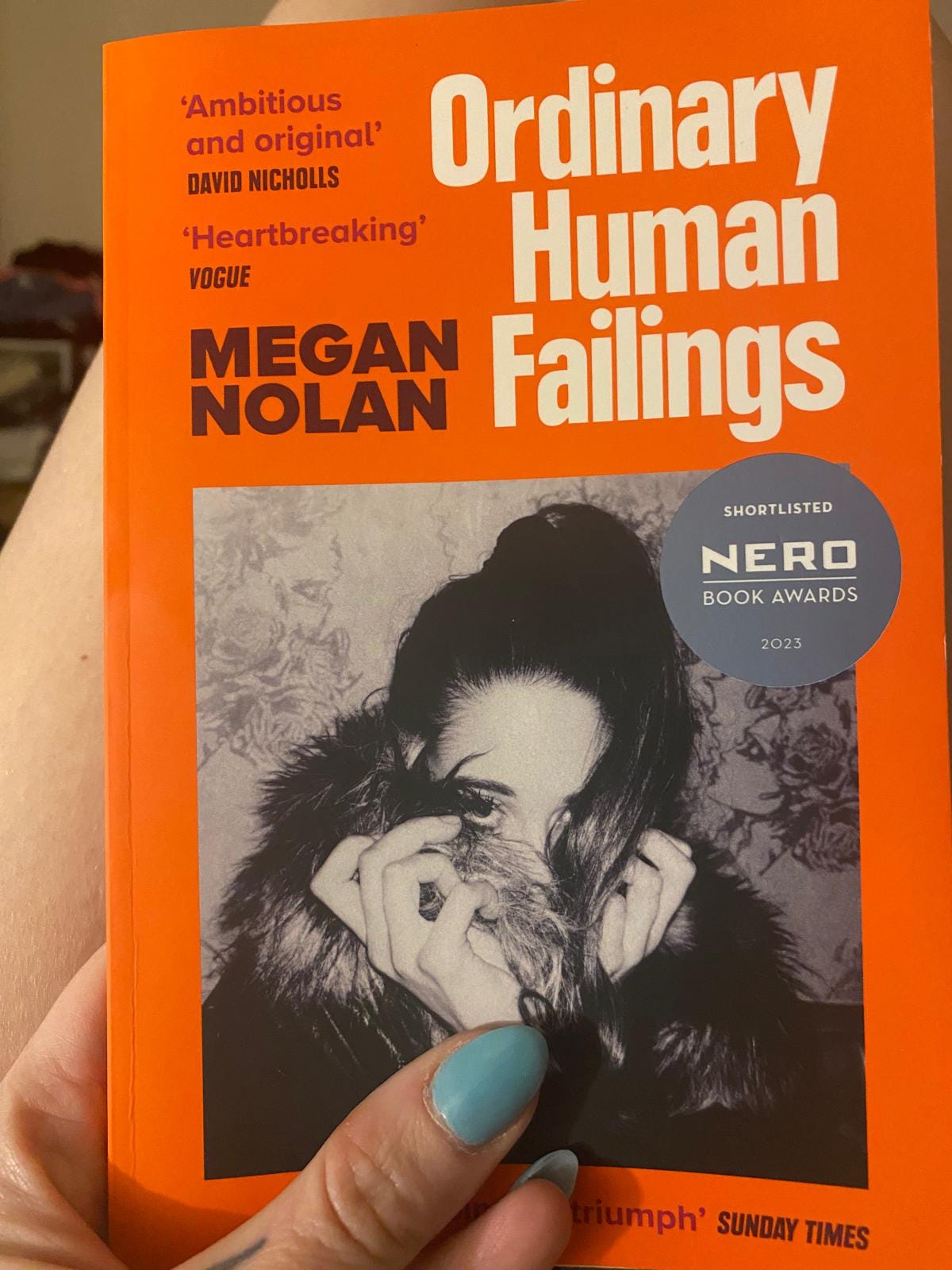
Megan Nolan writes with a cool restraint. Her novel circles a child’s death, but it is not really about the event itself. It is about the people caught in its gravity, the family members, journalists, officials, and bystanders, and how their own needs, wounds, and moral anxieties shape the story they tell themselves and others. Nolan is unsparing in showing how easily suffering becomes narrative, how quickly pain is recruited into cause, identity, and certainty.
I kept trying to work out how to describe the book’s structure, and the best metaphor I could land on is that some people vacuum in straight, orderly lines, methodically covering the room. This book doesn’t do that. It stands in one place and moves outward, petal by petal, like a flower opening from the centre. Radial. Each chapter revisits the same core tragedy from a slightly different angle, revealing new textures and contradictions, never quite letting you settle into a single, comforting interpretation.
Ordinary Human Failings refuses to sentimentalise harm or sanctify victimhood. Nolan doesn’t lean on the contemporary language of ‘holding space’ or automatic belief. Instead, she shows how those instincts, however well-meaning, can flatten reality and erase complexity. Everyone is compromised. People do terrible things without being monsters. Institutions fail without malice. Pain ripples outward in ways no one fully intends or controls.
This is a novel that doesn’t tell you who to blame or how to feel. It asks you to sit with the uncomfortable truth that much of the damage in the world is caused not by extraordinary evil, but by very ordinary human weakness.
Pretty Girls by Karin Slaughter
A psychologically intense crime thriller examining misogyny, violence, and grief through a family centred narrative.
My popular fiction book of the year is Pretty Girls, a book that absolutely wrecked my nervous system. This is not a cosy suspense novel. If that is what you are after, go find an Agatha Christie novel. This book is brutal, propulsive, and terribly dark, and I couldn’t put it down.
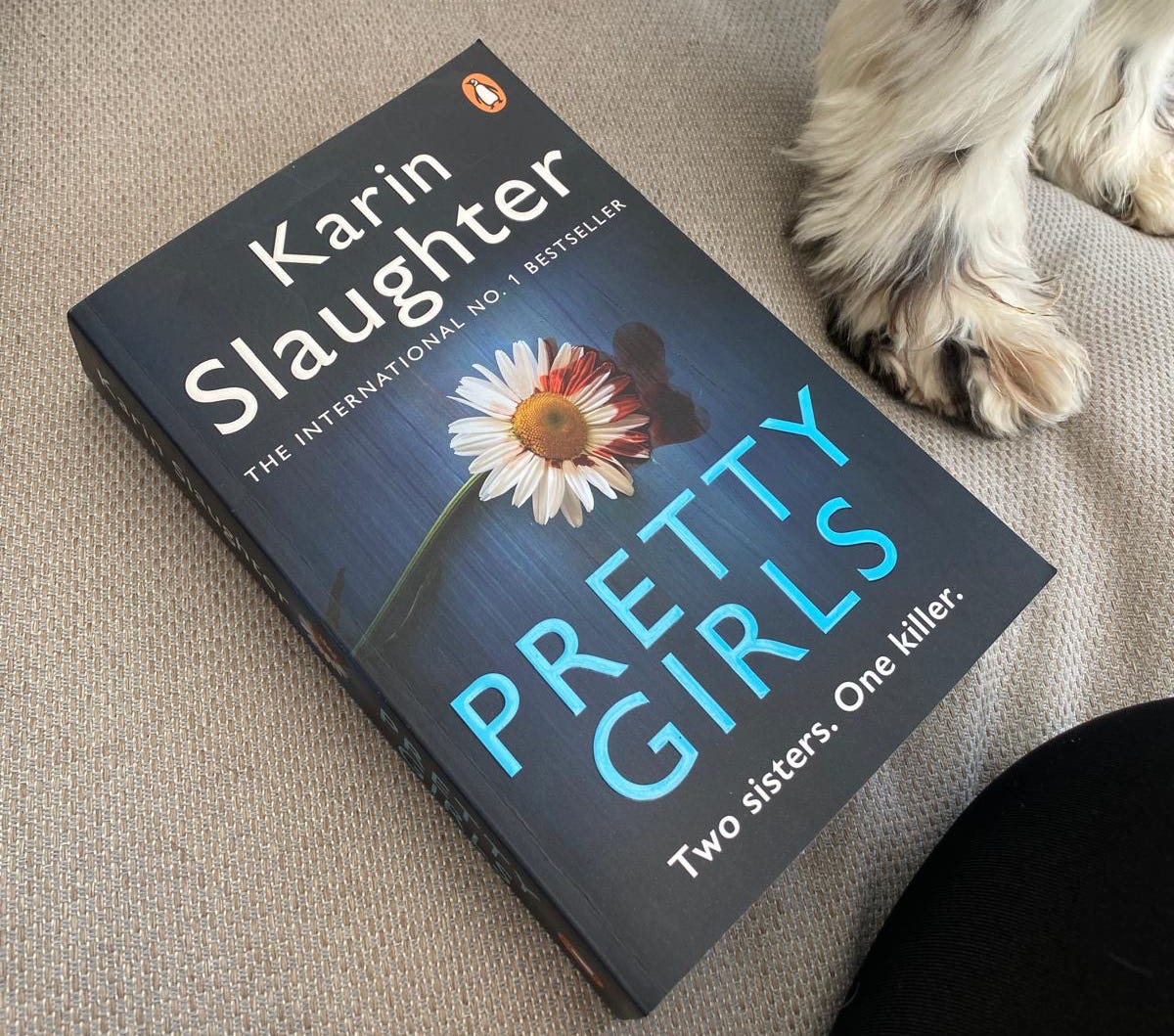
Karin Slaughter is a master of writing violence without flinching and Pretty Girls is so effective because the horror is purposeful and runs right up to the line of gratuitous without crossing it. The novel starts with a long-missing young woman and expands outward into a far more disturbing story, exploring what happens to women when they disappear, when they’re not believed, when their suffering is fetishised, monetised, or ignored. This is a thriller that understands power, cruelty, and how evil hides in plain sight behind respectability.
The emotional core of the book is grief: particularly female grief. Two sisters fractured by the disappearance of a third, each coping in ways that are messy, defensive, and deeply human. Slaughter is very good at writing women who are not likable in a neat, sanitised way. They’re angry, traumatised, suspicious, and often wrong, which makes them feel real and often annoying.
Pretty Girls refuses to soften its message. It is a novel about misogyny taken to its logical extreme, about a culture that consumes female pain as entertainment, and the cost of looking away.
This is not a book for the faint-hearted. It’s graphic, confronting, and deliberately upsetting. But if you want popular fiction that is genuinely gripping, emotionally serious, and unafraid to go to the darkest places, Pretty Girls is a very good read.
This article was originally published by Thought Crimes.