Table of Contents
Elliot Ikilei
Hobson’s Pledge trustee
Here at Hobson’s Pledge, we’ve been asking for a long time why we still have Māori seats in parliament. In a country that should stand for one rule for all and a truly representative democracy, seven special seats set aside based on race make no sense.
As we’ve often said, Māori are more than capable of winning seats, whether on councils or in parliament, without special treatment. The current government proves the point: Deputy Prime Minister David Seymour is Māori, and before him Winston Peters held the same role. Seven of the 20 cabinet ministers have Māori ancestry and across the House we have a disproportionate (related to the population) number of MPs who whakapapa Māori.
It’s well past time to scrap the Māori seats...just as the Royal Commission recommended back in 1986. Hobson’s Pledge has been campaigning for this for years, and we need your help to give it a big push to make change happen.
Now feels like the right time to say let’s scrap the Māori seats.
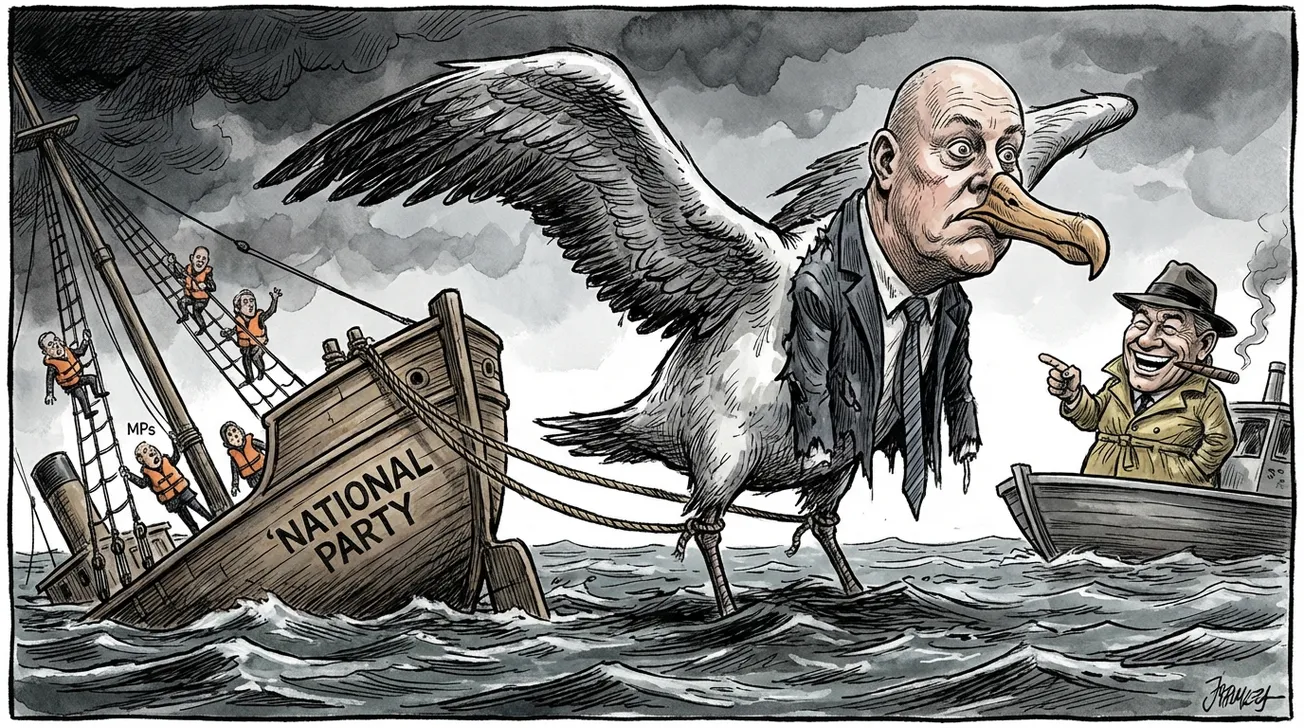
If you need any further reason to remove these seats, look no further than the ongoing chaos within Te Pāti Māori.
I’m not just talking about their recent performative theatrics or disrespectful behaviour in parliament, but the infighting that’s tearing them apart. MPs being expelled, accusations of not adhering to tikanga flying around, and leaders threatening utu (revenge) against those who disagree.
Even their newest MP, Oriini Kaipara, and youngest MP, Hana-Rawhiti Maipi-Clark, have reportedly “taken a break” from parliament. From their special seats. Kaipara has only been there for about 20 minutes and Maipi-Clark has just got back from a jaunt to New York.
Meanwhile, the rest of parliament gets on with the work of representing their constituents and passing laws.
New Zealand deserves a break. A break from this Te Pāti Māori chaos and drama that has done nothing to improve a single outcome for Māori, the people the special seats are meant to serve.
Māori are being better served in terms of outcomes by MPs in electorate or list seats. Like the work of Education Minister Erica Stanford, whose literacy and numeracy reforms are seeing amazing results for all kids, but especially Māori kids.
The coalition government gets called ‘racist’ and ‘anti-Māori’ for not playing the virtue signalling games that Labour do when they’re in charge, but if we look at OUTCOMES instead of grandstanding about sovereignty, this government is actually delivering for Māori.
Just to choose a random metric, if we look at the median hourly earnings from wages and salaries increased for ethnic groups in the year to the June 2025 quarter, Māori have seen the most significant percentage increase:
Europeans are up 3.7 per cent, Pasifika up 4.3 per cent, Asians up 4.6 per cent, and Māori are up 5.8 per cent.
In August, Statistics New Zealand announced that between 2007 and 2024 Māori life expectancy has increased by 3.1 years. That was more than twice the increase of NZ Europeans.

At a time when we’re seeing progress in education, wages, and life expectancy for Māori by focusing on all policies for all New Zealanders, Te Pāti Māori is distracted by internal squabbles only occasionally popping up in parliament to call the government racist.
Their dysfunction shows exactly why separate seats are unnecessary.
It’s time to get rid of the Māori seats. Focusing on the needs of all Kiwis is proving to serve the needs of Māori better than the divisive race-based approach of the last government. Sign the petition.
Last week, the government passed the Education Amendment Bill No 2 and we are stoked. This is a win for supporters of Hobson's Pledge.
Clause 127 would have made “promoting tikanga Māori, mātauranga Māori, and te ao Māori” a paramount objective for school boards. But, thanks to your support, Minister Erica Stanford removed the clause, correctly noting that the Treaty relationship exists between the Crown and iwi, not school boards. Boards should be focused on giving every child the best education possible.
However, the New Zealand School Boards Association doesn’t seem to have received the memo. This taxpayer-funded organisation, contracted to provide neutral governance advice, has gone rogue, attacking the minister’s decision and pushing its own political agenda.
NZSBA President Meredith Kennett has gone as far as suggesting Minister Stanford is lying by refuting her statement that the clause doesn’t impact outcomes: “The suggestion that this clause makes no difference simply isn’t true.”
She also has effectively issued advice that contradicts the legislation the government has now passed saying school boards “absolutely have a responsibility to understand and give effect to the Treaty of Waitangi”.
If the NZSBA wants to act as a political lobby group, it should do so without taxpayer funding or the authority of the Ministry of Education. Otherwise, the ministry must ensure that its contractors align with government policy rather than subvert it.
We’ve written to Minister Stanford to bring it to her attention and await her reply.
We have also kicked off a ONE LAW FOR ALL petition that relates to this. Add your signature if you haven’t already.
The latest Internet NZ 2026–2031 Strategy is yet another example of ideological capture. Instead of focusing on managing internet access and domain names, Internet NZ is now all about “giving practical effect to Te Tiriti o Waitangi”, “growing cultural capability” and delivering “tikanga-based dispute resolution”.
It’s a masterclass in bureaucratic overreach and trying to force a Māori worldview onto internet governance, as if the .nz domain itself needs Treaty training.
Once again, we ask: why are so many publicly funded or publicly trusted organisations obsessing over race politics instead of serving all New Zealanders?
If you joined up to Internet NZ as many of us did, check your emails for the news of this strategy document. You can then feedback and tell them to get back in their lane.
He iwi tahi tātou/we are one people.
P.S. Did you see Oriini Kaipara recently claimed that the devastating fires in Tongariro National Park were a “message” from a deceased ancestor demanding the land be returned to Māori. How we’ve reached a point where natural disasters are interpreted as spiritual political messages is beyond belief!
This article was originally emailed by Hobson’s Pledge.