Table of Contents
Ani O’Brien
Like good faith disagreements and principled people. Dislike disingenuousness and Foucault. Care especially about women’s rights, justice, and democracy.
When a minister of the Crown takes the rare step of addressing the public directly in an open letter, it may not be front-page news, but it should be put to the public in full so we can be informed. Judith Collins’ open letter to the people of New Zealand, a detailed, unvarnished account of what the government says is really going on behind the mega-strike, was ignored by some and others like the NZ Herald paraphrased and editorialised around it. But none (that I can see) published it in full.
Judith Collins’ Open Letter in full and unedited:
To the patients, students and families affected by this week’s planned strike,
The government regrets the impact on you, your children and your families that is expected on Thursday because of a strike planned by a number of unions.
We regret even more that the strike appears to be politically motivated by the unions.
What else could possibly explain that in early October, when we were trying to negotiate with the secondary teachers’ union, the number one item on their agenda for a meeting with Education Minister Erica Stanford was Palestine.
Palestine. Not terms and conditions. Not student achievement. Not the new curriculum. Palestine. That’s not what students or parents should expect.
So, to all the parents of senior students – most who have already endured ongoing interruptions throughout their schooling and who are now missing two crucial days of classes less than two weeks out from NCEA exams – I urge you to ask your children’s teachers to question their union’s priorities.
And to all the parents of younger children, who have had to rearrange their usual commitments, I urge you to ask your children’s teachers why their union arranged a strike in a week when many schools already have teacher only days, followed by Labour Day on Monday.
The government has acted in good faith, and we have met unions’ demands for pay increases in line with inflation. Our request that teacher-only days and professional development be undertaken in school holidays to reduce disruption to students and families was refused.
To the estimated more than 6000 New Zealanders who have had medical appointments and procedures postponed due to the strike, I know some of you are living in pain, and in fear of a possible diagnosis that will now be delayed.
This industrial action is unfair and unwarranted.
Health Minister Simeon Brown even wrote to the chair of Health New Zealand, and Association of Salaried Medical Specialists union seeking their agreement to attend binding arbitration, and for the union to not proceed with the strike action. Health New Zealand agreed. The union refused.
The government values nurses, doctors and other health workers whose dedicated care every day supports patients, just as we value teachers, principals and teacher aides. We value all public sector employees.
The government also has a responsibility to manage the country’s finances carefully, especially when money is tight.
From cancer drugs to social housing, from support for vulnerable people to conservation initiatives, there are thousands of appeals for increased spending, as well as for wage increases.
The country is simply not earning enough to meet all these calls.
After a huge increase in public spending over Covid and in the following years, public debt exploded. In the financial year ending in June 2025, New Zealand spent $8.9 billion just servicing debt. This was more than the government spent on Police, Corrections, the Ministry of Justice, Customs and Defence combined.
Only by New Zealand becoming wealthier can we afford to spend more.
We have made numerous offers to key unions, and in some cases, these have been rejected without even being put to union members.
The government wants settlements, and New Zealanders want certainty that hospitals and schools and other services will operate as normal. It is only unions who want strikes. We ask, once again, for them to come to the table. That is the place to talk and to bargain.
THE FACTS:
Teachers:
The latest offer to primary teachers means 66 per cent will be paid a base salary of at least $100,000 within 12 months of ratification – up from 40 per cent currently.
The latest offer to secondary teachers means 76 per cent will be paid a base salary of at least $100,000 from 29 October 2025 – up from 60 per cent currently.
The latest offers come on top of the $53 million the government is spending to pay teachers’ registration and levies, of up to $550 per teacher.
Teachers will continue to enjoy very generous annual leave provisions.
Senior doctors:
The latest offer would have provided a salary increase of at least five per cent over two years, with the ability to provide an additional increase for first-year specialists. These increases are additional to the $5900 annual step increase senior doctors receive until they reach the top of the 15-step pay scale.
In addition, a $40 million fund is proposed for distribution to senior doctors in recognition of the value of their work and to support the workforce.
Nurses:
The average salary for both senior and Registered Nurses is $125,662, which includes overtime, a professional development allowance and penal rates. Under the offer, nurses on the top step would have had a two per cent increase in June 2025 – an extra $2135 per year – with another one per cent increase in June next year.
Under the June offer, a graduate nurse on $75,773 would have received two per cent from 2 June 2025 – an extra $1515 per year. A year later, their salary would have increased to $83,317 – a total increase of $7544 or $145 per week. On 1 June 2026 they would have received an additional one per cent increase, taking their salary to $84,150. That’s a total pay increase of $8377, or 11 per cent, by 1 June 2026.
Public v private sector:
Public sector wages grew 2.8 per cent in the year to June 2025.
Private sector wage growth was 2.3 per cent in the year to June 2025.
There was a time when unions were the backbone of our national story. From the 1890 Maritime Strike to the 1951 Watersiders’ dispute, organised labour stood for something simple and noble: fairness for working people. They fought for safe conditions, reasonable hours, and a decent wage. They shaped the social contract that made this country worth living in. They were led by workers, not careerists, and their credibility came from blisters, not boardrooms. We owe those early unionists a debt of gratitude. They made the modern middle class possible.
Fast-forward to 2025 and the story is very different. Today’s union leaders aren’t found on the factory floor. They’re political insiders with double, even triple, six-figure salaries, media advisors, and direct lines to the opposition benches. Their members’ dues bankroll ideological crusades about foreign conflicts and fashionable causes.
Collins’ letter points to this in one facepalm-inducing anecdote:
In early October, when we were trying to negotiate with the secondary teachers’ union, the number one item on their agenda for a meeting with Education Minister Erica Stanford was Palestine. Not terms and conditions. Not student achievement. Not the new curriculum. Palestine.
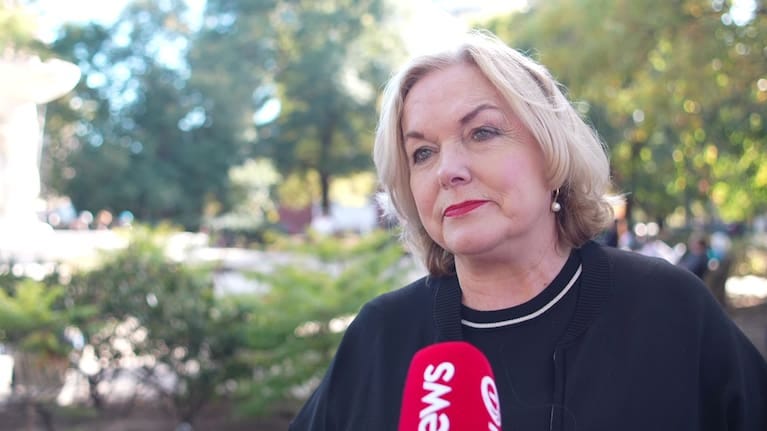
That says it all. Teachers’ unions, whose members care about being paid well, having good conditions, literacy rates, curriculum standards, and the wellbeing of kids, are prioritising international activism over the actual state of education. Check out the work the New Zealand Council of Trade Unions promotes on their website relating to Israel/Palestine. Meanwhile, New Zealand’s industrial base is hollowing out in the name of climate virtue, and the rise of AI threatens jobs across every sector. Yet the unions are focused on politics, not productivity. They’ve become bureaucratic empires, not worker movements.
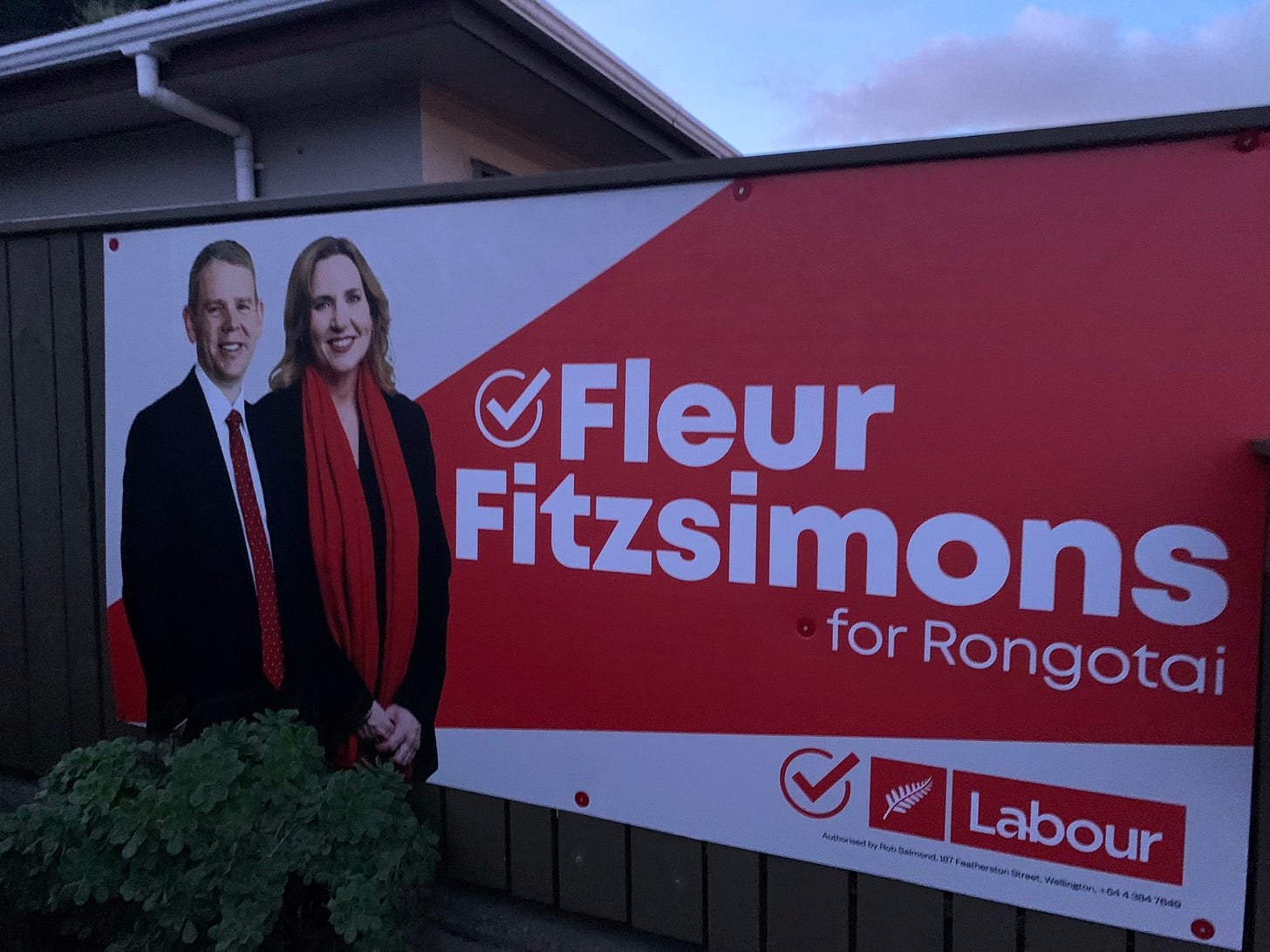
The revolving door between the unions and the Labour Party is practically a conveyor belt and that is no secret. Key figures in the current wave of industrial action are steeped in Labour politics. Public Service Association (PSA) National Secretary Fleur Fitzsimons, for example, was a Labour-affiliated Wellington City councillor before standing as a Labour candidate in the last general election, losing Rongotai to Julie Anne Genter. Michael Wood, the former Labour minister who famously held onto his Auckland Airport shares while running the transport portfolio, is now back heavily involved in unions as a director at E tū. Many of the union leaders orchestrating these current strikes either ran for Labour, worked in ministerial offices, or hold executive roles in Labour-aligned advocacy groups.
When a centre-right government takes office, it doesn’t simply face an opposition across the aisle, it faces an opposition embedded within and around the system itself. The unions, which were once independent worker movements, now act as political auxiliaries of the Labour Party, working hand-in-glove to frustrate reform. Their messaging aligns almost word-for-word with Labour’s talking points, their industrial action conveniently timed to embarrass the government, and their media allies amplify the narrative on cue. What looks like a wage dispute on paper is often a coordinated political campaign designed to generate public pressure, not better pay.
This is why every centre-right government in New Zealand, no matter its democratic mandate, finds itself governing in constant headwinds. The bureaucracy leans progressive (to say the very least), the public sector unions serve as its muscle, and Labour provides the ideological script. It’s an entrenched ecosystem of influence. A permanent political class that refuses to accept the outcome of elections unless it suits them. Ministers can change, policies can shift, but the machinery of resistance hums along, powered by union dues.
Collins’ open letter laid out what the government has actually offered in negotiations, details that rarely make it into the mainstream reports. To teachers, it included pay scales where two-thirds of primary and three-quarters of secondary teachers would earn over $100,000 within a year, with registration fees paid by the government and generous annual leave untouched. For senior doctors, the offer was a five per cent pay rise over two years, plus a $40 million recognition fund, on top of their $5,900 annual step increases. Nurses, who have already had significant pay increases in recent negotiations with the average pay for both senior and Registered Nurses already $125,000 including allowances, were offered a two per cent rise this year, another one per cent the next, and 11 per cent growth for new graduates over two years.
Even more telling is that public-sector wages continue to rise faster than the private sector by 2.8 per cent versus 2.3 per cent. These are not the numbers of an “austere” government. But you wouldn’t know that from the headlines.
Collins’ frustration echoes a deeper truth. Every reform-minded minister in this Government is battling not just political opponents, but the very system they inherited and all of the bolt-on allies determined to resist any reform. The public service is riddled with activist bureaucrats who think their job is to resist elected leaders rather than serve them. Every reform, from education to justice to resource management, has faced pushback, leaks, and “risk-based” obstruction. “Free and frank advice” has become a shield for political resistance. Ministers have faced outright refusal to implement policies they were elected to deliver.
In a week where we have seen significant success in improving literacy and numeracy, hundreds of principals accused Education Minister Erica Stanford of “manufacturing a crisis”, a line straight from the union playbook, while Radio NZ obligingly amplified it. The pattern is clear as day. When ministers try to deliver reform or take action, the bureaucracy and unions circle the wagons, and the media frames it as government overreach, failure, or discrimination.
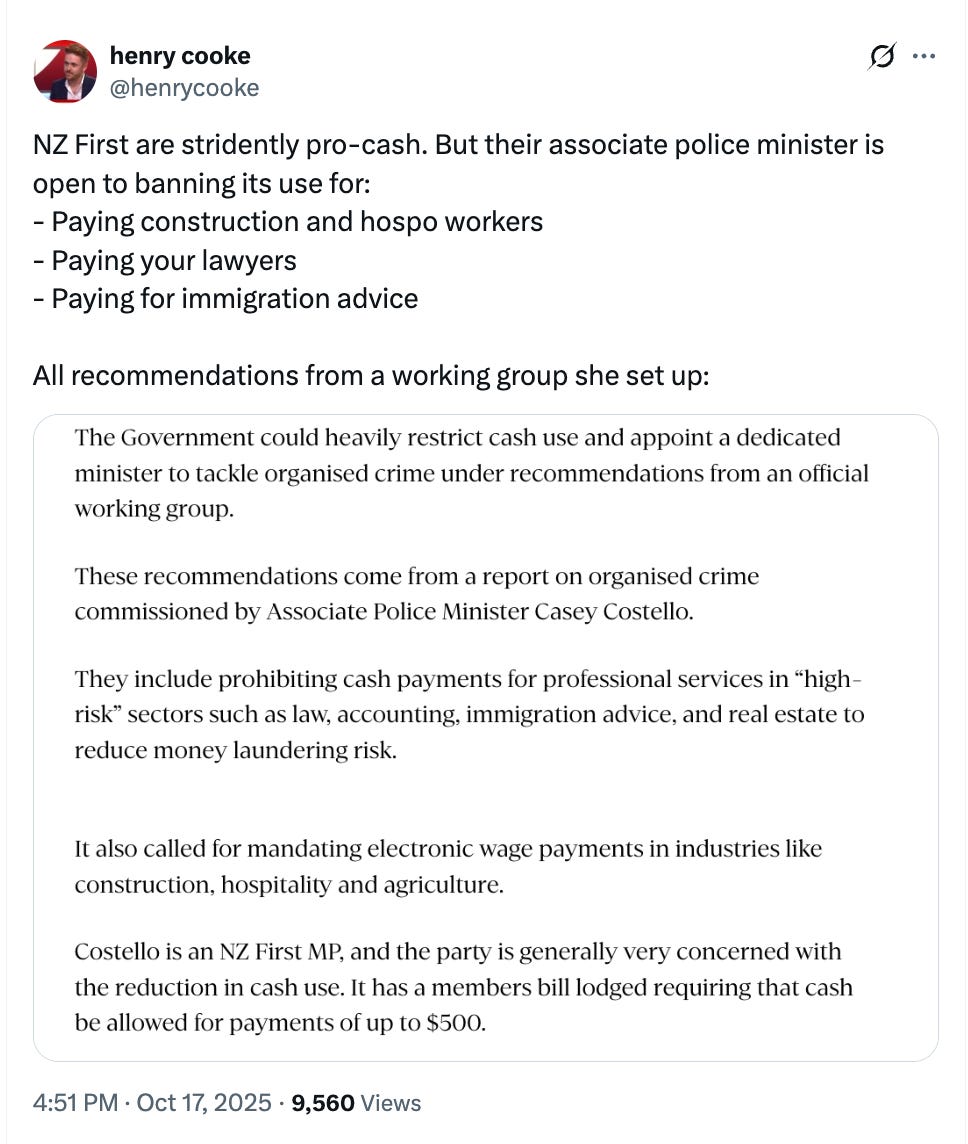
Last week, Stuff/the Post turned the proposed work of Minister Casey Costello’s working group on organised crime into a story about inconsistency from New Zealand First, pointing out that the party is “pro-cash” yet Costello is supporting restricting large-cash payments. The policy suggestion under discussion was to ban or heavily control very large cash transactions in certain high-risk services to starve gang funding. That doesn’t mean you’re anti-cash for ordinary people: it means you’re against untraceable cash flows enabling outlaw activity. Critiquing New Zealand First for supporting legal cash and simultaneously supporting sensible safeguards is like accusing someone of inconsistency for believing alcohol should be legal, yet also backing laws to prevent under-18s drinking, or driving a car while also supporting laws setting speed limits. Both positions are logically consistent.
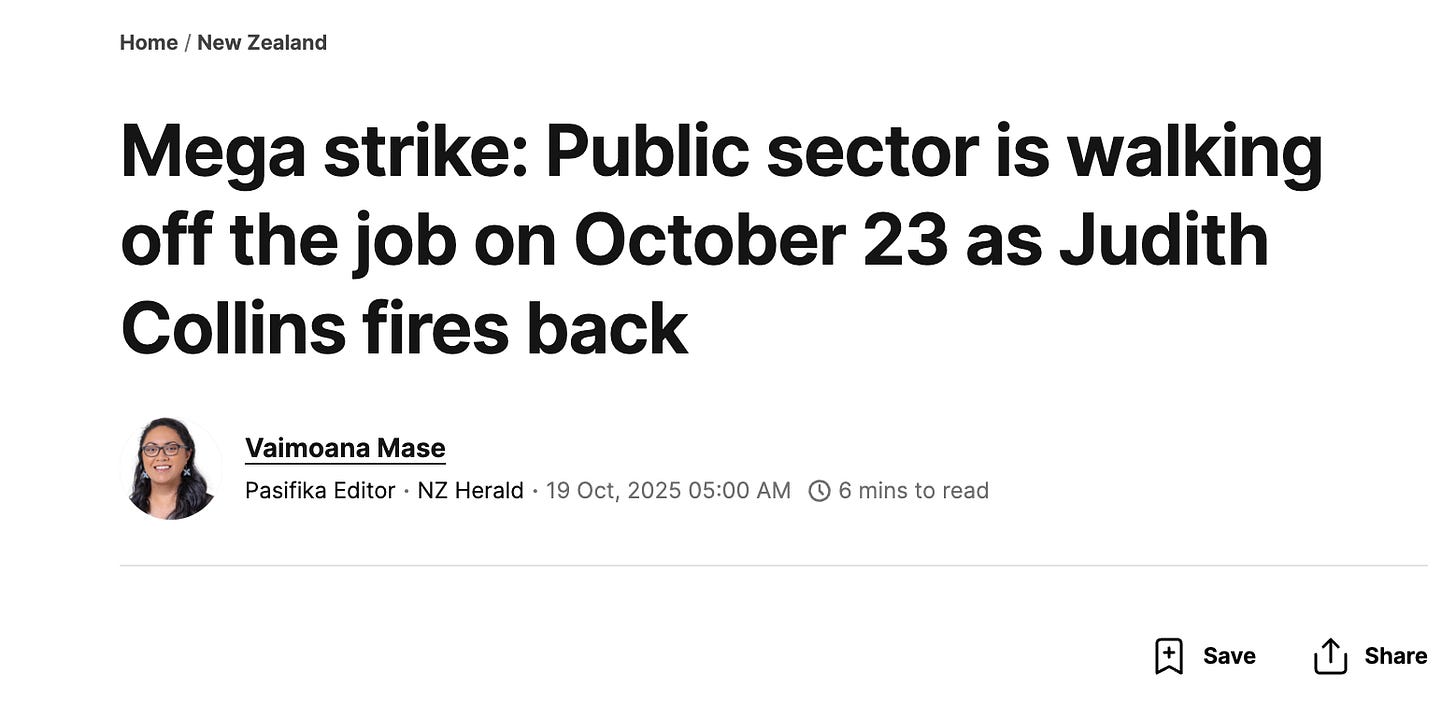
The media’s job is to inform the public. When a minister issues a letter directly to New Zealanders, the ethical thing to do is publish it in full and let readers decide. Instead, the Herald filtered it through the headline “Collins Fires Back”. The framing wasn’t “Minister explains government offer to teachers and doctors,” but “Minister fights unions.” It’s choreography. Choreography that lets unions strike on the taxpayer’s dime while the public remains in the dark about the facts.
Judith Collins’ letter isn’t merely a PR exercise, though it certainly is in part. It’s a dispatch from the front line of the struggle to govern against an entrenched political-bureaucratic-media complex. The unions, the public service, academia, and the media form a self-sustaining ecosystem, each validating the other, each invested in keeping real reform at bay. The voters’ mandate for change meets an immovable wall of inertia and ideology.
This is the fight Collins was trying to expose. And the fact that her words were ignored or twisted is proof she’s right.
This article was originally published by Thought Crimes.