Table of Contents
Lindsay Mitchell
lindsaymitchell.blogspot.com
Michelle Duff claims in an ‘analysis’ for “trustworthy, accurate and reliable” Stuff:
90 per cent of those who have lost their jobs post-Covid are women
Yesterday I quoted another source that debunked the number.
The shocking revelation – that of the 11,000 fewer people in paid employment, 10,000 of them were women – should be taken with a grain of salt, said KiwiBank economist Mary Jo Vergara, because the level of disruption during lockdown made it hard to conduct the survey.
“But I think the message there is clear – even if you adjust for some anomalies in the data you’d still see over 50 per cent, probably around 60 or 70 per cent of those who lost their jobs, would be women.”
But let’s check the claim against MSD data:

The annual increase uptake of Jobseeker benefit was GREATER for males. It could be argued that females get locked out of Jobseeker if they have a working partner but that did not apply to the COVID Relief Payment for people made redundant after March.
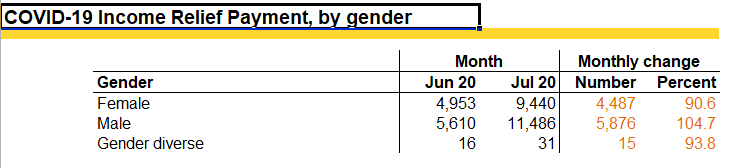
The monthly increase uptake of CIRP was GREATER for males.
And 22% more males than females are receiving CIRP.
This outrageous claim will become an urban myth unless we arm ourselves with the facts and reject it.
If you enjoyed this BFD article please share it.