
Table of Contents
Summarised by Centrist
Winston Peters has warned that the proposed free trade agreement with India goes beyond trade, saying it risks becoming a “free migration deal”.
“There has been a lot of talk about the Indian FTA, and not much comprehension about what the consequences are for New Zealand,” the NZ First leader and foreign affairs minister said.
Peters cited Indian government claims of “unprecedented” mobility and questioned why New Zealand would be “more generous on migration with India than in any other FTA”.
MFAT figures show the deal allows 1,667 Indian nationals a year to apply for three-year work visas, capped at 5,000 people in the country at any one time.
Peters has argued those 5,000 visa holders could translate into much larger numbers once family members are included.
Trade Minister Todd McClay said workers on visas longer than a year are already allowed to bring partners and children, calling this “nothing new” and not a concession to India. Indian workers, he said, would have “no greater right than anyone else”.
The agreement also includes a working holiday scheme capped at 1,000 places per year and enhanced post-study work rights for Indian students. It does not change the uncapped nature of international student visas.
Prime Minister Christopher Luxon said Peters was “wrong” on the migration implications. With NZ First invoking the coalition’s agree-to-disagree provision, Labour leader Chris Hipkins said his party is broadly supportive, while seeking clarity on protections for migrant workers.
Editor’s note: When ministers respond by saying “nothing new” or “no greater rights than anyone else”, they are answering a narrow legal claim Peters has not clearly made, rather than the broader policy warning he is raising. In a country the size of India, even modest shifts in incentives or signalling can translate into large absolute numbers for a small country like New Zealand.
Peters’ concern is about exposure and scale, not legality. Student migration settings are uncapped (not related to the FTA), and the FTA could increase Indian students as a side effect, which could have secondary population effects.
Loading...
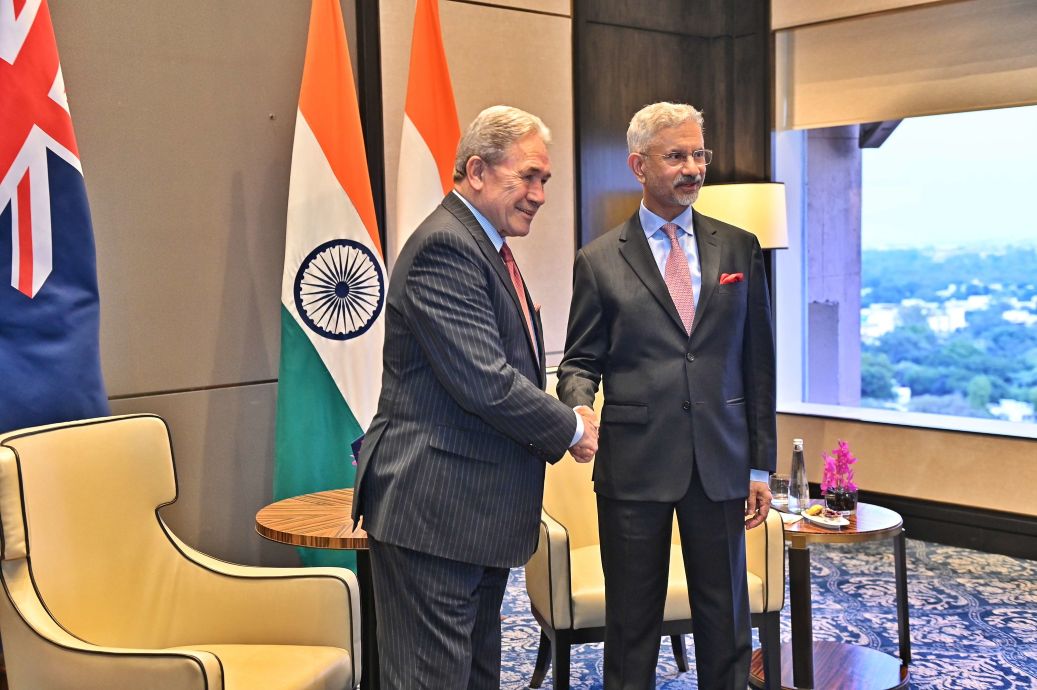
Image: MEAphotogallery archival



![[The Good Oil] April 2026 Political Poll](https://images.unsplash.com/photo-1540910419892-4a36d2c3266c?crop=entropy&cs=tinysrgb&fit=max&fm=webp&ixid=M3wxMTc3M3wwfDF8c2VhcmNofDk1fHx2b3Rpbmd8ZW58MHx8fHwxNzIyMzkxNTI4fDA&ixlib=rb-4.0.3&q=80&w=1304)

