Yvonne van Dongen
Veteran NZ journo incredulous gender ideology escaped the lab. Won’t rest until reality makes a comeback.
Fantasists of a feather flock together.
Sadly that is only one of the lessons of the sad story of bogus academic Jason Arday.
Arday was the feted young black academic at Cambridge University (UK) who took his own life on August 14 this year after media and academic focus on the veracity of his work and outlandish claims.
Some of those claims include:
- At the age of three diagnosed with autism and global developmental delay.
- Unable to speak until he was 11.
- Could not read or write until 18.
- Suffered epilepsy (sometimes linked to a severe gang beating at 18 that caused lifelong seizures), locked-in syndrome, testicular cancer, a brain tumour, and other conditions.
- Ran 30 marathons in 35 days (partly with a hairline fracture/broken leg after an epileptic seizure mid-run) and, separately, 600 miles in six days (or 300 miles in three days) for charity.
- Installed water points in South America and West Africa.
- Played semi-professional football.
- Earned a £1.4 million (currency unspecified) advance for his memoir.
Given the absurdity of these claims, it was only a matter of time before he would be undone. Indeed, it’s hard to believe Arday was ever appointed professor of sociology of education in the Faculty of Education at the University of Cambridge in March 2023 at the age of 37 and that he escaped scrutiny for so long.
Well it’s not so hard to believe once you read what happened to anyone who dared look under the bonnet of Planet Arday.
In 2023 Emeritus Professor David Harris at Plymouth Marjon University contacted Arday, Cambridge, and Liverpool John Moores University (where Arday did his PhD) about substantial overlap/plagiarism in Arday’s 2018 paper and other work. He later described Arday’s PhD and subsequent articles as showing “serious plagiarism”.
What happened to him? Arday warned that further communication would be treated as “bullying and harassment”. Harris’s emeritus title was temporarily stripped (apparently linked to separate comments critical of critical race theory), though it was later restored. Cambridge largely brushed aside his concerns, saying the earlier research was “not within our remit”.
In September 2025 a reporter at Times Higher Education (THE), Jack Grove, conducted a detailed investigation into Arday’s PhD thesis and papers. Grove contacted Arday and Cambridge for comment.
What happened to him? Arday hired a high-profile defamation firm, which sent THE a legal letter. THE spiked the story. Grove later received a police warning not to contact Arday again after a harassment complaint. The investigation was effectively suppressed for nearly nine months until another academic went public with his doubts about Arday.
That academic was Nathan Cofnas. Cofnas is an American philosopher specializing in the philosophy of biology and ethics. While there had been critical rumblings from other academics over the years, the entry of Cofnas into the fracas must have scared the bejesus out of Arday.
Cofnas is an academic outlier who has never shied away from controversy. His work on group differences in intelligence, hereditarianism (which he terms “race realism”), and critiques of diversity, equity, and inclusion (DEI) policies are controversial to say the least.
He’s been fending off criticisms of his work for years now from academics and students alike. In 2024, a Substack he wrote arguing for the acceptance of hereditarianism as a path to defeating progressive ideology triggered student petitions, formal complaints and protests. He was even removed from his unpaid college research associate role at Emmanuel College, Cambridge.
That reputation followed him when he joined Ghent University in Belgium in 2026. Staff and students noisily expressed their disapproval. Undeterred, in July this year Cofnas published a detailed Substack post alleging extensive plagiarism in Arday’s thesis and papers.
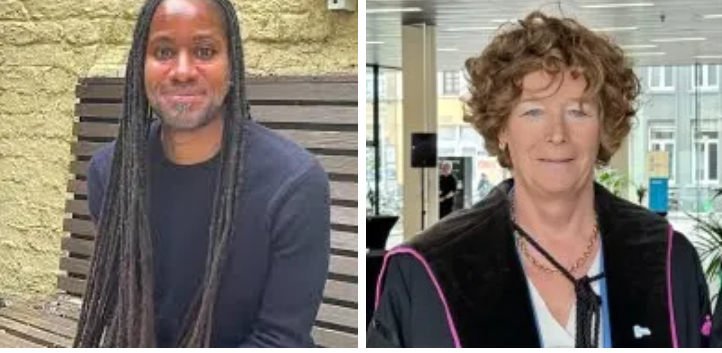
Cofnas’ essay was the spark that led to wider media scrutiny of Arday’s academic record and claims. On 5 August the youngest black person ever appointed to a professorship at Cambridge (and one of the youngest people appointed to a professorial chair in Oxbridge history) resigned from Cambridge University. On 14 August he was found dead.
What happened to Cofnas? A week after Arday’s death, Ghent Rector Petra De Sutter suspended Cofnas as a precautionary measure pending a disciplinary investigation related to his public statements. Cofnas has said he expects to be fired. He views it as retaliation.
Who is Ghent Rector Petra de Sutter? He is a man pretending to be a woman (performance began in 2004). That’s right – another fantasist.
De Sutter is a former Belgian politician (deputy prime minister 2020–2025 for the Green party Groen), and previously a member of the European Parliament. Plus this man cosplaying as a woman is also a gynaecologist and professor of reproductive medicine.
Despite overwhelming evidence to the contrary, there are still Arday defenders who believe he was unfairly persecuted. A GoFundMe page set up for his family has garnered over $NZ500k so far.
If reading all this makes you feel like you’ve entered Madville or just been on an epic bender, you are not alone. But with any luck it might embolden you to speak out when someone or something sounds a bit iffy, even if they come with impeccable cred and dazzling social status. Verily, dear readers, we live in deranged times.
This article was originally published on the author’s Substack.