
Table of Contents
Millions of Australians already squeezed by a cost-of-living crisis have just been belted again, with another interest rate rise. The rise is yet another wrecking ball to the Albanese government’s economic credibility. For all Treasurer Jim Chalmers’ blatherskite about the economy picking up, voters in mortgage-belt suburbs are only going to see their household bills going up again.
And they know who to blame. Again.
Especially if rate hikes continue, as they seem almost certain to do.
It’s a future outlined in the quarterly Statement of Monetary Policy, which foreshadows a sharp downturn in growth, plunging household consumption, an evaporation of dwelling investment and a steady rise in unemployment through to mid-2028.
Even then, inflation wouldn’t be entirely vanquished.
That’s because the government is addicted to spending, spending and even more spending, all the while denying flatly that its out-of-control spending, already nearly half of the economy, is driving inflation.
The banks naturally couldn’t wait to slug their customers.
Australia’s major banks have begun announcing rate rises following the Reserve Bank of Australia’s decision to hike interest rates for the first time in four years.
The cash rate rose by 0.25 of a percentage point, meaning it now sits at 3.85 per cent.
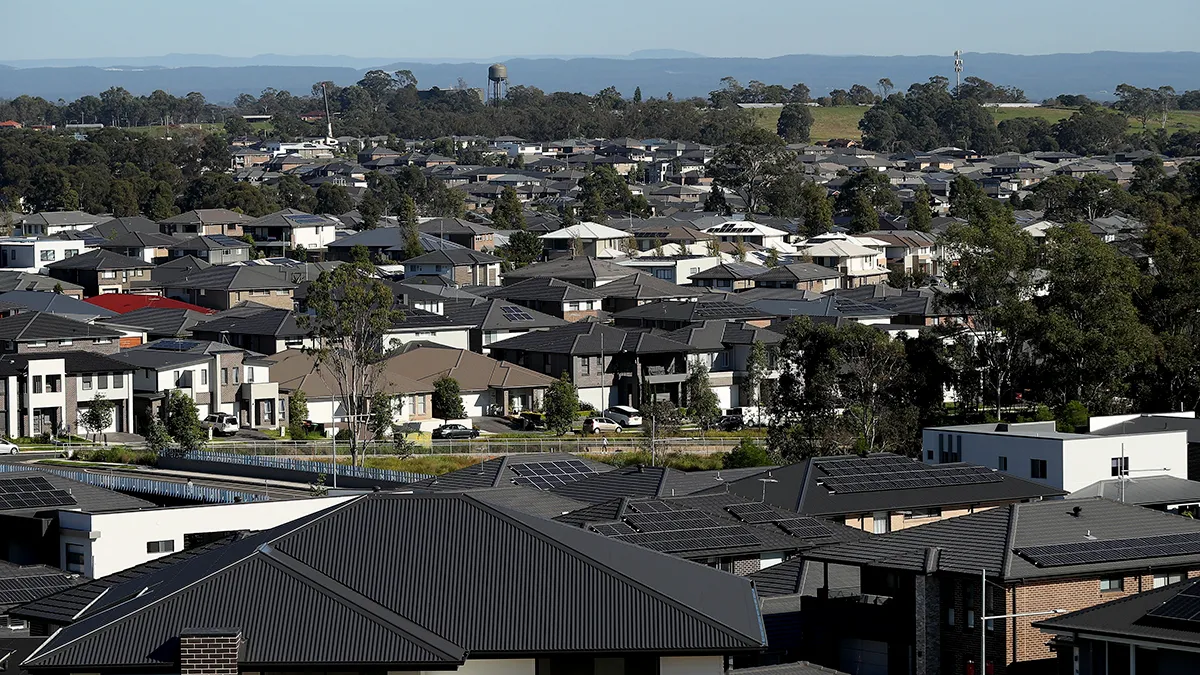
Why does a seemingly piddly 0.25 per cent rate rise seem so dramatic? Because millions of Australians are already barely able to pay for a roof over their heads.
We are mortgaged to the hilt against real estate, and ours is among the most expensive in the world.
And our banking system overwhelmingly relies upon variable-rate mortgages. Even our fixed-rate loans are mostly three years and under.
In the US, the bulk of home lending is done on 30-year fixed rates. So when the US Federal Reserve raises interest rates, it has minimal impact on households and the amount of money they spend.
Here, it’s the opposite. A rate hike or a cut flows through almost immediately to spending.
With house prices at record highs, driven into the stratosphere by record-high mass immigration, many new homeowners have had to borrow at their limit just to get into the housing market. World-record-high power prices, again the direct consequence of government policy – namely the mad obsession with ‘Net Zero’ – are only compounding the financial burden. Just a couple of rate rises would be enough to drive many to the wall.
Not many are going to be inclined to buy denial and excuses from the government.
For voters, whether the recent inflation pressure is the federal government’s fault is beside the point. It’s what the government does next that matters. Like parents whose kids are fighting, they don’t care who started it. They want it finished.
So Chalmers’ choice to focus on absolving himself in Question Time – even boasting that the Reserve Bank’s statement didn’t mention him – is not going to fly, especially if one hike is followed by another.
And the government spending goes on and on.
But of course, the government can influence household budgets and has in fact been making a concerted effort to do exactly that by handing out cost-of-living relief.
And that is just more of the same spending that’s keeping inflation running high.




![[The Good Oil] Stuff Up of the Day](/content/images/size/w1304/format/webp/2024/09/Stuff-up-image-1.webp)
