Table of Contents
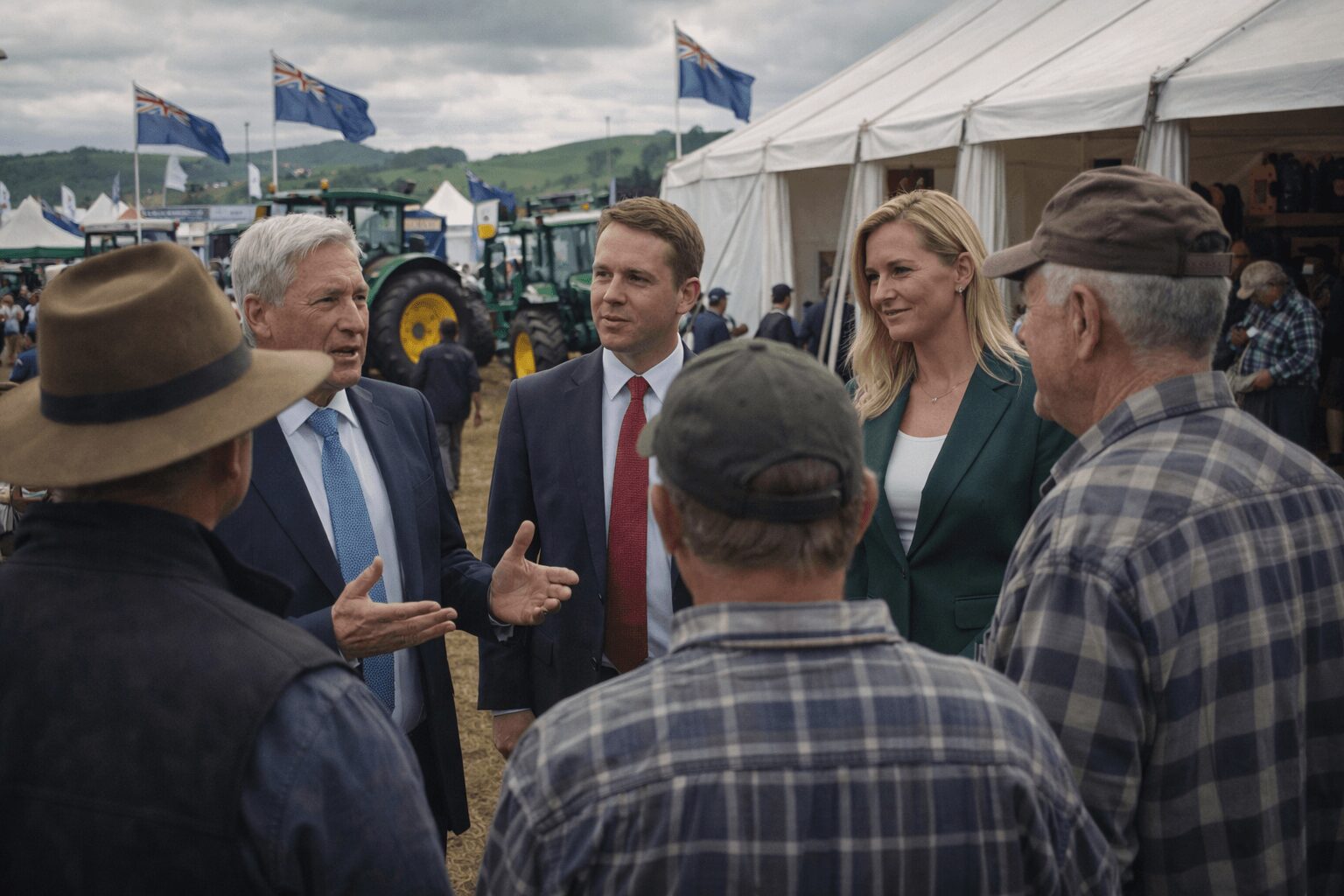
Fieldays New Zealand has become a stage where the rural economy NZ and NZ election politics are openly tested, with this year’s event putting the sector’s concerns and campaign promises in the same spotlight. The report notes the focus is on the “rural economy” and “election politics”, underscoring how closely farm performance and political credibility now track together.
Economic pressure meets political exposure
The agricultural economy NZ remains central to export earnings and regional employment, so Fieldays’ emphasis on rural conditions signals more than industry pride. It highlights a tight feedback loop: policy settings shape farm viability, while farm confidence influences broader economic sentiment. When those pressures are aired publicly, parties face sharper scrutiny on delivery rather than rhetoric.
By framing the event around “election politics”, the coverage signals a shift from trade show to campaign arena. That raises the stakes for politicians seeking trust in rural communities, where decisions on costs, land use and regulation have immediate impact. The visibility of the farming sector politics at Fieldays also elevates questions of consistency and follow-through.
Why the spotlight matters
Fieldays is one of the few national events where urban and rural narratives intersect, and the report suggests that intersection is now more contested. If parties use the platform to promise relief or reform, they face the risk of credibility loss if signals don’t match policy outcomes.
The emphasis on rural economy NZ and NZ political news at Fieldays shows how agricultural priorities are being positioned as election-defining issues, reinforcing the sector’s leverage in the national debate and the need for durable policy rather than short-term messaging.