Table of Contents
Bjørn Lomborg, in his landmark The Skeptical Environmentalist, called it “the Litany”: the endlessly repeated environmental screed of doom and gloom. It’s indeed an almost religious script – from a pre-Industrial state of grace, humanity has fallen into a state ever-collapsing environmental sin.
The problem with the Litany, Lomborg convincingly argued, is that it’s mostly untrue and becoming more untrue by the year. The world is very far from Paradise, but it’s nowhere near Hell, either – and we’re climbing further and further out of environmental Purgatory. Environmental improvement is certainly not uniform, and there are certainly pockets of worsening degradation, but, overall, the picture is one of slow, incremental improvement.
For instance, leaving aside problem areas in South East Asia, globally, forest cover is expanding. Britain has more forest now than it has for centuries. Even in China, forest cover is increasing. Much of this is due to factors that the environmental lobby continually demonises: a slight rise in atmospheric CO2 and industrial farming and genetic engineering, which allow much more food to be grown on less land.
The other factor – also hysterically demonised by the environmental lobby – is increasing economic abundance. Put simply, environmentalism is a luxury concern for wealthy nations. Compare, for instance, the ubiquity of vast amounts of plastic waste strewn around the landscape in poor African and Asian countries, compared to the cleanliness of Western cities (notwithstanding the ones with large populations of Third World illegal immigrants).
Here are some ‘re-wilding’ success stories you won’t hear much about from the doom-addicted legacy media.
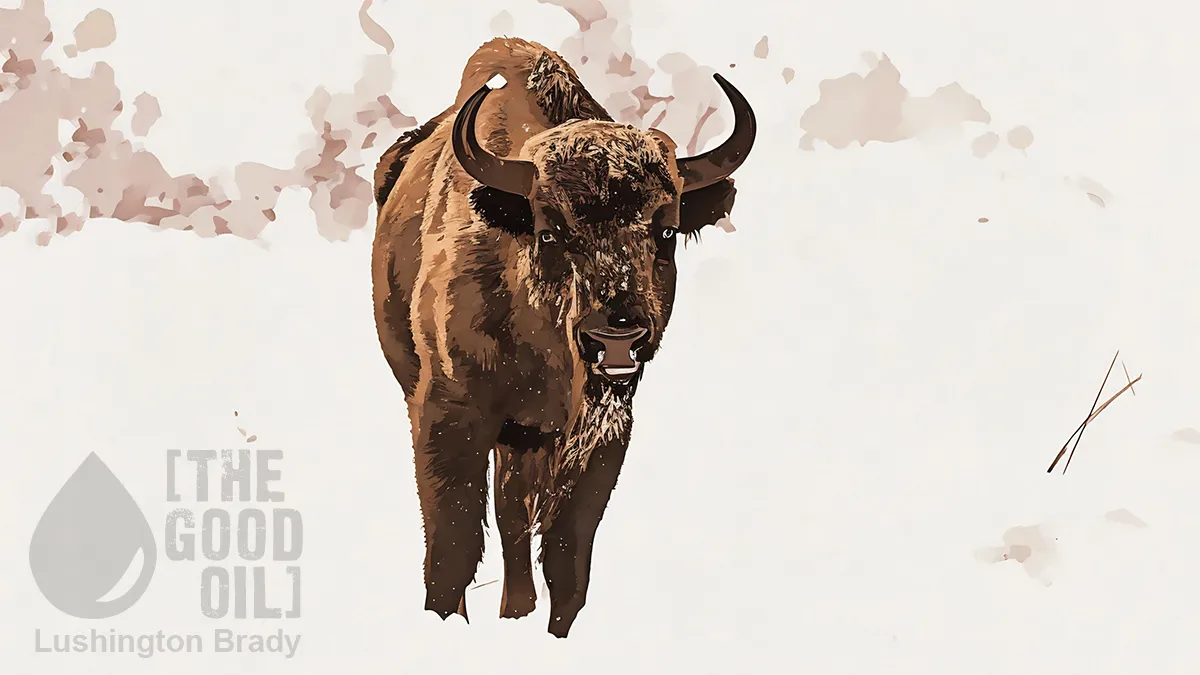
In a historic milestone for rewilding in Spain’s Iberian Highlands, nine European bison have arrived in the village of El Recuenco, in the province of Guadalajara. Sourced from a private estate north-west of Madrid, their presence will support a pioneering research effort led by Rewilding Spain to explore how bison – Europe’s last wild bovine and its largest terrestrial mammal – can help to restore and revitalise ecosystems in the Mediterranean and beyond.
The particular significance of this is that the European bison is a ‘keystone species’. Such species have huge influence on their environments.
“We expect the bison to help reduce the risk of catastrophic wildfire outbreaks through their grazing and browsing of the woodland,” says Enrique Collada, the mayor of El Recuenco. “We are also hoping that this unique and iconic species will attract more visitors to our village, generating new opportunities, jobs, and income for the people living here” […]
The bison herd released in El Recuenco – which comprises five females and four males of various ages – arrived from a private estate in El Espinar, located around 65 kilometres from Madrid. The adult animals had lived on the estate since arriving from Poland and the Netherlands three years ago, while the younger individuals were born there. As a result, the herd is already socially cohesive and well adapted to environmental conditions in inland Spain. Following their release from the enclosure, members of the Rewilding Spain team will track the movement and behaviour of the bison in the field, making use of GPS collars attached to the animals.
After a short period in a closely monitored adaptation enclosure, the herd will be released into 400 hectares of fenced-off, publicly owned woodland.
As the animals begin to roam across the site, they are expected to generate multiple benefits for the 80-strong community of El Recuenco. The local council – an instrumental partner in the initiative – asked to host the herd in view of its anticipated positive impact on the village, which, like many rural settlements across Spain, has faced significant socioeconomic decline over recent decades […]
The woodland will still be used for other activities, such as timber extraction, hunting, and mushroom picking, as well as recreational pursuits and wildlife observation by local villagers and nature enthusiasts.
Further north and east, another European species is returning from the brink of extinction. Eastern imperial eagles, the heraldic emblem of many European nations, such as Serbia and Hungary, are making a comeback in the land they symbolise.
For decades, everything from deforestation to hunting, and communist government poisoning campaigns, drove the birds to the brink.
By the late 1980s, only two small imperial eagle populations remained in Serbia: one in the Deliblato Sands, a steppe east of Belgrade, and another in the hills of Fruška Gora, near Novi Sad. Deliblato’s eagles were lost in the 1990s. Fruška Gora held on to its birds until 2015 […]
While Serbia was losing its birds, a different story was unfolding across the border. Hungary has been protecting imperial eagles for decades. From 20 pairs in the 1980s, the population numbers 550 today. As Hungarian territories became saturated, young eagles began dispersing south, first arriving in Serbia in 2011. “Hungary became a source population for the region,” says [Milan Ružić, executive director of the Bird Protection and Study Society of Serbia (BPSSS)]. About the time the species disappeared from Fruška Gora, a new pair showed up in northern Serbia.
Playing to national pride is also a powerful motivator. Imagine the United States, after all, without bald eagles.
Today, BPSSS monitors territories, rehabilitates injured eagles and works with communities. “In village cafes, we would point out there were fewer imperial eagles left in the entire country than people drinking beer in the room,” says Ružić. “People suddenly cared.”
As the imperial eagle is widely believed to be depicted on Serbia’s national coat of arms, that message carried extra weight. “When you tell people there is an eagle nesting nearby, it becomes a brand: ‘our village has the eagle’. Immediately, people are less likely to shoot or poison.”
The results are visible. Each year, the search for nests covers more ground. New territories appear, with the population expanding southwards along river corridors at an estimated rate of 15–20km a year.
The recovery is still fragile, of course. And now the birds face a new threat, one brought on by the environmental lobby itself: wind farms and the miles of new power lines required to support them.