Alwyn Poole
Began teaching in 1991. TBC, HBHS, St Cuths. Founded/led Mt Hobson MS–18 years. Co-founded SAMS and MSWA. Econs degree, Masters in Edn, tchg dip, post grad dip – sport.
A lot of what is sold to students and families in NZ education is highly mythical and primarily for the benefit of the perception of the school – as opposed to the genuine good of the students.
“Sports Academies” within school are often an example of this.
I love sport and sporting achievements. I see no negative at all with young people (and adults for that matter) being fit and active in any range of ways.
A part of my background growing up was 1st XV rugby, age group and limited first class representation. I then went on to coach through school levels – including three years with the Tauranga Boys College 1st XV – club with two years of University of Auckland Under 21s and three years of University of Auckland Premiers. I was privileged to make small to moderate coaching contributions to 18 players who represented a range of nations at Rugby World Cups.
Throughout the world the perception of the opportunities in professional sport are significantly overblown.
For instance: for American Football, approximately seven per cent of high school players make college rosters and only 2.6 per cent of those are Division 1. Only 1.5 per cent get drafted to the NFL for careers that last an average of 3.4 years. So, 0.023 per cent of high school players make the NFL and the vast majority of those careers are over well before 30 years old.
While in New Zealand I could look at the full range of sports, rugby is enough to give an indicator of how limited – and short-lived – the opportunities are.
Rugby Union became officially professional in 1995. Recent statistics have approximately 400 domestically based players and 460 NZ overseas players that could be regarded as professional. Clearly there would be a huge range of incomes covering those 860 players (prior to a Ranfurly Shield game I once got a free pair of boots that I was pretty chuffed with). There is then a range of roles from administrators, coaches, match officials, etc – who earn an income through the sport. New Zealand is not alone in this – for example – less than one per cent of South African High School rugby players make it into the professional ranks.
In terms of another sport: for all of the New Zealand boys who have player 1st XI soccer over our history – only six have played in the English Premier League.
Many New Zealand schools now have ‘rugby academies’ and high provision features for other sports. They often involve significant promises towards a professional future.
My best guess is that New Zealand has around 8,750 1st XV rugby players each year, There are 29,153 teenage boys registered as playing the game.
When the 2023 All Black squad travelled to the Rugby World Cup, only 23 out of 460 schools were represented. In the history of the game – by that point – only 28 schools had seen 10 or more players go on to All Black representation. Over its 153 years existence to that point, Auckland Grammar School has the most with 51 players – i.e., one All Black every three years. Christchurch Boys’ High School was second (and catching up fast) with 47 All Blacks over 141 years.
The average number of games played by an All Black is less than 13. That is also a number skewed by a small number of players who play a high number of tests. That is similar to the NFL where high profile players, of the Tom Brady type, create the impression that it is a long-term career option. In a conversation I had with NRL legend Paul Whatuira, his point was that NRL stands for “not real long”.
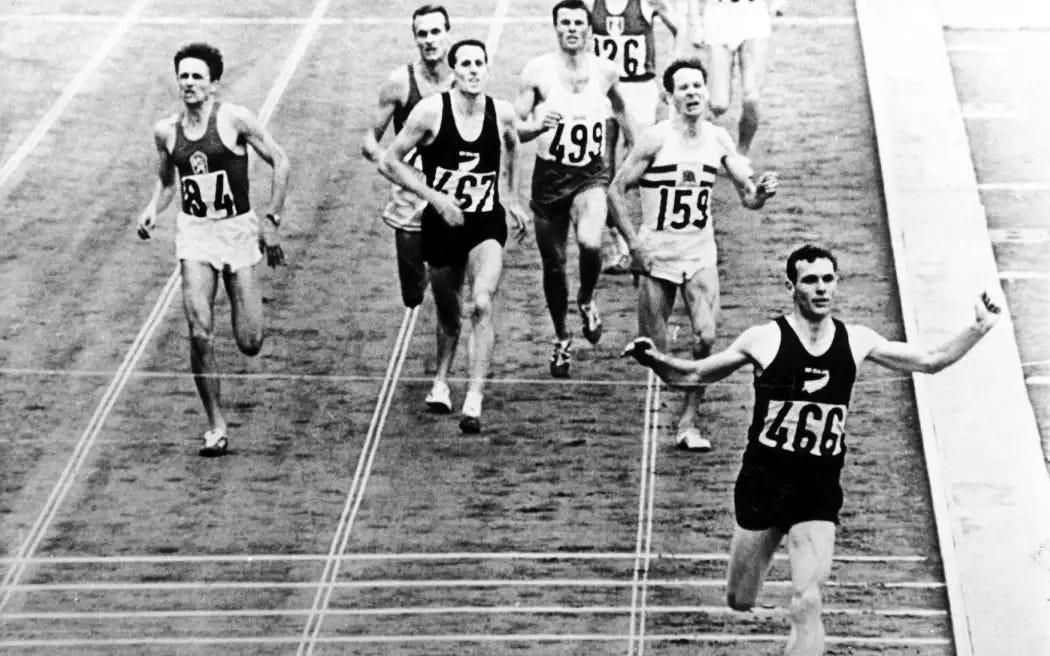
My point. I have a son who competed well for a number of years as a professional athlete in NZ, the USA and other international situations. Soon into that ‘career’ he realised that academics is not ‘Plan B’ but ‘Plan Also’… and the long-term foundation. He completed his sporting career with some achievements to be proud of and now, through his qualifications, has a superb professional career in developing medications in the USA. One of his greatest privileges was to spend a weekend with Sir Peter Snell. Sir Peter fully acknowledged the deep sense of achievement with his three Olympic Golds and world records. He retired from competitive athletics in 1965 at the age of 27. In 1971 he moved to the USA and had a remarkable academic career that he was equally proud of.
I have no issue with schools having high quality sporting provisions and encouraging students to be aspirational in that area. But they must never exploit those young people for their own reputation and MUST see that their academics/qualifications are of, at least, equal value.
This article was originally published by Education – the Absolute Best Ways.