In brief
- Stuff reported my conclusion that Batchelor’s presentation was “not racially charged” but omitted the reasoning behind it.
- The presentation focused largely on Treaty history, the Littlewood Draft and competing interpretations of sovereignty.
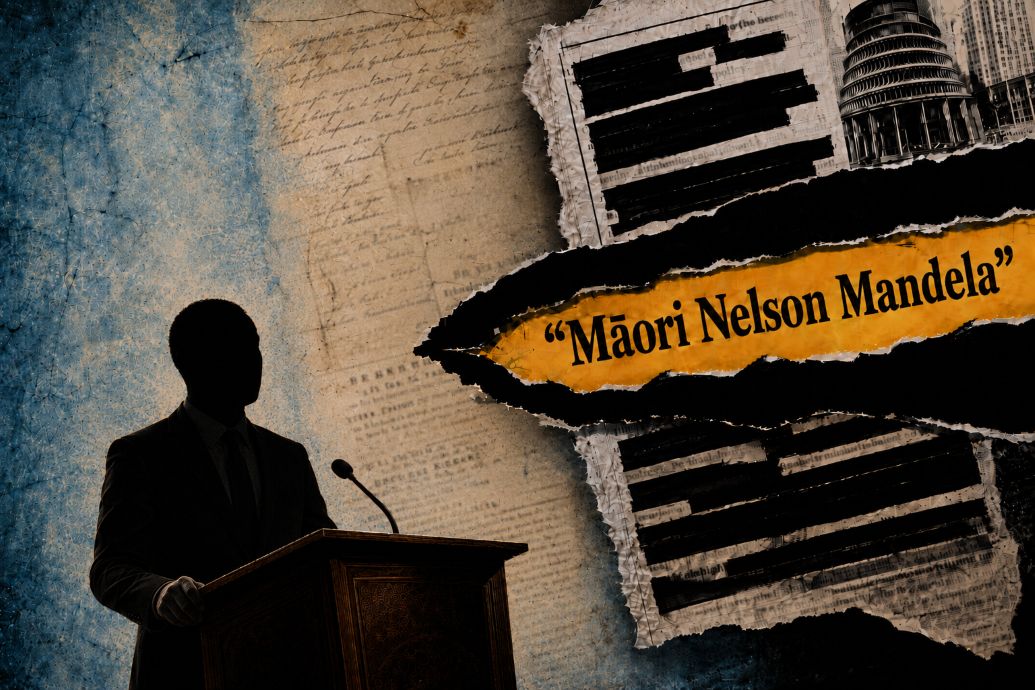
- Batchelor ended by calling for a “Māori Nelson Mandela”, a detail that complicates the claim that his message was driven by racial hatred.
Stuff’s framing
Writing for Stuff, Catrin Owen reported that businessman Jim Grenon had discussed Batchelor’s views with Centrist staff to see if they were “too racially extreme”.
Owen then wrote, “The Centrist manager, who Grenon said was of Muslim upbringing, watched a full presentation online by Batchelor and went to a live presentation by Destiny Church.”
The article continued, “His feedback to me was the presentation was more of a history lesson, and it was not racially charged.”
I would not normally insert myself into this story, but because Stuff cited my assessment, readers deserve the reasoning behind it.
The reporting was accurate as far as it went. But it left out one important detail from the presentation itself, which helped form my view.
What I actually heard
When I attended a live event at Destiny Church, the presentation concluded with Batchelor saying New Zealand needed a “Māori Nelson Mandela”. For all the controversy around Batchelor, I found that omission striking.
If the presentation were best understood as racial hostility toward Māori, ending with a call for a “Māori Nelson Mandela” would have been a strange way to finish.
To most people, Nelson Mandela, the former South African president, is inseparable from anti-racism, reconciliation and social cohesion. Hearing that line made it difficult to reconcile the presentation I saw with claims that it was driven by racial hatred.
The overwhelming focus of Batchelor’s presentation was on documents, translations, historical figures, competing interpretations of the Treaty, and how New Zealand ended up with an English text that differs significantly from Te Tiriti.
That is why I described it as more of a history lesson than something racially charged.
None of this means Batchelor’s language, campaign or conclusions are beyond criticism. People may reasonably find parts of his argument offensive, inflammatory or wrong. My assessment was limited to what I reviewed at the time. The material struck me as a contested argument about Treaty history, sovereignty and co-governance, rather than a call to favour one race over another.
That does not mean I endorse Batchelor, his campaign, or every one of his claims. It means the presentation I saw did not match the media framing of it as racist or anti-Māori.
The Littlewood Draft
Much of the presentation focused on the Littlewood Draft, which Batchelor argues was the final English draft from which Te Tiriti was translated.
The Littlewood Draft is an English-language Treaty draft named after the Littlewood family, who discovered it in 1989 among papers linked to James Busby, the British Resident in New Zealand at the time, and a central figure in the drafting of the Treaty.
For Batchelor, the draft matters because he believes it challenges later interpretations of the Treaty based on partnership and shared sovereignty.
His argument is that those interpretations rest on a misunderstanding of the Treaty’s original meaning.
Whether one agrees or disagrees, Batchelor presented this as an argument about history and constitutional interpretation rather than race.
A provocative argument
While supporters view co-governance as shared decision-making, Batchelor frames it as a democratic threat. His most strident line, “co-governance is code for a coup by stealth,” is provocative. But I did not read it as inherently racist.
In my opinion, based on the material I reviewed at the time, Batchelor’s stated objection appeared to be to race-based policymaking, not to Māori as a people.
Why I reached a different view
Some of the backlash seemed to treat Batchelor’s challenge to prevailing Treaty interpretations as inherently racially charged.
I disagree.
People interested in Treaty history can assess Batchelor’s claims for themselves, including the parts they reject.
Readers are free to disagree with my assessment. But if Stuff is going to cite that assessment, readers deserve to know why I reached it.
Loading...