Table of Contents
Ani O’Brien
Like good faith disagreements and principled people. Dislike disingenuousness and Foucault. Care especially about women’s rights, justice, and democracy.
The government has announced a $50 per week support package for working families in response to the fuel price surge that has resulted from the Iran conflict. Around 143,000 households will receive the payment through a boost to the in-work tax credit, with eligibility expanded to a further 14,000 families. It will cost up to $373 million if it runs for the full year. It will run for up to a year or until the price of petrol goes below $3/litre for four consecutive weeks.
Finance Minister Nicola Willis has been clear that her priority is providing relief to low- and middle-income working families with children. This is not, she emphasises, a broad cost-of-living cash spray gun. This is about taking a bit of pressure off those who are most vulnerable and who need to drive to work and to take kids to school.
When pressed by reporters, Willis rejected their implications that this was not enough and did not cover all the groups of people it should. “What about beneficiaries?” a journalist asked. To which she pointed out that they would be receiving an increase on 1st April anyway, but more importantly they do not have a job they are obliged to drive to.
This “fuel shock” (as we now seem to be calling it) could not have come at a worse time for National who were hoping New Zealanders would start to experience the relief of “green shoots” before the November election.
Governor of the Reserve Bank of New Zealand (RBNZ) Anna Breman also held a press conference to address the fuel shock. She said it is likely to push inflation higher in the near term. Higher petrol and diesel prices lift headline inflation immediately, but the greater concern is how those costs feed into freight, food, and broader business expenses over time.
The RBNZ has emphasised that the duration of the shock matters more than the initial spike. A short-lived increase can be absorbed, but a sustained period of elevated fuel prices risks embedding inflation more deeply across the economy. Even if underlying economic conditions would otherwise justify easing, persistent fuel-driven inflation could force the RBNZ to keep interest rates higher for longer than expected.
The government are stuck between a rock and a hard place. On the one hand they have a population which has had enough of things being hard and a media class who seems to think that the government should get out the cash spray gun, inflationary consequences be damned. On the other hand, Treasury, RBNZ, and every serious economic commentator is warning them not to further contribute to inflation. They need to help those most in need without making the long term worse for everyone.
Christopher Luxon and Nicola Willis both referred to the importance of learning from the Covid-19 inquiries and they are right about this, but it is also a handy rhetorical tool for them. It allows them to justify their restrained action, by saying they are not going to repeat the mistakes of the last lot. Consequently, the government is saying this relief will be funded within the Budget 2026 allowance. They’re not whipping out the credit card again. Yet.
They are also making sure to really remind everyone that this economic shock has been triggered by an international conflict that we have zero control over. This is vital to their prospects at the election because if they fail to communicate this point New Zealanders will go to the polls blaming them.
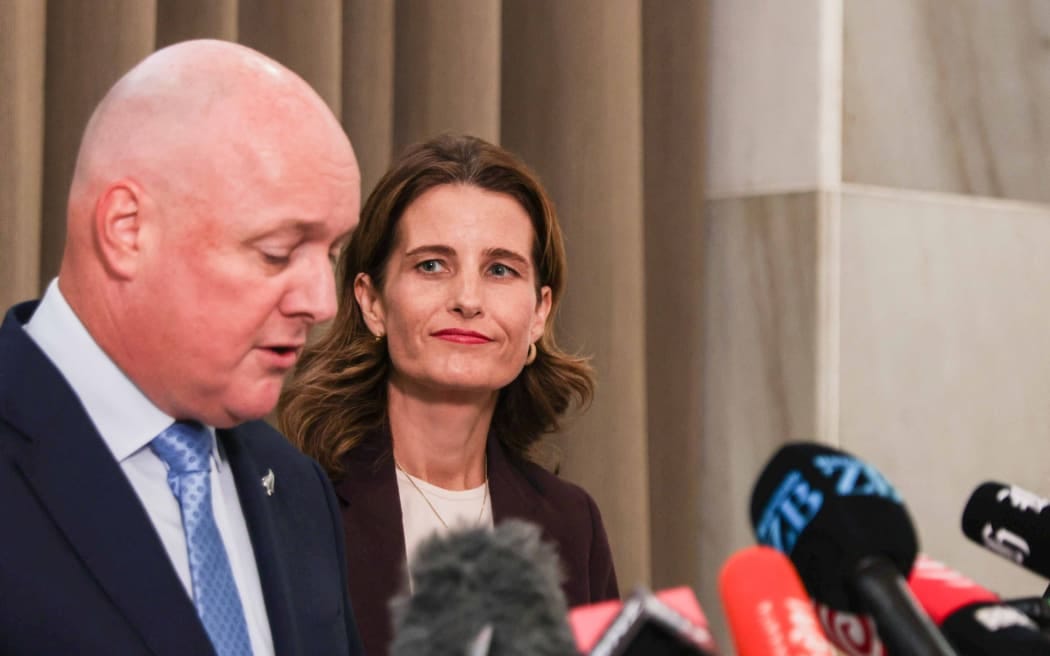
There is a slim chance, in my view, that the Government could experience the same boost Jacinda Ardern and Labour did with Covid-19. It may be hard to remember, but Labour were on struggle street before the pandemic. National was polling at around 40 per cent and it was looking like Labour would be a one-term government. However, when an external threat came along that New Zealanders recognised was out of the control of the government, people rallied behind Ardern and her team.
I say “slim chance” because a) New Zealanders are more cynical and hardened after Covid-19 and b) because a centre-right coalition doesn’t have the benefit of a supportive media urging unity.
There has been a lot of focus on petrol and the price at the pump, which is understandable, but this fails to see the bigger picture. Over the past month, diesel prices have surged, directly impacting the cost base of the entire economy. Diesel moves freight, food, construction, and agriculture in New Zealand. When diesel costs rise sharply and stay high, that cost moves through supply chains and shows up in supermarket prices, in building costs, and in the price of doing business. That is why the pump is not as significant as some are assuming. It is inflation, degrowth, and the broader economic outlook we should be worried about.
New Zealand is vulnerable structurally to these much deeper impacts because our lack of fuel security leaves us exposed. We consume around 24 million litres of fuel a day, hold only weeks of supply at any given time, and no longer refine fuel domestically. Instead, we rely on imported refined fuel, largely sourced from overseas refineries that are themselves dependent on access to crude oil, much of which moves through the region now under strain.
Our system makes sense if you want a cheaper and more efficient system when things are all ticking along nicely. The problem is when everything goes to the proverbial. Global markets cannot be trusted to be stable and responsive. When Marsden Point was looking to close, officials assessed geopolitical risks as low and concluded that importing fuel from multiple sources would provide sufficient security. They weren’t incorrect to make those assumptions, but they failed to consider that the world they were looking at could change, as it has done.
The debate over Marsden Point has resurfaced, inevitably. The closure and the actions of the government in relation to it were hotly debated back in 2021 and they are hotly debated now. Would having a refinery still operating have made us more resilient? The honest answer is technically yes. However, it wouldn’t have made us significantly more resilient and it would have come at significant cost.
Marsden Point relied on imported crude so it would not have insulated New Zealand from a global price shock. But it did provide something we no longer have, which is optionality, storage, and flexibility. With Marsden Point we had a slightly thicker buffer between global disruption and domestic impact.
Obviously, now the buffer is gone and we have a system optimised for efficiency, not resilience. I know I bang on about it, but politics is about trade-offs and unfortunately sometimes the trade-offs only become visible when they are tested, and this is what that test looks like.
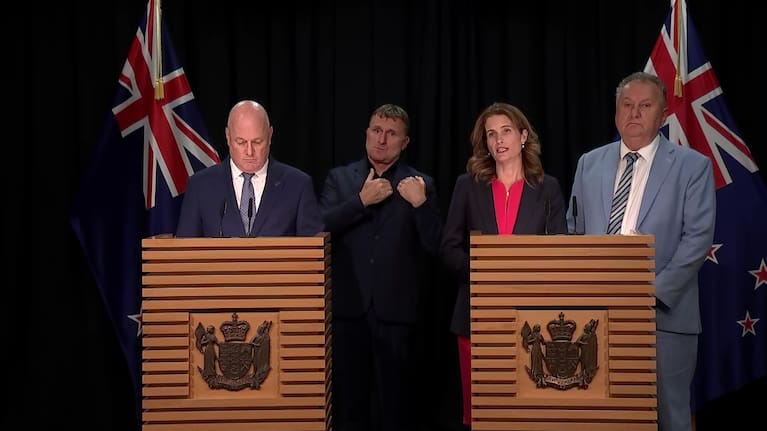
I note Shane Jones would likely say he did not need a test to see the trade-offs clearly. At the press conference, the Associate Energy Minister made sure to remind Labour that they were warned about the potential risks of not stepping in to prevent the closure of the refinery.
In any case, that is history and we are where we are now, dealing with the cards as they lay. The government cannot restart refining at Marsden Point at a click of their fingers and perhaps they would not want to. They have a limited set of options before them and none of them come for free. As I said earlier: rock and a hard place.
The $50 per week payment is deliberately targeted at working families through the tax credit system. It is temporary, and it is conditional on fuel prices remaining high. It is not an attempt to control fuel prices. Rather it is an attempt to cushion the impact for those judged most exposed to the hit.
I posted on X about this earlier and received some interesting responses. A few people argued for reduction in excise tax and a few others argued for a reduction in GST. Cutting fuel excise or slashing GST might feel like bold action and it certainly has a kind of sloganistic appeal, but both options are expensive, blunt, and poorly targeted.
It would burn through billions in revenue only to give the biggest dollar gains to people who need it least. Higher-income New Zealanders spend and consume more so these measures would result in more savings for them while doing little to actually help those most squeezed by rising costs. And, because these are broad tax changes, this kind of action would not even guarantee the full benefit flows through to consumers. It’s just spraying money around and hoping for the best. Exactly what the Covid-19 inquiries told us not to do again.
Chris Hipkins initially told media that he was not going to come up with “policy on the fly” when asked what he would suggest should be done. Newstalk ZB reported:
Asked by the Herald what actions should be taken to help households, Hipkins responded, “the government needs to come up with a plan”.
“This is going to play out over the next six months. The next election is not until the end of the year. New Zealanders today are relying on this government to come up with solutions. They are the ones sitting in the hot seat…
“We are not the government,” he said, before noting that during the Covid-19 pandemic the then-Labour government didn’t wait to hear National’s ideas before acting.
Asked again to provide an alternative or any ideas, Hipkins said: “We will have plenty of ideas and we will be talking about them on the election campaign.
“The onus rests on the current government.”
Later he did come out with some ideas, but his suggestion that the government is somehow “raking in” extra GST from higher fuel prices and should simply recycle it back into relief is not sound economics. GST is applied as a percentage and higher prices also suppress demand which means people drive less, businesses cut costs, and consumption shifts. So while there may be more GST per litre sold, there is likely to also be a reduction in the number of litres sold.
As commentator Ben Thomas put it: “Maybe it was better when he had no ideas.”
Others have proposed things like working from home orders or cheaper public transport. A call for people to voluntarily work-from-home if they can could be effective as it would reduce fuel consumption, but the eagerness from some in the media for full-blown lockdowns is frankly terrifying. As for cheaper public transport… if you are taking public transport instead of driving you will be saving the money you would be spending on petrol and parking. We are broke, guys. We do not want the government willy nilly discounting things unnecessarily. They will have to borrow to do so and overspending will result in further inflation, higher interest rates, and more cost-of-living pain.
We need to accept that there is no policy lever that brings global oil prices down and there is no domestic decision that stabilises the Strait of Hormuz. The Government cannot ‘fix’ fuel prices.
The real debate we should be having is what role government should play when a global shock hits an economy that is highly exposed to it. Should it absorb more of the cost through subsidies? Should it allow prices to flow through and support incomes instead? Should it invest more heavily in resilience like storage, infrastructure, diversification, knowing that comes with significant long-term cost?
This is the reality of the structure of the system we have built and the reality of us as a small, distant, highly trade-dependent economy. We are efficient in normal times, but exposed in volatile ones. We have prioritised cost over redundancy, lean supply chains over buffers, and global integration over domestic capacity. That made life cheaper, but it has made this shock hit harder.
The $50 payment is imperfect, but it is targeted. It is a responsible action and perhaps further action will be necessary later on, but we should be relieved that Nicola Willis did not get out Grant Robertson’s spray gun.
Note: I rushed to get this out so it is not my best writing. I apologise for the clunky phrasing and awkward transitions between topics. I just wanted to get it out quickly.
This article was originally published by Thought Crimes.