Table of Contents
EKO
Artist and bookmaker.
You’ve read Lewis. Everyone has.
Narnia on the shelf, Screwtape somewhere in a box, maybe Mere Christianity during a season when you were trying to figure out if any of it was real. Lewis sold more books on Christianity than anyone in the 20th century. He’s the voice in your head when you think about faith and reason holding hands.
And he never shut up about the man who made him.
“I know hardly any other writer who seems to be closer, or more continually close, to the Spirit of Christ Himself.”
That’s Lewis talking about a Scottish fantasy novelist who died in 1905, a minister the church fired, a writer almost nobody reads anymore.
You’ve probably seen the name in a Lewis biography and thought you’d get to him someday. You didn’t. Almost nobody does.
Lewis was 19, an atheist, sharp-tongued and proud of it. The kind of young man who could dismantle your faith before you finished your sentence.
He picked up a battered copy of MacDonald’s Phantastes at a train station bookstall and started reading on the platform. Something got into him that night, something he couldn’t name and couldn’t shake. He would later call it “a bright shadow,” a quality of holiness he’d never encountered and couldn’t explain away.
He didn’t convert. He didn’t even believe. But something had breached the wall, and he spent the next 10 years trying to name what had happened to him. By the time he understood, he was a Christian.
MacDonald baptized his imagination. The belief came later. The imagination went first.
Born 1824 in Aberdeenshire, Calvinist territory where the soil was rocky and the theology matched. His mother died when he was eight and he never stopped writing about what it means to have a father who won’t let you go.
He became a minister. Lasted three years.
The congregation discovered he harbored dangerous ideas. He thought the heathen might not roast forever, suspected God’s mercy reached further than the Westminster Confession allowed. They cut his salary. He stayed. They cut it again. He resigned.
Twenty-nine years old with a wife and eventually 11 children, no denomination, no prospects. He started writing to feed them and never stopped. Fifty years. Fifty books.
The church couldn’t contain what MacDonald actually believed.
He looked at the theology he’d inherited and saw a transaction, a courtroom where the Father needed to be paid off before He could love you. God as creditor, humanity as debtor, Jesus as the payment that settles the account.
MacDonald called it what it was: a lie about the Father’s character.
He saw something else entirely. God as father, actually father, not a judge performing a role but a father who would chase his children into whatever far country they’d fled to, a father with eternity to work with and no intention of giving up.
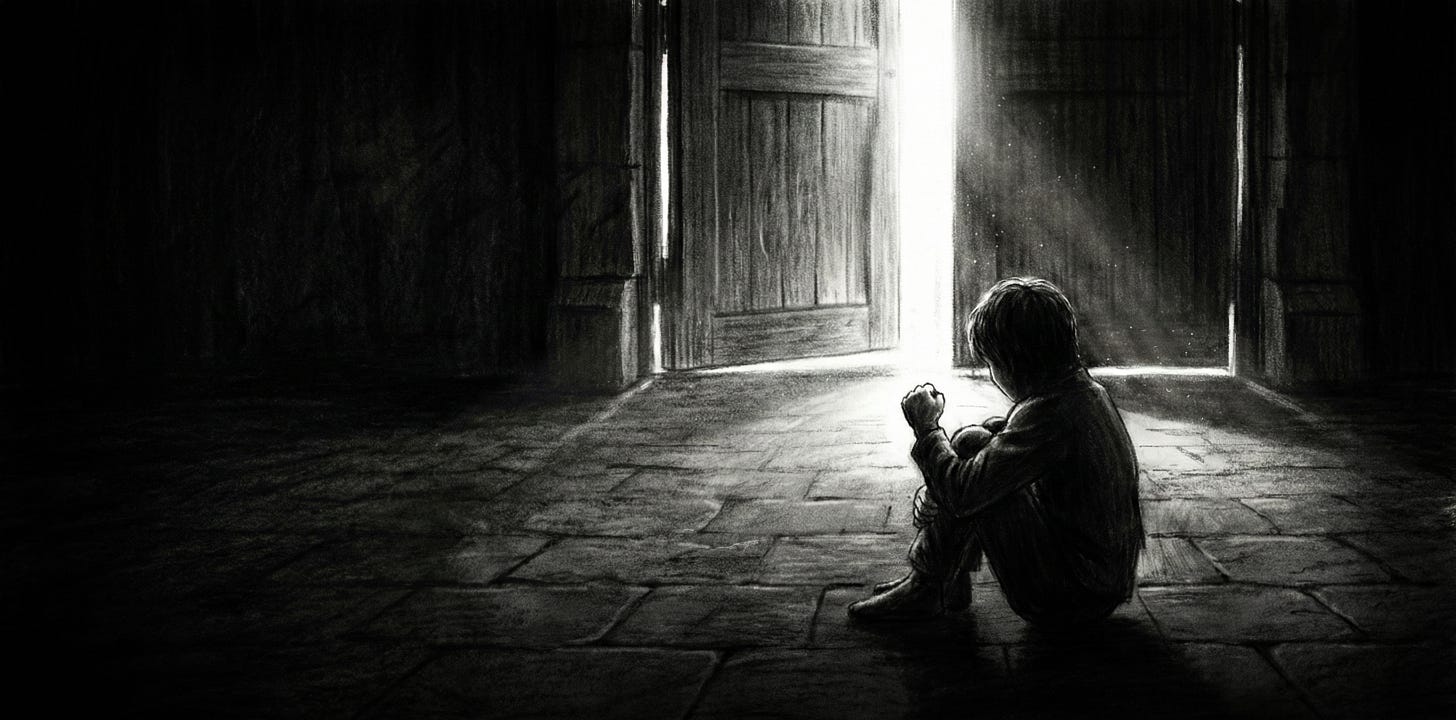
Hell, for MacDonald, wasn’t a torture chamber God built for his enemies. Hell was a room his children locked from the inside, a place where the stubborn sit in darkness while the Father waits on the porch. Forever if necessary.
This got him thrown out of the church. This is what captured Lewis completely.
The Princess and the Goblin, published 1872, was written for children.
But not really.
A princess named Irene lives in a house on a mountain with goblins beneath. One day she climbs a staircase she’s never noticed and finds an old woman spinning in a tower room, her great-great-grandmother. The woman gives Irene a ring with a thread attached. The thread is invisible.
When you’re lost, the grandmother says, follow it. Even when you can’t see it, even when everyone says you’re making it up.
The thread leads Irene into the goblin caverns, into exactly the place she doesn’t want to go. And it brings her out again.
MacDonald wrote children’s books the way Jesus told parables. The meaning isn’t sitting on top waiting to be extracted. It’s woven into the fabric of the story itself. You don’t analyze it. You undergo it.
Phantastes is the one that got Lewis.
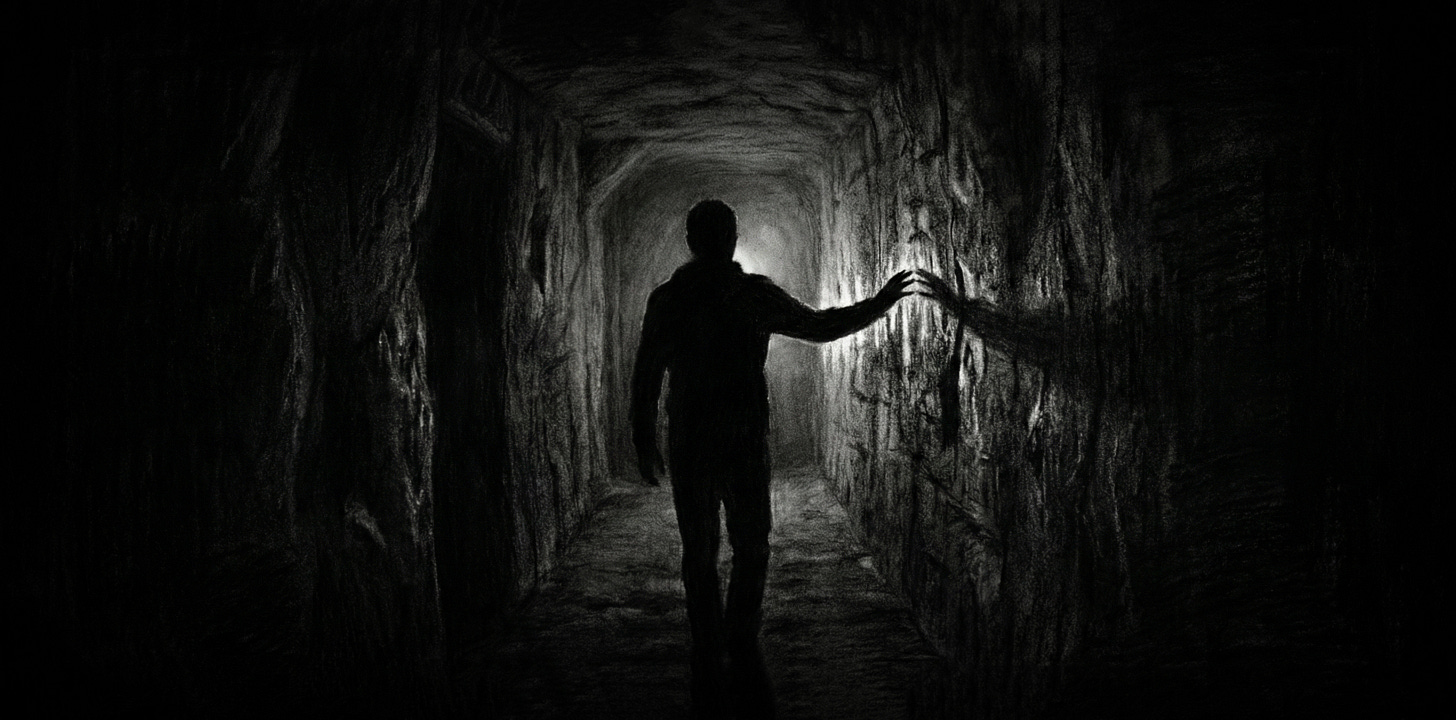
A young man named Anodos wakes to find his bedroom has become a forest. He wanders Fairy Land for 21 days, falls in love with a woman made of marble, and nearly destroys her by trying to possess her. Along the way he picks up a shadow, his dark self, his cynicism made visible, and it follows him everywhere after that. Everything he touches turns sour. A kind woman in a cottage offers him bread and he realizes his shadow has made him incapable of receiving it. The trees sing and he can no longer hear them. Something inside him has gone deaf.
He dies in battle against something evil. Wakes up back home. Only hours have passed.
The book wanders and refuses to explain itself. MacDonald wasn’t interested in plot mechanics. He was building a world where goodness was simply present, not selling anything, just there. Lewis read it at 19 and the atmosphere haunted him for a decade. He called it holiness, but that word has been so abused it barely means anything any more. What he meant was this: he’d encountered something real, a presence that wasn’t trying to recruit him.
He couldn’t explain it. He couldn’t forget it.
Lilith was MacDonald’s last novel, written when he was 71.
A man named Vane finds a passage in his library to another world where the dead sleep in a great stone house, waiting to wake. Children wander a ruined city, prey to a beautiful woman named Lilith who will not open her clenched hand.
The whole book spirals toward that image. The fist. The refusal. What is she holding? We never find out. It doesn’t matter. The drama is the grip itself, the self that would rather clutch nothing forever than let go and receive something.
Will she open her hand?
MacDonald believed she would. Eventually. He believed everyone would, given enough time and enough patience from the one who waits. He wasn’t a universalist in the cheap sense, the sense that says nothing matters because everyone’s fine. He was a universalist in the terrifying sense: God is so good and so relentless that he will not stop. Not until the last fist unclenches.
So why haven’t you read him?
Lewis tried to bring him back. He edited an anthology, wrote introductions, sang MacDonald’s praises for 30 years. It didn’t take. MacDonald stayed buried.
The evangelicals couldn’t handle his hell, a place you lock yourself into rather than a place God throws you. The academics couldn’t handle his formlessness, books that wandered and refused to be pinned to a thesis. Everyone found a reason to put him back on the shelf.
The fairy tales got sanitized and the strangeness trimmed out. Phantastes and Lilith became titles mentioned in Lewis biographies and never actually opened. The student became a giant. The master was forgotten.
The system buries what it can’t use.
What’s there if you go looking?
A different kind of Christianity, one where the Father isn’t the obstacle to your forgiveness but the source of it, where story isn’t illustration but revelation.
And a lineage. MacDonald taught Lewis. Lewis taught three generations. The stream didn’t start with the writers you grew up on. It started further back. There were fathers before the fathers you knew.
MacDonald is one of them.
Are you the younger son stumbling home from the far country? The one following a thread you can’t see into a darkness you didn’t choose?
Pick up The Princess and the Goblin. Follow the thread.
This article was originally published by EKO Loves You.