
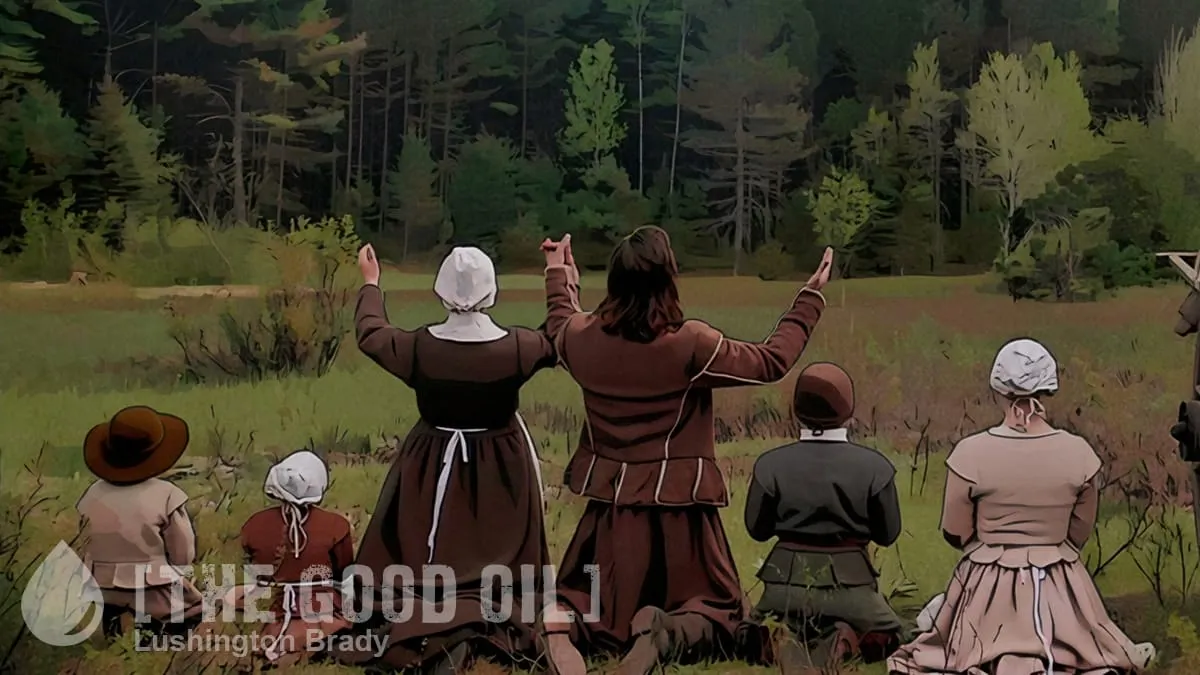
Folk horror is not a new genre, but it is enjoying new-found popularity. Films such as The Witch (2015) and Midsommar (2019), and TV shows like the (first season especially) of True Detective have brought it to the mainstream.
Folk horror is a subgenre of horror that uses elements of folklore to invoke fear and foreboding. Typically, it uses a rural setting, isolation and themes of superstition, folk religion, paganism, sacrifice and the dark aspects of nature. Although the term was coined in 1965 (in a line in John Fowles’ The Magus) and popularised in a 1970 film review, it is far from new. Even in modern horror, H P Lovecraft’s “The Picture in the House” (1920) almost perfectly described a template for the genre:
The true epicure in the terrible, to whom a new thrill of unutterable ghastliness is the chief end and justification of existence, esteems most of all the ancient, lonely farmhouses of backwoods New England; for there the dark elements of strength, solitude, grotesqueness, and ignorance combine to form the perfection of the hideous.
Most horrible of all sights are the little unpainted wooden houses remote from travelled ways, usually squatted upon some damp, grassy slope or leaning against some gigantic outcropping of rock… In such houses have dwelt generations of strange people.
Even Lovecraft was drawing on writers who preceded him in linking horror to country and antiquity: Arthur Machen and Algernon Blackwood especially.
It might also be questioned whether folk horror strictly relies on rural settings: after all, the unfairly derided second season of True Detective was as rooted in place and culture and ritual as any accepted folk horror story. It’s just that the place and culture and rituals were of modern Los Angeles, which is perhaps too familiar to most to be truly unsettling. Yet Piers Haggard, director of 1970’s The Blood on Satan’s Claw, an early folk-horror classic, also relied on the familiar: “I grew up on a farm and it’s natural for me to use the countryside as symbols or as imagery.”
Still, rural settings remain the signature motif of folk-horror. Perhaps because, for city folk, the bulk of the population, the countryside really is an alien place.
Modern folk horror often presents the countryside as a place where history has never disappeared. The woods, fields, ruins, and villages are not neutral backgrounds because they hold memories of ownership, faith, labor, violence, and exclusion. This approach challenges the romantic idea that rural life is automatically peaceful or morally pure.
Folk horror communities often appear stable because everyone knows the rituals, but that stability depends on obedience, secrecy, and punishment. The outsider gradually discovers belonging has a cost and consensus can conceal coercion.
Or, at least, that’s how it might appear to the city-bred outsider. If you don’t understand that calling an old-school rural matriarch or patriarch by their first name, without explicit invitation, is deeply rude, then the offended reactions might seem ‘hostile’ to you. In reality, you’re just a blundering oaf, as much as if you swanned around downtown Islamabad in short-shorts and a rainbow crop top.
The same city folk who wax ecstatic about the natural environment have likely never been closer to it than watching a David Attenborough doco on the telly. I’ve seen city types on a tramp cowering at the sight of a snake and wondering how to kill it, while my kids just calmly waited for old Joe Blake to go off on his own business. Or try to pet a ‘sweet moo-cow’ when she has a new calf.
Environmental anxiety has made folk horror especially resonant. Many recent stories depict nature as indifferent, wounded, or resistant to human control, and not as a source of simple healing. Forests, coastlines, animals, and weather can become active forces that expose human arrogance.
Forests, coastlines, animals and weather become forces that expose arrogance. The landscape watches, remembers and sometimes retaliates. Few films have this existential dread of the natural landscape as effectively as Long Weekend (1978).
Key, above all, is isolation and unfamiliarity.
Folk horror removes characters from familiar networks, then places them in communities whose codes they cannot read. A phone signal disappears, a road closes, or local language becomes ambiguous and leaves the outsider dependent on people who may be dangerous.
They discover, too, that information is no substitute for wisdom. In an era when anyone can check news reports or look up Wikipedia entries within seconds, folk horror strips away the illusion that faster data equals security. In a society which prioritises atomisation and novelty, community and nostalgia seems ancient, unknowable and threatening. The Wicker-Man (1973) and The Children of the Stones (1976) both captured this idea perfectly.
Songs, dances, masks, meals, and seasonal ceremonies can appear meaningful before their purpose is fully understood. The audience senses that every gesture belongs to a system, even when the protagonist cannot see the rules.
The current popularity of the form suggests audiences are preoccupied with forces larger than the individual. A globalised world has become, not a global village, but a worldwide system of billions hiding in their rooms and watching the rest of the world through a tiny screen that feeds them a steady diet of bad news: war, crime, unrest and environmental collapse. The world out there is one big bogey-man.
Folk horror gives those diffuse anxieties faces, ceremonies, landscapes and consequences. It refuses simple explanations, allowing the supernatural, the psychological, the political and the ecological to overlap. As Lovecraft said, “the oldest and strongest emotion of mankind is fear”. For all our modern sophistication and technological armour, the old fears, it turns out, are still very much with us.





![[The Good Oil] Stuff Up of the Day](https://storage.ghost.io/c/31/f4/31f4e20a-0315-499e-83ff-139e8eab53bf/content/images/size/w1304/format/webp/2024/09/Stuff-up-image-1.webp)

