Table of Contents
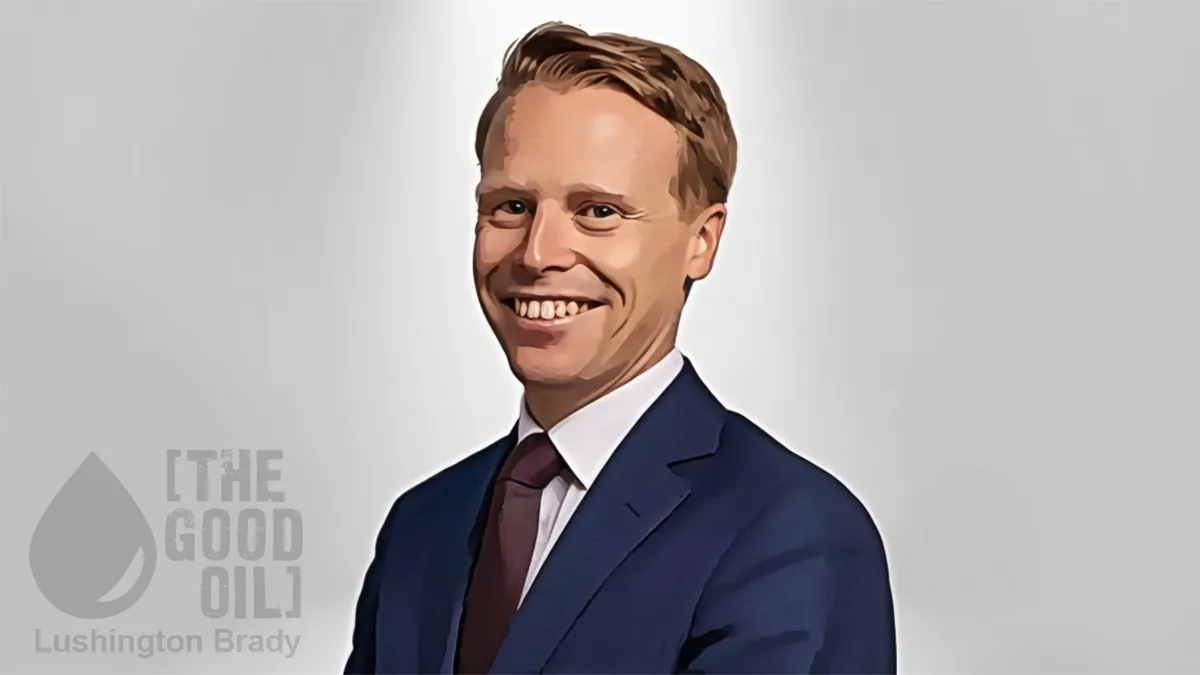
I don’t have a lot of time for Tasmanian Labor – and, going by the last election results, neither do three-quarters of Tasmanian voters – but the maiden speech by newly elected Senator Richard Dowling is worth noting. Dowling, who looks far younger than his 42 years (but then, too many politicians, police and doctors, look like children to me these days), has followed, as he says, an unusual career path to a Labor seat: from a day job at KFC to a cadetship at the Tasmanian Treasury, to chief economist at the Tasmanian Chamber of Commerce and Industry.
That career path brings an unusual perspective to the Labor party.
I never bought into the idea that, in a modern economy, labour and capital should be enemies. Maybe that’s a Tasmanian perspective. We’re too small to be fighting each other.
Strong industries and secure, well-paid jobs go together.
So it is that, while mouthing the requisite Labor platitudes about ‘clean energy’ and ‘healthcare’, Dowling also talks up “voracious entrepreneurship and innovation”. Not to mention “optimism”.
Where Dowling really grabbed my attention is when it comes to what has been, for too long, the weakest link in Tasmania’s economy and society. With an economy running strongly to agriculture and forestry, Tasmanians traditionally leaned to a ‘less learnin’, more earnin’’ mentality. Tasmania is the only Australian jurisdiction other than the ACT to use the college system (high school runs years seven to 10, while year 11 and 12 are college and are studied on separate campuses).
When young Tasmanians could leave school at year 10 and get a good paying job, the college system worked well. But with primary employment falling, the need for at least a year-12 education is vital. Unfortunately, Tasmanian attitudes are slow to change, so, unlike the ACT with the highest rate of year-12 completion, Tasmania is stuck with one of the lowest.
It doesn’t help, either, that, for the past two decades, generations of Tassie kids have been shoved from pillar to post by each new education minister trying to make their name by adopting the latest, invariably bullshit, educational theories. Paula Wriedt’s “Essential Learnings”, “an integrated, enquiry-based curriculum underpinned by constructivist pedagogy”, was a particular disaster.
Dowling thinks that one way Tassie schools can benefit our kids is by better preparing them for the real, adult, world of money and finances.
One area that I believe would improve fairness in our economy is of empowering people with better financial skills, from young people trying to understand credit cards to older people vulnerable to exploitation. It’s been a passion for me for a long time.
Many years ago, I met a young law student named Grace. She had incredible prospects, but she was distraught. She’d applied for a $500 credit card. The bank, in its wisdom, gave her a $10,000 limit – something no young student should ever be handed. Assuming the bank knew best, she began to spend, only to realise the repayments weren’t even touching the principal. She was spiralling into debt without understanding how she got there. We sat down together and mapped out a plan. She got through it, but I’ll never forget what she said: ‘Why don’t they teach more of this stuff in school?’ She was right.
Today, it’s not just credit cards: it’s buy-now pay-later schemes, payday loans and online scams promising instant riches. The tools have changed, but the risks to people’s futures are the same, and I don’t believe the answer is simply more regulation.
Wait… did a Labor politician just say that more regulation isn’t the answer? Pardon me while my head swims.
We have to empower people to protect themselves and to thrive, because a confident, financially capable citizen is harder to exploit and better placed to seize the opportunities the economy offers. Australians are expected to navigate an increasingly complex financial world, but we don't teach them how. Budgeting, compound interest, mortgages, superannuation and investing – we still expect people to just figure it out by themselves. The result is that too many young Australians feel like they’re falling behind before they’ve even begun and too many older Australians are vulnerable to scams, predatory products or silent stress about money. This is a fairness issue.
Dowling also notes that financial literacy doesn’t count for much without a strong economy.
It’s also about having a future in your own state, with jobs that are secure, meaningful and tied to place. In Tasmania, that future depends on strong modern industry. For more than a century, sectors like mining, metal processing, agriculture, aquaculture and advanced manufacturing have been the backbone of private sector employment. That must continue – not out of nostalgia but because it’s the foundation of opportunity. Young people deserve careers, not just casual work.
If only Labor had more up-and-coming pollies who think like this, then the party might have a crack at getting back into government – and even doing a good job of it. Just so long as the party machine doesn’t ruin him first.